Impacts of globalization on China's cultural heritage and cultural identity








China has undergone a complete transformation from an economy of scarcity back in 1981 when I first arrived here, to an economy of surplus today in 2019. China has everything. China is not just the factory of the world, but now the investor, and in many cases, the investment bank of the world. From this perspective, people’s lives in China have transformed.
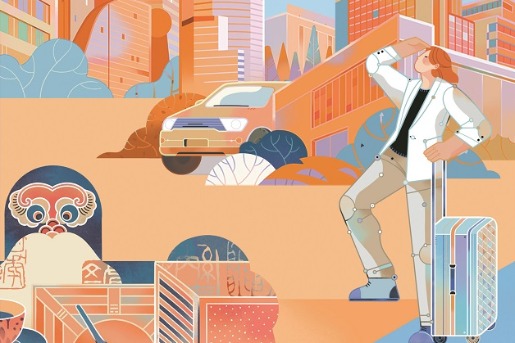
When I first came here, people were surprised to see a foreigner; it was something new, exotic. Today, Chinese people are going around the world, they are shoppers around the world, they are the investors of the world. We are looking at a country that is very integrated and very synergic, and a country that is actually setting and driving trends, rather than following them.
Globalization is not something new. Global connectivity is something that is a deep part of China's history and past. The projection of the Belt and Road and what is called the "Cyber Silk Road" taking a deep root in the past and projecting it into a totally new future.
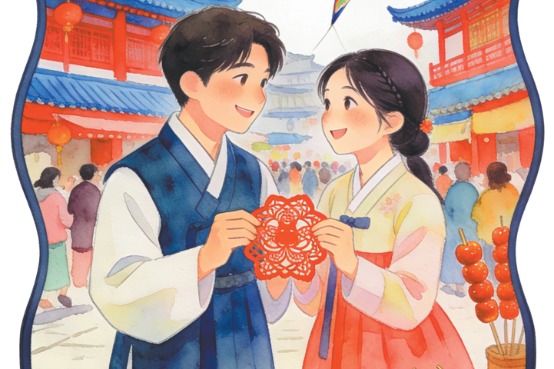
China's cultural heritage and identity is a composition of over 5,000 years of global integration. What is Chinese culture? China has had an incredible history of different countries and cultures coming through from the Silk Road, from Mongolia. It's been constantly reinventing itself. China is the original melting pot of cultures. There are so many motifs of Chinese culture, architecture and design. I could look at that, I could say, "that came from Mongolia, that came from Central Asia, that came from Nepal." Likewise, Chinese ideas were going out. Actually, the Silk Road was the beginning of global interconnectivity. And through that idea, Chinese ideas were going global, and global ideas were coming in.
Through four decades of economic opening and global connectivity, economic prosperity has come to China. Starvation is no longer a problem in most Chinese cities, but Chinese people are not happier than before. With the accumulation of wealth, their anxiety level rises instead. It's not just China, but all countries of the world. You need materialism, but materialism alone is not enough. You also need spirituality, you need culture. Way back when the reforms began, in the 80s, Deng Xiaoping talked about something. He said that you need material civilization, you also need spiritual civilization. Right now, many Chinese have acquired a degree of comfort, and many have acquired wealth.
But at the same time, they also are searching for spirituality to understand who they are, where they came from, where we all are going to go. In that respect, you see a rise here in all kinds of interest in Buddhism, Daoism, many different aspects of meditation, yoga, kung fu, tai chi - all of these now are integral parts of the Chinese lifestyle. It’s a very different China than when I came here in 1981, where people were trying to figure out how to eat and how to survive. It’s now a China that is looking at its own spirituality evolving further its own values, and a country that is looking at the future in many ways that a lot of other countries are not even thinking about yet.
In the past 40 years, China's economic achievements have transformed the society materially. But has material prosperity brought social harmony and happiness? In many ways, economic growth has challenged Chinese culture. However, if harnessed in the right way, it can support cultural sustainable development.
Culture begins with language, and it also begins with architecture. One of the phenomena that China has faced in the past 40 years of development is a lot of the old city’s heritage sites have been lost. Environment and natural environment also have been lost with high growth and with fast-tracked development. However, the leadership today recognized the importance of heritage culture and environment, and is trying to preserve and bring them back.
More and more cities are trying to restore their old heritage sites, build their buildings, bring back their heritages and their cultures. There's a movement to revive Chinese national studies, which is about Chinese culture, and of course, with the Ecological Civilization policy, enormous emphasis on environmental preservation, repairing the environment, and adopting forms of renewable green energy, green finance for a future that can be sustainable, both in terms of environmental sustainability, and cultural heritage sustainability.
We have to understand that culture is something that is essential to a people's development. If people understand the roots of their heritage and culture, if the roots of the tree are deep, regardless of how big the storm, that tree will not fall; however, if the roots are shallow, the wind will knock the tree down.
The author is founding director of Himalayan Consensus and an international research fellow at the Center for China and Globalization.
The opinions expressed here are those of the writer and do not represent the views of China Daily and China Daily website.