High-tech zones advance in innovation







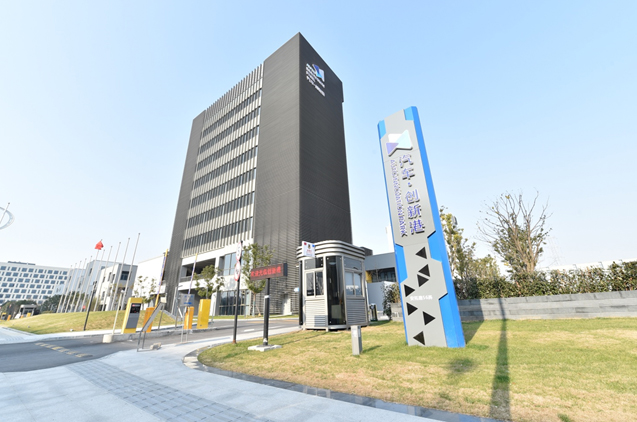
Improvement needed in attracting foreign talent, investment, report says
China's National High-Tech Industrial Development Zones, the backbone of the country's high-technology industries, have made major progress in innovation capabilities since 2010. But their ability to attract quality foreign talent and venture capital investment still lags that of Silicon Valley, according to a report published on Tuesday.
The innovation index, a figure that measures and evaluates the innovation capability of the zones, has risen from 100 points in 2010 to 233 points in 2017, according to a 2018 evaluation report. The report has been published annually since 2013 by the Institutes of Science and Development of the Chinese Academy of Sciences.
The problem of unbalanced development among high-tech zones has also greatly improved, the report added. High-tech zones from central and western parts of China saw strong growth in their overall innovation capabilities last year. This was in part thanks to major cities in those regions working closely with the zones to unleash their innovation potential.
The index is based on five main criteria for innovation: resources, start-up environment, company activity and performance, international cooperation and the effects on development.
This year marks the 30th anniversary of China's high-tech development zones, which added 12 new zones this year to reach a total of 169 as of October, said Wang Shengguang, director of the research center on China's high-tech zones at the academy's Institutes of Science and Development.
"After 30 years, the high-tech zones have successfully fulfilled their mission of pioneering China's innovation systems, driving socioeconomic development, leading high-tech industries' growth and radiating their positive influence to the nation and the world," he said.
In 2017, the 156 national high-tech zones that provided data reported a total of 9.51 trillion yuan ($1.38 trillion) in goods and services, representing 11.5 percent of the national GDP last year, the report said. These zones also yielded a net profit of around 2.14 trillion yuan, and exported goods and services valued at $478 billion last year.
Some of the zones' most profitable high-tech fields included electronics and telecommunications, biomedicine, mechatronics, new materials, new and efficient energy, environmental protection and space technologies. Mechatronics is the combination of mechanical engineering, computing and electronics.
The national high-tech zones are also heavyweights in research and development. Companies from those 156 zones spent more than 616 billion yuan in R&D last year, making up around 35 percent of the total R&D spending in China.
In 2017, there were 2,922 national research institutes, including 341 important "state-key laboratories", that were either located in or worked with the national high-tech zones. This meant two-thirds of the nation's state-level research institutes were linked to high-tech zones.
But in comparison to Silicon Valley, the world's leading innovation ecosystem, China's high-tech zones are still behind in terms of attracting quality foreign talent and venture capital investments, Wang said.
In 2016, over 37.8 percent of the population of the Silicon Valley area was foreign born, with many working in computer science, engineering, medicine and other high-tech sectors, the report said. Only around 1 percent of personnel working in China's high-tech zones were foreigners.
As for venture capital, Silicon Valley received $14 billion worth of investment last year. The national high-tech zones received 37.4 billion yuan last year, which was just around 39 percent of the amount Silicon Valley had.
"We still need more effort to transform high-tech zones into a fertile ground for attracting and nurturing quality talent," Wang said. "At the same time, we need to create innovative mechanisms to facilitate the commercialization of knowledge and scientific output."


- 6.6-magnitude quake hits waters off Taiwan: CENC
- China seeks public feedback on draft rules for anthropomorphic AI services
- China's top legislature concludes standing committee session
- China adopts revised Civil Aviation Law
- China launches satellite to aid in early extreme weather detection
- Report on mining accident that killed 6 suggests accountability for 42 individuals