


Imperial Tombs of the Ming and Qing dynasties








Category of site: Cultural Site
Brief introduction
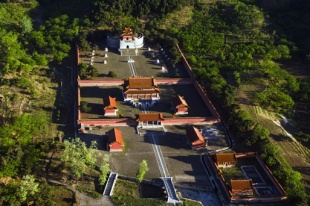
Built in 17th century, Imperial Tombs of the Ming and Qing dynasties includes three imperial tombs – the Yongling, the Fuling and the Zhaoling Tombs. They are natural sites modified by human influence, which were carefully chosen according to the principles of geomancy (feng shui) to house numerous buildings of traditional architectural design and decoration. The Ming and Qing imperial tombs are distributed in Beijing, and in Hebei, Liaoning, Anhui, Jiangsu and Hubei provinces. As some of the most important constructions of the nation at that time, they were often built under the personal inspection of the emperors themselves, and always designed with the closest attention and highest skills. Most of the mausoleums are still well preserved.
The three tombs were respectively added to the World Heritage List in 2000, 2003 and 2004.
Cultural heritage
A showcase of the highest level of architectural and design concepts in Ming and Qing China (1368-1911); a dazzling illustration of the beliefs, world view, moral values and ideas about life and death of Chinese feudal society for thousands of years.
Every year at the Ming Tombs there were three large sacrificial ceremonies and four small ones. Sometimes officials hosted the ceremonies, and sometimes the emperor himself. Temporary palaces were built in the vicinity for these emperors.
Architecture
The 13 Ming and Qing imperial tombs in Beijing are basically similar in appearance. Cloistered in ancient cypress and pine groves, they were usually built in oblong shape, surrounded by red walls and covered with yellow tiles. The whole area is enclosed by a majestic wall built in accordance with the hilly topography, with the main entrance spanning two hills, named Dragon and Tiger. A large symbolic gateway, the largest one in ancient China, was erected at the entrance, with a height of 14 meters and width of 29 meters. Five gates and six columns leading to the tomb area are made of white marble, through which one is directed along a road lined with 18 pairs of stone figures (24 animal figures and 12 human ones), stele pavilions, gates and bridges. Among the 13 tombs, the Chang, Yong and Ding tombs are the grandest.
The Ming and Qing Tombs are outstanding examples of the principles of geomancy (Fengshui) in China, as well as of traditional architecture.
Burial and memorial ceremonies
The funeral of an emperor was lengthy and solemn. The coffin was kept in the Palace until the day before the funeral, when the funeral vehicles and mourners were arranged in special dispositions outside the Wumen Gate of the Forbidden City. The crown prince, the deceased emperor's wives, the high-ranking officials and other relevant mourners attended a farewell ceremony in the mourning hall. After that, the coffin would be covered with a pall, and carried to the hearse. It was then accompanied by all the mourners to the Wumen Gate, where the crown prince alone was to halt and turn back. The coffin was carried through the Wumen Gate to the Duanmen Gate, out of the Deshengmen Gate and all the way to the Tianshoushan Tombs. Memorial altars were set up beforehand along this way, where hereditary nobles, officials, members of the imperial family, ministers, monks, Taoist priests and local squires saw the deceased emperor off and held sacrifices for him. The crown prince, meanwhile, held an ancestral worship sacrifice in the Tai Temple.
When the coffin arrived at the mausoleum, it would still have to wait for a calculated auspicious time to be moved into the Underground Palace. Only when all the burial objects were placed in the Underground Palace together with the coffin and the gate of the Underground Palace was closed was the whole funeral finished.