



Shopping: Brick and mortar still matters







Shopping malls rise
The department store industry in Shanghai enjoyed steady growth until the end of the 20th century when it was buoyed by national initiatives such as the Shanghai Urban Master Plan which resulted in rapid urbanization.
"Most residents preferred to stay around the central Huangpu district because the suburban areas did not have much in the way of amenities. But people were gradually able to live across the city because of the improvement in living conditions," says Wang Xudong, a Shanghai native.
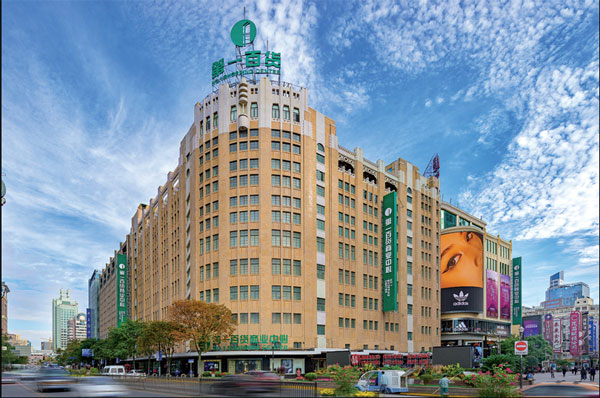
To serve the population of these newly urbanized areas, massive shopping malls, rather than department stores, were added to the landscape. These facilities, such as the Super Grand Mall in Pudong New Area and Grand Gateway 66 in Xuhui district, combined social, commercial and recreational offerings under one roof. Traditional department stores in central Shanghai had, by comparison, become one-dimensional.
By 1999, business zones in the city hit 20 million square meters, almost five times what it was in 1990, according to Chao Gangling, business school professor at Shanghai University of Finance and Economics. However, the number of small and midrange department stores had decreased by more than a half. This situation was exacerbated in the mid-2000s when e-commerce emerged.
"It's convenient when shopping is simply about making a few clicks with a mouse. And then there's also the allure of discount coupons and delivery service," says Chao, who is also the vice-chairman of the Shanghai Business Economics Society.
According to the National Bureau of Statistics, the overall size of the nation's online retail sector was 7.18 trillion yuan ($1.04 trillion; 911.7 billion euros; £817.6 billion) last year, a rise of about 32 percent from the previous year.
But despite talk about the extinction of brick and mortar retail businesses in the face of e-commerce, Chao believes there will always be a place for offline shopping.
"The unique aspect of a mall is the experience you get from spending time dining, playing or even learning. This experience is something e-commerce cannot offer," he says. "There is no need to fight against e-commerce. It's about giving full play to offline advantages."
The current retail trend supports this sentiment. Old department stores are being transformed into new malls that offer a blend of retail and experiential offerings.
For example, the former Orient Shopping Center along Huaihai Road was turned into a mall that features the world's largest flagship stores for Under Armour and Muji.
The Pacific Department Store on the same road, which was shut down in 2016, has been transformed into the new Xintiandi Plaza which is slated to open at the end of this year. The new space will feature a host of top global brands, popular restaurants, and an area dedicated to art shows and technology exhibitions. There will also be two rooftop outdoor gardens overlooking the bustling area.
Some branches of traditional stores in Shanghai, like Printemps Department Store, New World Department Store and Orient Shopping Center have also sought to stay relevant in recent times by introducing new spaces for public events, dining, education and entertainment.
Shanghai announced a three-year plan earlier this year to build the four brands of the city - services, manufacturing, shopping and culture - to become a shopping hub that will offer the world's trendiest and most value-for-money products.
The city is also planning to create two world-class shopping streets, 10 local first-class core business districts, and 20 special shopping districts by 2020.
The revitalization of 50 brands with Shanghai characteristics and 50 time-honored brands is also a major part of the project. Traditional stores that are classic icons of Shanghai society will take the lead in this transformation process, Chao says.




















