Nation moves to limit use of capital punishment







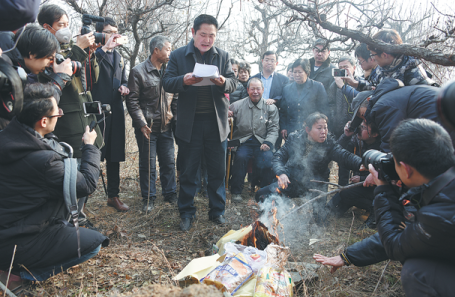
Tougher penalties
In the 1980s and early '90s, the government believed that harsh penalties would act as a deterrent and maintain public security.
According to Hu Yunteng, a senior judge at the Supreme People's Court, from 1982 to 1996, rural people flooded into China's big cities, seeking job opportunities in the rapidly diversifying market. However, the nation's urban management systems could not keep pace with the changes, let alone solve them.
The changes also resulted in a rise in criminal activity, especially financial offenses, that harmed public security and threw the fledgling market into disarray. In response, the government tried to solve the problem by adding more than 100 new crimes to the statute books, imposing harsher punishments and extending the death penalty to 40 more crimes, he said.
In 1983, sentences ranging from five years to death-often referred to as "tougher penalties"-accounted for about 50 percent of convictions. Meanwhile, provincial-level courts had the right to impose the death penalty, especially when ruling on crimes such as intentional homicide (the crime of murder does not exist in Chinese law), rape, robbery, bombing and drug-related offenses, Hu said.
"At the time, the judicial system preferred tougher punishments and placed great emphasis on efficient solving of cases, so we were not strict enough in ensuring that evidence was relevant and correctly obtained," he said.
Control and prudence
Economic growth accelerated after China further opened up in the late 1990s, causing the number of robberies and other crimes to fall and allowing rapid improvements in public security.
The developments helped China to better integrate with the outside world and also prompted changes in the use of the death penalty.
Mo, the law professor, regards the 2007 decision to give the Supreme People's Court the final say on executions as a major contribution to limiting the use of capital punishment.
"It was a key step in catering to the international trend for the prudent application of capital punishment," she said, adding that the changes were also reflected in legislation.
The changes included amendments to the Criminal Law in 2011 which ensured that 13 nonviolent or economic crimes, such as negotiable instruments fraud, were no longer subject to the death penalty. That reduced the overall number to 55.
Moreover, under the amended law, it was no longer permissible to execute offenders age 75 and older.
In 2015, the Standing Committee of the National People's Congress, the top legislative body, abolished the death penalty for nine more crimes-including five related to the financial sector, such as illegal fundraising-cutting the number to 46.
"The death penalty for financial misconduct was not equitable to the crime. After all, life is the most precious thing, and capital punishment is irreversible," said Xu Hao, a criminal lawyer at the Jingshi Law Firm in Beijing.
"With China's rapid economic development, more people have better lives. Before, a child might starve to death if its family's savings or grain were stolen. But nowadays few people face such a situation if their property is damaged."
Hu, from the top court, praised the reduction in the use of capital punishment, saying "scientific penalties" better protect human rights. In 2005, for example, the so-called tougher penalties accounted for just 18 percent of all sentences handed down. "It was an improvement in the rule of law," he added.
Zhou, the law professor, was also in favor of greater leniency. "It isn't possible to reverse an execution if errors are discovered in investigations or trials," he said. "Severe punishments do not act as a deterrent, let alone help to build a safer society."





- Lantern Festival lights bring the Dunhuang grottoes to life
- China's 2026 Spring Festival travel rush to begin
- Knocking on the stone-framed door
- Shanghai Science and Technology Museum to reopen soon
- Shanghai celebrates Spring Festival with intl students
- Pegasus fondant artwork ushers in Year of the Horse in Shanghai