



Experts: Case of gene-edited twins exposes loopholes







They say laws are needed to provide better control of emerging field
The controversy over gene-edited twins has heightened the urgent need for specific laws regulating assisted reproductive technologies, experts said on Tuesday.
Zhai Xiaomei, a professor and executive director of the Center for Bioethics of the Chinese Academy of Medical Sciences and Peking Union Medical College, said the country's regulatory framework in the field mainly consists of guidelines issued by government departments.
Relevant laws, with clear-cut penalties, remain absent. Stipulations in guidelines do not carry the power to impose legal penalties when people break ethical rules, Zhai said, adding that the loophole must be plugged by introducing specific laws that will deter wrongdoing and penalize violators.
Zhai is in Hong Kong attending the second International Summit on Human Genome Editing, which kicked off on Tuesday. She is a member of the summit's organizing committee.
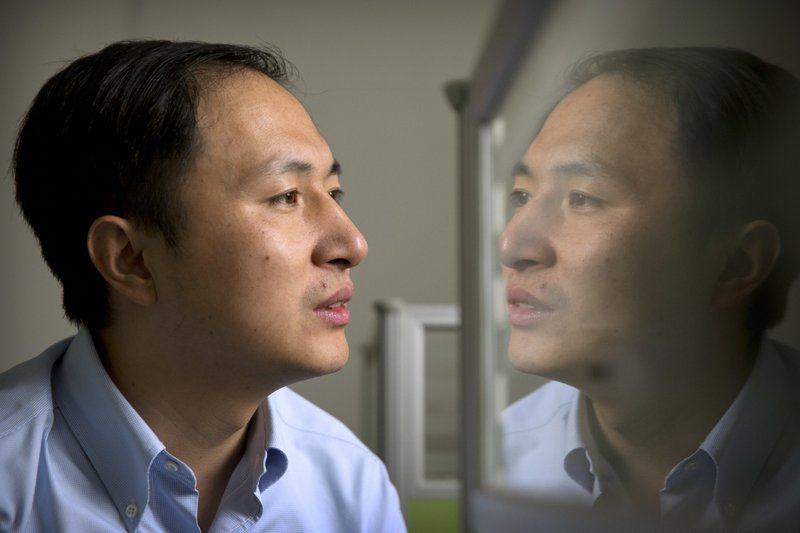
She made the remarks as shock waves reverberated around the world after Monday's claims by Chinese biological researcher He Jiankui related to the birth of a pair of gene-edited twin girls. The announcement triggered outcries from the public and the academia over research ethics.
Qiu Renzong, a professor at the Chinese Academy of Social Sciences, said He's research was unethical and contravened relevant regulations issued by the Ministry of Science and Technology and the previous Ministry of Health - now the National Health Commission. The regulations stipulate that no genetically modified embryo may be implanted into the reproductive organs of a human or animal.
Given the current state of the law, however, what the researcher did was not against the law, according to Qiu, who is also in Hong Kong for the genome summit.
Another serious question, Zhai said, involves the mechanism by which an ethics review board was set up and how it gave He the green light to carry out his research.
It was widely reported that the review board for He's research was from a private hospital in Shenzhen, which denied having done so.
It would be inappropriate for a hospital-level review board to grant authority to conduct an ethics review of gene-editing, Zhai said, adding that a national-level review board should be in place to examine any experiment on genes and embryos.
However, some scientists have also cautioned that overregulation may risk slowing down gene research and related technology development in China. Wei Wensheng, a researcher in Peking University's College of Life Sciences who is also attending the summit, said he worried there might be a backlash calling for a ban on the application of such technologies in China.
Wei said gene editing is an effective tool in treating serious genetic diseases, but He's case has frightened the public, so there could be repercussions.
"It is completely unnecessary to edit the genes for HIV prevention. There are other alternatives that have proved far safer than gene editing to achieve the goal," said Wei, who thought what He did was for fame and money, not for academic improvement.
Qiu suggested that genome editing should meet a set of preconditions, including preclinical trials - nonhuman animal research in particular - and basic research to improve genome editing techniques.
Qiu urged relevant societies such as the Chinese Medical Association and Chinese Society for Genetics and Medical Genetics to develop ethical guidelines.
For China's National Health Commission, Qiu suggested it develop specific regulations on applying genome editing in human reproduction, establish a licensing system, conduct double ethics reviews both by institutions and peers and setting up a protocol to examine and assess the results of any institutional review.





- China's Global Governance Initiative receives positive feedback at forum
- China's Xizang sees steady tourism growth in 2025
- First-of-its-kind pearl auction held utilizing Hainan FTP
- Agarwood exhibition steeps Shanghai museum in fragrance
- The Fujian Coast Guard conducts regular law enforcement patrol in the waters near Jinmen
- IP protection for new fields to improve














