
<tt id="6hsgl"><pre id="6hsgl"><pre id="6hsgl"></pre></pre></tt>
          <nav id="6hsgl"><th id="6hsgl"></th></nav>
          国产免费网站看v片元遮挡,一亚洲一区二区中文字幕,波多野结衣一区二区免费视频,天天色综网,久久综合给合久久狠狠狠,男人的天堂av一二三区,午夜福利看片在线观看,亚洲中文字幕在线无码一区二区
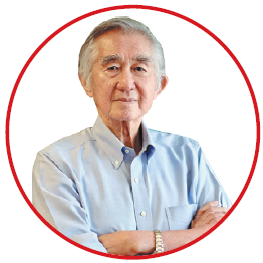
          Liu Thai Ker
          Urban planning adviser
          BORN:

          Singapore, Feb 23, 1938

          EDUCATION:

          1962: Bachelor of architecture, University of New South Wales

          1965: Master's in city planning, Yale University

          1995: Doctor of science (honorary), University of New South Wales

          CAREER:

          1969-89: Chief architect and CEO, Housing and Development Board of Singapore

          1989-92: Chief planner and CEO, Urban Redevelopment Authority of Singapore

          1996-2005: Chairman, National Arts Council of Singapore

          2000-09: Chairman, Singapore Tyler Print Institute

          1992-2017: Senior director, RSP Architects Planners and Engineers

          2008-present: Founding chairman, advisory board of the Centre for Livable Cities

          2017-present: Chairman, Morrow Architects& Planners

          AWARDS:

          2001: Medal of the City of Paris, France

          2014: Business China Excellence Award

          2015: Singapore Institute of Planners' Distinguished Lifetime Achievement Award

          MAJOR PROJECTS IN CHINA:

          1997: Fuzhou Changle International Airport, Fujian province, 120,000 square meters

          2002: Huafa Xincheng, Zhuhai, Guangdong province, 450,000 sq m

          2011: Weifang Cultural Center, Shandong province, 294,000 sq m

          2011: Guilin Watermark Lijiang Residential Development, Guangxi Zhuang autonomous region, 116,000 sq m

          AWARDS FROM CHINESE AUTHORITIES:

          2011: China Construction Engineering Luban Award for Weifang Workers' Hall and Youth Hall

          2015: Jinan Wenbo CBD Planning Award

          2016: Weifang Planning Award

          The man who helped design China's urban landscape

          Since meeting with Deng Xiaoping in 1978, Singaporean has helped plan nearly 50 cities nationwide
          Low Shi Ping in Singapore
          A model of the Fujian-Singapore Friendship Medical Service Center, designed by Liu, is unveiled in Xiamen, Fujian province, on Aug 8, 2009. The center was opened in 2011. [YANG FUSHAN/CHINA NEWS SERVICE]

          A lot of convincing

          That the city in question was Fuzhou was probably no coincidence. The ethnic Chinese living in Singapore mostly had roots in southern Chinese provinces like Guangdong and Fujian.

          "It was probably to encourage them to invest in China, too," Liu said.

          On a more personal note, Liu's mother hailed from Fuzhou, which further compelled him to take up the commission.

          "As a child, I heard a lot of stories about the city, so I was comfortable," he said. "For example, Fuzhou has the nicknames of Rongcheng (banyan tree city) and Sanshan (three hills). In fact, I went to Sanshan Primary School, established by the Fuzhou people living in Singapore."

          One of the first things he did in Fuzhou was to look for the three hills. When he could not find them, he realized it was because there were no roads leading to the hills, and they were obstructed by buildings.

          "I created roads around the hills so they can be seen more easily," he said.

          Another cause he championed was the preservation of the city's historical buildings. The most famous area is Sanfangqixiang (three lanes, seven alleys), which had been home to the literati, government officials and the wealthy upper class. However, rather than preserve the area, the local authorities were determined to raze it to the ground.

          "Those were beautiful buildings with unique styles that you don't see elsewhere in China," Liu said. "It took a lot of convincing not to demolish them."

          He found himself repeating the same arguments when it came to the Minjiang River that runs through the city. Although it was filled with sewage, Liu could see its potential.

          "They protested, but I forced them to select a site to put a sewage treatment plant to treat the sewage so the river would become clean," he said.

          In the early 1990s, toward the end of Liu's work on the Fuzhou master plan, Xi Jinping, now president of China, was appointed Party secretary of Fuzhou.

          Liu met with Xi to brief him on his plans for the city. Later, he was asked to design the Fuzhou Changle International Airport. "I said no because I had never planned an airport," Liu recalled.

          A few months later, Xi visited Singapore and asked to see Liu privately, and again he broached the subject. "He said he appreciated two things about me: First, the timely delivery of the Fuzhou master plan, and second, its good quality."

          Xi said if Liu could do that, then he was confident Liu could do the same for the airport. In the end, Liu accepted and had the Changi Airport Group help out.

          An important learning point was not to underestimate the rate of urbanization in China. While Liu consciously planned for the long-term growth of the city, it developed much faster than anticipated.

          "The change of China is really dramatic," he said. "In those days, when I planned the area, I thought it would last a long time. But actually the rate of urbanization has moved much faster than that."

          Last year, the Fuzhou government knocked on his door again to ask him to plan greater Fuzhou, which will stretch all the way to the coast. He is now working on the master plan.

          Back in the '80s, before he finished planning Fuzhou, Liu received his second commission - for Xiamen Island, also in Fujian. Again, the thirst for progress drove the authorities to want to pull down historic buildings to replace them with skyscrapers.

          Liu said: "I told them if you insist on pulling down these buildings, it's like throwing the gold mine of tourism into the sea. Do you really want to do that?"

          Today, visitors to Xiamen Island can see a neighborhood of heritage shophouses that Liu saved from demolition. They can also make a stop at Yuandang Lake, which Liu said was a "cesspit of sewage" when he first visited.

          The authorities had insisted on breaking the dam that divided the lake and the sea, and let the water flow out.

          "I told them it was one of the highlights of the city and that they were not allowed to," Liu said. "One day in a meeting, I sat down and said I'm not going to dismiss the meeting until we find the solution for a sewage treatment plant to treat the lake - so we talked until we did."

          For many years now, Xiamen Island has been rated one of the most livable areas in China, Liu said with pride.

          "Old habits die hard," he said. "You needed to give a lot of explanations to convince them. But I sensed they were all patriotic about rebuilding China, so if you told them it would be good for the city, at the end, they would accept."

          Another noteworthy project was the master plan for Ningbo, Zhejiang province, which Liu did after he left the Singapore civil service to join RSP Architects Planners and Engineers as senior director.

          To show just how important the project was to the Singapore government, the citystate's founding prime minister, Lee Kuan Yew, joined in the final presentation of the concept to the Ningbo authorities.

          Liu remembers wanting to plan the area around the port.

          "It took me three and a half hours to drive there," he said. "Ten years later, when I returned to the city and asked them to show it to me, it took me 35 minutes to drive to the port. That's the power of planning."


          Liu Thai Ker
          Urban planning adviser
          BORN:

          Singapore, Feb 23, 1938

          EDUCATION:

          1962: Bachelor of architecture, University of New South Wales

          1965: Master's in city planning, Yale University

          1995: Doctor of science (honorary), University of New South Wales

          CAREER:

          1969-89: Chief architect and CEO, Housing and Development Board of Singapore

          1989-92: Chief planner and CEO, Urban Redevelopment Authority of Singapore

          1996-2005: Chairman, National Arts Council of Singapore

          2000-09: Chairman, Singapore Tyler Print Institute

          1992-2017: Senior director, RSP Architects Planners and Engineers

          2008-present: Founding chairman, advisory board of the Centre for Livable Cities

          2017-present: Chairman, Morrow Architects& Planners

          AWARDS:

          2001: Medal of the City of Paris, France

          2014: Business China Excellence Award

          2015: Singapore Institute of Planners' Distinguished Lifetime Achievement Award

          MAJOR PROJECTS IN CHINA:

          1997: Fuzhou Changle International Airport, Fujian province, 120,000 square meters

          2002: Huafa Xincheng, Zhuhai, Guangdong province, 450,000 sq m

          2011: Weifang Cultural Center, Shandong province, 294,000 sq m

          2011: Guilin Watermark Lijiang Residential Development, Guangxi Zhuang autonomous region, 116,000 sq m

          AWARDS FROM CHINESE AUTHORITIES:

          2011: China Construction Engineering Luban Award for Weifang Workers' Hall and Youth Hall

          2015: Jinan Wenbo CBD Planning Award

          2016: Weifang Planning Award

          The man who helped design China's urban landscape

          Since meeting with Deng Xiaoping in 1978, Singaporean has helped plan nearly 50 cities nationwide
          Low Shi Ping in Singapore
          A model of the Fujian-Singapore Friendship Medical Service Center, designed by Liu, is unveiled in Xiamen, Fujian province, on Aug 8, 2009. The center was opened in 2011. [YANG FUSHAN/CHINA NEWS SERVICE]

          A lot of convincing

          That the city in question was Fuzhou was probably no coincidence. The ethnic Chinese living in Singapore mostly had roots in southern Chinese provinces like Guangdong and Fujian.

          "It was probably to encourage them to invest in China, too," Liu said.

          On a more personal note, Liu's mother hailed from Fuzhou, which further compelled him to take up the commission.

          "As a child, I heard a lot of stories about the city, so I was comfortable," he said. "For example, Fuzhou has the nicknames of Rongcheng (banyan tree city) and Sanshan (three hills). In fact, I went to Sanshan Primary School, established by the Fuzhou people living in Singapore."

          One of the first things he did in Fuzhou was to look for the three hills. When he could not find them, he realized it was because there were no roads leading to the hills, and they were obstructed by buildings.

          "I created roads around the hills so they can be seen more easily," he said.

          Another cause he championed was the preservation of the city's historical buildings. The most famous area is Sanfangqixiang (three lanes, seven alleys), which had been home to the literati, government officials and the wealthy upper class. However, rather than preserve the area, the local authorities were determined to raze it to the ground.

          "Those were beautiful buildings with unique styles that you don't see elsewhere in China," Liu said. "It took a lot of convincing not to demolish them."

          He found himself repeating the same arguments when it came to the Minjiang River that runs through the city. Although it was filled with sewage, Liu could see its potential.

          "They protested, but I forced them to select a site to put a sewage treatment plant to treat the sewage so the river would become clean," he said.

          In the early 1990s, toward the end of Liu's work on the Fuzhou master plan, Xi Jinping, now president of China, was appointed Party secretary of Fuzhou.

          Liu met with Xi to brief him on his plans for the city. Later, he was asked to design the Fuzhou Changle International Airport. "I said no because I had never planned an airport," Liu recalled.

          A few months later, Xi visited Singapore and asked to see Liu privately, and again he broached the subject. "He said he appreciated two things about me: First, the timely delivery of the Fuzhou master plan, and second, its good quality."

          Xi said if Liu could do that, then he was confident Liu could do the same for the airport. In the end, Liu accepted and had the Changi Airport Group help out.

          An important learning point was not to underestimate the rate of urbanization in China. While Liu consciously planned for the long-term growth of the city, it developed much faster than anticipated.

          "The change of China is really dramatic," he said. "In those days, when I planned the area, I thought it would last a long time. But actually the rate of urbanization has moved much faster than that."

          Last year, the Fuzhou government knocked on his door again to ask him to plan greater Fuzhou, which will stretch all the way to the coast. He is now working on the master plan.

          Back in the '80s, before he finished planning Fuzhou, Liu received his second commission - for Xiamen Island, also in Fujian. Again, the thirst for progress drove the authorities to want to pull down historic buildings to replace them with skyscrapers.

          Liu said: "I told them if you insist on pulling down these buildings, it's like throwing the gold mine of tourism into the sea. Do you really want to do that?"

          Today, visitors to Xiamen Island can see a neighborhood of heritage shophouses that Liu saved from demolition. They can also make a stop at Yuandang Lake, which Liu said was a "cesspit of sewage" when he first visited.

          The authorities had insisted on breaking the dam that divided the lake and the sea, and let the water flow out.

          "I told them it was one of the highlights of the city and that they were not allowed to," Liu said. "One day in a meeting, I sat down and said I'm not going to dismiss the meeting until we find the solution for a sewage treatment plant to treat the lake - so we talked until we did."

          For many years now, Xiamen Island has been rated one of the most livable areas in China, Liu said with pride.

          "Old habits die hard," he said. "You needed to give a lot of explanations to convince them. But I sensed they were all patriotic about rebuilding China, so if you told them it would be good for the city, at the end, they would accept."

          Another noteworthy project was the master plan for Ningbo, Zhejiang province, which Liu did after he left the Singapore civil service to join RSP Architects Planners and Engineers as senior director.

          To show just how important the project was to the Singapore government, the citystate's founding prime minister, Lee Kuan Yew, joined in the final presentation of the concept to the Ningbo authorities.

          Liu remembers wanting to plan the area around the port.

          "It took me three and a half hours to drive there," he said. "Ten years later, when I returned to the city and asked them to show it to me, it took me 35 minutes to drive to the port. That's the power of planning."

          主站蜘蛛池模板: 日本中文字幕有码在线视频| 亚洲日本乱码熟妇色精品| 亚洲av永久无码精品水牛影视| 国产成人一区二区三区在线观看| 中文人妻AV高清一区二区| 久久久噜噜噜久久中文福利| 无码中文字幕加勒比高清| 天堂最新版在线| 视频一区二区不中文字幕| 国产仑乱无码内谢| 国产精品三级黄色小视频| 和艳妇在厨房好爽在线观看| 国产日韩精品秘 入口| 国产超碰无码最新上传| 国语偷拍视频一区二区三区| 人妻少妇无码精品专区| 人成午夜免费视频无码| 亚洲大尺度一区二区三区| 无码福利写真片视频在线播放 | 国产精品色哟哟在线观看| 亚洲精品二区在线播放| 性欧美牲交在线视频| 国产成人av大片大片| 日韩乱码人妻无码中文字幕| 国产av一区二区午夜福利| 深夜福利资源在线观看| 乱色熟女综合一区二区三区| 国产精品尤物午夜福利| 一级做a爰片久久毛片**| 日韩成人午夜精品久久高潮| 欧美寡妇xxxx黑人猛交| 国产人成精品一区二区三| 亚洲午夜伦费影视在线观看| 人妻出轨av中文字幕| 91蜜臀国产自产在线观看| 亚洲区1区3区4区中文字幕码| 亚洲电影天堂在线国语对白| 日韩中文字幕不卡网站| 熟女系列丰满熟妇AV| 精品国产乱码久久久久久1区2区| 中文有无人妻vs无码人妻激烈|