
<tt id="6hsgl"><pre id="6hsgl"><pre id="6hsgl"></pre></pre></tt>
          <nav id="6hsgl"><th id="6hsgl"></th></nav>
          国产免费网站看v片元遮挡,一亚洲一区二区中文字幕,波多野结衣一区二区免费视频,天天色综网,久久综合给合久久狠狠狠,男人的天堂av一二三区,午夜福利看片在线观看,亚洲中文字幕在线无码一区二区
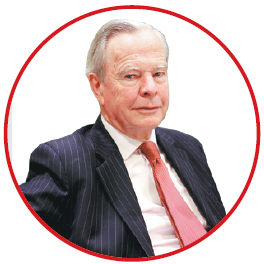
          Hugh Davies
          Former commercial counselor at the British embassy in Beijing
          BORN

          India

          EDUCATION

          1955-60: Rugby School, A levels

          1961-64: University of Cambridge, BA in history

          CAREER

          1965: Joined Foreign and Commonwealth Office

          1966: Sent to Hong Kong to study Mandarin

          1968: Appointed second secretary to the British charge d'affaires in Beijing

          1971: Returned to the Foreign Office in London

          1984-86: Commercial counselor at the British embassy in Beijing

          1993-97: Led British team in Sino-British Joint Liaison Group during last four years of negotiations for handover of Hong Kong

          1998: Took early retirement from diplomatic service

          1999-2005: Executive director of Prudential Corp Asia

          2005-06: Joined Old Mutual to help its China expansion

          1999-2016: Board member of China Britain Business Association

          Four-decade makeover just the beginning
          China will become the most important country in the world in next 40 years, says former British diplomat who experienced Beijing in the 1980s
          Cecily Liu in London
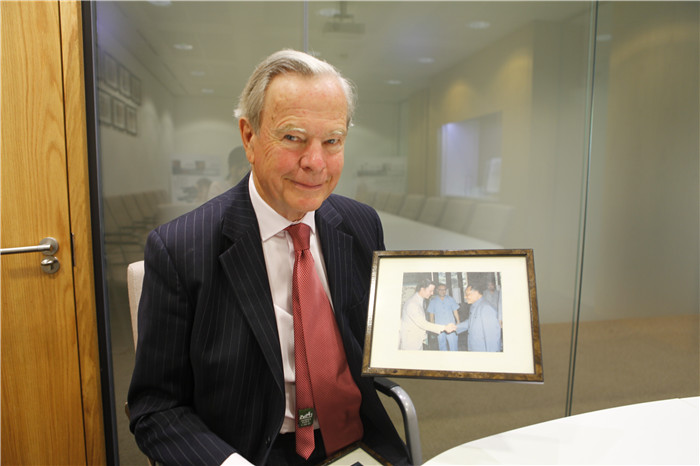
          Hugh Davies. [By Cecily Liu]

          Hugh Davies fondly remembers the time he introduced a British publisher to Chinese leader Deng Xiaoping in 1985, when Davies was commercial counselor at the British embassy in Beijing.

          Deng asked the publisher, "When you go back, could you tell them that the Chinese would like to join the Eureka program?"

          Founded in 1985, the program was a European platform for sharing jointly funded research and development projects. China did not end up joining Eureka, but Davies still likes to tell the story to demonstrate Deng's forward-looking attitude.

          "It was extraordinary that the Chinese wanted to join. For me, that was a fine example of how China needs to move forward in working with other countries," said Davies, whose enthusiasm is tangible as he makes observations about China's 40 years of dramatic transformation.

          He said he thinks the next four decades will be even more exciting.

          Davies, who first visited China in 1966, has many insights into how the country has transformed from a planned economy to a market economy thanks to its reform and opening-up policy, which was initiated in 1978.

          The former diplomat said the Chinese government's visionary approach to economic development, combined with the entrepreneurial spirit of the Chinese people, will continue to propel the nation forward.

          "China has a huge population, it has a huge geographical spread, a massive industrial base, huge financial resources, and experiences in both participating in international organizations and also peacekeeping operations," Davies said. "In the next 40 years, China will undoubtedly become the most important country in the world."

          Davies joined the United Kingdom's Foreign Office in 1965 as a university graduate. A year later, he was sent to Hong Kong to study Mandarin. Soon after, in 1968, he traveled to Beijing to work as second secretary to the British charge d'affaires. The UK and China had not formally established ambassadorial relations at the time, but would do so in 1972.

          In 1971, Davies returned to the Foreign Office in London. He would go on to other overseas diplomatic postings but always kept a keen eye on China's development.

          When he returned to Beijing, in 1984, as commercial counselor at the British embassy, the nation was undergoing a dramatic change. The planned economy had made way for the early stages of entrepreneurialism. Markets had popped up, and farmers were selling vegetables and eggs directly to consumers, a novelty at the time.

          "That was the first time. It was a very important step, because a free market had not existed before," Davies said. "Individual Chinese were being encouraged to run their own businesses."

          In addition to produce markets, Chinese were selling blue-and-white porcelain that had been passed down through the generations. Davies and his wife have fond memories of buying such items, which they still treasure.

          "There was one particular market we used to go at the weekend," he said. "We observed Chinese people becoming entrepreneurial."

          What Davies saw on the streets of Beijing was reflected in what was happening at work.

          On the national scale, the Chinese government was following the pattern set by the Four Asian Tigers - importing light industrial machinery and promoting export-led growth as the first steps in a new industrial revolution. The Four Asian Tigers were the continent's first industrialized economies: Hong Kong, Singapore, South Korea and Taiwan.

          Using that economic model, the Chinese mainland effectively became the world's factory, and during the next 40 years, its GDP grew by an average of 9.5 percent a year.

          Within China's fast-industrializing landscape, the domestic market quickly opened up to foreign business.

          Fascinated by his three years in China, at such a critical point in the country's history, Davies was inspired to publish the 2015 book So Peking Personal: 36 Months with Deng Xiaoping, a collection of letters he wrote to his family back home that detail his observations of China beginning the process of reform and opening-up. Although the letters were not originally intended for publication, Davies realized they "provide a rare and very vivid picture of life" in China at that time.

          In 1998, he took early retirement from his diplomatic career, but continued to work with China, spending time as an adviser to British insurance companies Prudential and Old Mutual and helping them plan their strategies for entering China's life-insurance market.

          If Prudential and Old Mutual found their early expansions into China an unknown journey, today's international insurance companies have a much more accessible route. They simply need to establish a presence on Lloyd's of London, the world's oldest insurance market, which established a platform in Shanghai in 2007. The platform already hosts 33 international syndicates, making it Lloyd's largest outside London. Their collective revenue has risen from a few million yuan in 2007 to 2.2 billion yuan ($330 million) last year.

          In addition to his work in the insurance sector, Davies spent 12 months with MG Rover in 2002 and 2003, during the company's attempts to find a Chinese partner. In 2004 and 2005, he carried out research and analysis of China's energy procurement for Middle East Consultancy and the Japan External Trade Organization.

          In addition to advising businesses, he was a board member of the China Britain Business Association between 1999 and 2016.

          He said "mutual benefit" drives the growing collaboration between China and the UK. In addition to trade, the UK's advanced technology sector and the English language remain influential on China and its internationalization, he said.

          Looking to the future, Davies said he would like China to open up further to foreign investment, saying it will help Beijing step into the role of responsible global leader.

          "If China can continue to open, then the international community will feel that China is playing by the rules, and will see China as a good neighbor in the world," he said. "I'm not saying that other countries are doing that well themselves. But China, being such a huge country, has massive responsibilities."


          Hugh Davies
          Former commercial counselor at the British embassy in Beijing
          BORN

          India

          EDUCATION

          1955-60: Rugby School, A levels

          1961-64: University of Cambridge, BA in history

          CAREER

          1965: Joined Foreign and Commonwealth Office

          1966: Sent to Hong Kong to study Mandarin

          1968: Appointed second secretary to the British charge d'affaires in Beijing

          1971: Returned to the Foreign Office in London

          1984-86: Commercial counselor at the British embassy in Beijing

          1993-97: Led British team in Sino-British Joint Liaison Group during last four years of negotiations for handover of Hong Kong

          1998: Took early retirement from diplomatic service

          1999-2005: Executive director of Prudential Corp Asia

          2005-06: Joined Old Mutual to help its China expansion

          1999-2016: Board member of China Britain Business Association

          Four-decade makeover just the beginning

          China will become the most important country in the world in next 40 years, says former British diplomat who experienced Beijing in the 1980s
          Cecily Liu in London
          Hugh Davies. [By Cecily Liu]

          Hugh Davies fondly remembers the time he introduced a British publisher to Chinese leader Deng Xiaoping in 1985, when Davies was commercial counselor at the British embassy in Beijing.

          Deng asked the publisher, "When you go back, could you tell them that the Chinese would like to join the Eureka program?"

          Founded in 1985, the program was a European platform for sharing jointly funded research and development projects. China did not end up joining Eureka, but Davies still likes to tell the story to demonstrate Deng's forward-looking attitude.

          "It was extraordinary that the Chinese wanted to join. For me, that was a fine example of how China needs to move forward in working with other countries," said Davies, whose enthusiasm is tangible as he makes observations about China's 40 years of dramatic transformation.

          He said he thinks the next four decades will be even more exciting.

          Davies, who first visited China in 1966, has many insights into how the country has transformed from a planned economy to a market economy thanks to its reform and opening-up policy, which was initiated in 1978.

          The former diplomat said the Chinese government's visionary approach to economic development, combined with the entrepreneurial spirit of the Chinese people, will continue to propel the nation forward.

          "China has a huge population, it has a huge geographical spread, a massive industrial base, huge financial resources, and experiences in both participating in international organizations and also peacekeeping operations," Davies said. "In the next 40 years, China will undoubtedly become the most important country in the world."

          Davies joined the United Kingdom's Foreign Office in 1965 as a university graduate. A year later, he was sent to Hong Kong to study Mandarin. Soon after, in 1968, he traveled to Beijing to work as second secretary to the British charge d'affaires. The UK and China had not formally established ambassadorial relations at the time, but would do so in 1972.

          In 1971, Davies returned to the Foreign Office in London. He would go on to other overseas diplomatic postings but always kept a keen eye on China's development.

          When he returned to Beijing, in 1984, as commercial counselor at the British embassy, the nation was undergoing a dramatic change. The planned economy had made way for the early stages of entrepreneurialism. Markets had popped up, and farmers were selling vegetables and eggs directly to consumers, a novelty at the time.

          "That was the first time. It was a very important step, because a free market had not existed before," Davies said. "Individual Chinese were being encouraged to run their own businesses."

          In addition to produce markets, Chinese were selling blue-and-white porcelain that had been passed down through the generations. Davies and his wife have fond memories of buying such items, which they still treasure.

          "There was one particular market we used to go at the weekend," he said. "We observed Chinese people becoming entrepreneurial."

          What Davies saw on the streets of Beijing was reflected in what was happening at work.

          On the national scale, the Chinese government was following the pattern set by the Four Asian Tigers - importing light industrial machinery and promoting export-led growth as the first steps in a new industrial revolution. The Four Asian Tigers were the continent's first industrialized economies: Hong Kong, Singapore, South Korea and Taiwan.

          Using that economic model, the Chinese mainland effectively became the world's factory, and during the next 40 years, its GDP grew by an average of 9.5 percent a year.

          Within China's fast-industrializing landscape, the domestic market quickly opened up to foreign business.

          Fascinated by his three years in China, at such a critical point in the country's history, Davies was inspired to publish the 2015 book So Peking Personal: 36 Months with Deng Xiaoping, a collection of letters he wrote to his family back home that detail his observations of China beginning the process of reform and opening-up. Although the letters were not originally intended for publication, Davies realized they "provide a rare and very vivid picture of life" in China at that time.

          In 1998, he took early retirement from his diplomatic career, but continued to work with China, spending time as an adviser to British insurance companies Prudential and Old Mutual and helping them plan their strategies for entering China's life-insurance market.

          If Prudential and Old Mutual found their early expansions into China an unknown journey, today's international insurance companies have a much more accessible route. They simply need to establish a presence on Lloyd's of London, the world's oldest insurance market, which established a platform in Shanghai in 2007. The platform already hosts 33 international syndicates, making it Lloyd's largest outside London. Their collective revenue has risen from a few million yuan in 2007 to 2.2 billion yuan ($330 million) last year.

          In addition to his work in the insurance sector, Davies spent 12 months with MG Rover in 2002 and 2003, during the company's attempts to find a Chinese partner. In 2004 and 2005, he carried out research and analysis of China's energy procurement for Middle East Consultancy and the Japan External Trade Organization.

          In addition to advising businesses, he was a board member of the China Britain Business Association between 1999 and 2016.

          He said "mutual benefit" drives the growing collaboration between China and the UK. In addition to trade, the UK's advanced technology sector and the English language remain influential on China and its internationalization, he said.

          Looking to the future, Davies said he would like China to open up further to foreign investment, saying it will help Beijing step into the role of responsible global leader.

          "If China can continue to open, then the international community will feel that China is playing by the rules, and will see China as a good neighbor in the world," he said. "I'm not saying that other countries are doing that well themselves. But China, being such a huge country, has massive responsibilities."

          主站蜘蛛池模板: 亚洲区欧美区综合区自拍区| 国产精品夫妇激情啪发布| 1024国产基地永久免费| 老司机导航亚洲精品导航| 乳欲人妻办公室奶水 | 无码人妻aⅴ一区二区三区有奶水| 欧美三级韩国三级日本三斤| 成人精品区| 免费大片黄国产在线观看| 国模杨依粉嫩蝴蝶150p| 国产a网站| 最新偷拍一区二区三区| 人人爽人人模人人人爽人人爱| 亚洲av成人精品日韩一区| 色综合久久中文综合久久激情| 国产av无码专区亚洲aⅴ| 老司机精品成人无码AV| 亚洲精品国产三级在线观看 | 亚洲三区在线观看内射后入| 亚州AV无码一区东京热久久| 精品国偷自产在线视频99| a午夜国产一级黄片| 国产精品亚洲综合第一页| 日韩秘 无码一区二区三区 | 少妇高潮水多太爽了动态图| 69天堂人成无码免费视频| 二区中文字幕在线观看| 暖暖视频免费观看| 国内揄拍国内精品对久久| 在线视频不卡在线亚洲| 暖暖 免费 高清 日本 在线观看5| 中文无码乱人伦中文视频在线| 久久久久无码国产精品不卡| 自拍偷在线精品自拍偷免费| 免费无码高H视频在线观看| 人人妻人人澡人人爽| 鲁丝一区鲁丝二区鲁丝三区| AV最新高清无码专区| 在线观看热码亚洲AV每日更新| 国产成人久视频免费| 日韩有码中文字幕av|