

<tt id="6hsgl"><pre id="6hsgl"><pre id="6hsgl"></pre></pre></tt>
          <nav id="6hsgl"><th id="6hsgl"></th></nav>
          国产免费网站看v片元遮挡,一亚洲一区二区中文字幕,波多野结衣一区二区免费视频,天天色综网,久久综合给合久久狠狠狠,男人的天堂av一二三区,午夜福利看片在线观看,亚洲中文字幕在线无码一区二区
          Mark Cramer
          Executive director at Greater Gaston Development Corp
          EDUCATION

          1976: BA, classical civilization, University of North Carolina at Chapel Hill

          1979: Juris doctor, University of Virginia

          CAREER

          1979-81: Associate and partner, Cramer and Lispen, and Cramer and Cramer

          1981-85: Director of congressional relations, deputy general counsel and general counsel, US Government Printing Office

          1985-2003: Vice-president and counsel, Blankenship-Cramer Development Corp

          2007-14: Adjunct faculty, University of North Carolina at Chapel Hill

          2015-present: Executive director, Greater Gaston Development Corp

          US trade mission remembered
          Exchange of students in early days of reform and opening-up part of establishing relationship
          May Zhou in Houston
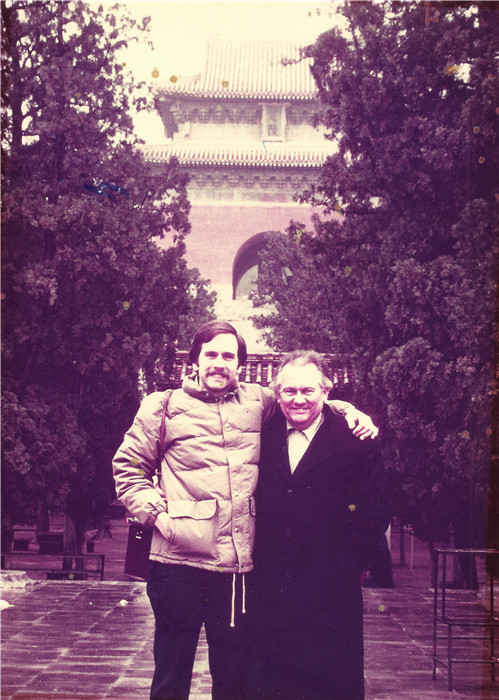
          Mark Cramer (left), a member of the first major US trade mission, visits Beijing in 1979 with his father William. [Photo provided to China Daily]

          Mark Cramer started taking US companies to China almost 40 years ago, when relations between China and the United States were first normalized.

          Now, as executive director at Greater Gaston Development Corp in North Carolina, he pays special attention to engaging Chinese business visitors.

          "I make sure I'm involved in anything Chinese. I'm in touch with the Charlotte Chinese Chamber of Commerce and have made presentations to visiting Chinese delegations about local business opportunities," Cramer said.

          He said Chinese investors have shown increasing interest in North and South Carolina in the past seven or eight years, leading to more Chinese investment in the region. Part of his job involves attracting Chinese investment to Gaston County, a suburb of Charlotte, the largest city in North Carolina.

          Cramer, who visited China as a member of the first major US trade mission in 1979, has been involved in bringing US companies to the country for almost 40 years.

          "In 1977, my father, William Cramer, a former congressman, discussed with Hong Kong businessman Richard Chen about exploring business opportunities in China," Cramer recalled. "They formed a partnership - International Aviation System Group - with a couple of other business people in the US and Hong Kong."

          When then US president Jimmy Carter decided to formalize US-China relations in 1978, Chen suggested it would be a great idea to form a trade delegation to visit China.

          Cramer's father and his Hong Kong business partners formed US China Trade Consultants, based in Washington, for that purpose. "My father was the chairman, I was the vice-president and secretary," Cramer said.

          US CTC led a trade mission of about 32 US companies to China from March 28 to April 12, 1979. It was the first major US trade delegation to travel to China after the normalization of US-China relations on Jan 1 that year.

          "We visited Beijing, Shanghai and Guangzhou. We had people from US electronics, shipping, petroleum and textiles industries," Cramer said.

          It was a first trip to China for most members of the US trade mission, including Cramer.

          "We met with a vice-premier at the Great Hall of the People, the foreign minister and such - all very high-level meetings," he said. "We were very warmly received.

          "There was a very strong desire to open business opportunities to the West, the US in particular. China was just opening up to foreign business in a significant way, eager for foreign investment, technology transfer, and we were involved in what they described as the Four Modernizations policy at that time."

          The visit opened numerous opportunities and the group signed agreements and memorandums of understanding during the trip.

          "We also enjoyed lavish banquets, drank too much Maotai, got to see the Forbidden City, the Ming Tombs, the Great Wall and other cultural sites," Cramer said.

          International Aviation System Group prepared a proposal for air traffic control systems, and the delegation toured the airport traffic control towers in the three cities it visited. "We were told we were the first Western business group ever allowed inside the towers," he said.

          Cramer said the first trip left a positive impression.

          "Many of the very senior officials we met with had actually studied in American or British universities before the war and were very fluent in English, and happy that commercial and diplomatic relations with the US were established," he said.

          Cramer remembers the delegation having currency exchange issues, and Shanghai's Pudong district was just a fishing village.

          "Chinese did not have much hard currency to purchase goods from out of China," he said. "There was not a commercial legal court that foreign companies could use for disputes. I remember great discussions about currency exchanges, talks of coal, logs and agricultural products in exchange for machinery."

          All that has changed in the past 40 years, he said. Pudong, full of skyscrapers, now sports the highest building in China, and the country's foreign currency reserves exceed $3 trillion. The change is astounding, Cramer said.

          "It was hard to imagine China could grow so successfully and rapidly at that time," he said. "The 7 to 9 percent annual GDP growth achieved by China is astounding. The ability of the Chinese economy to bring people out of poverty to the middle class and a higher standard of living is extraordinary."

          In 1980, US CTC hosted the first US trade exhibition in China as part of Electronic China 80 in Guangzhou, capital of Guangdong province. About 60 US companies attended.

          US CTC signed a memorandum of understanding with Beijing Eco Development Corp in 1980 to assist in recruiting a US company to help develop infrastructure in Beijing, and later brought in major US companies to get the job done.

          It also formed the Academic Exchange Foundation. "We worked with China's Ministry of Education and had agreements with Harvard, American and Georgetown universities from 1979 to 1982 to sponsor college and graduate student exchanges, committing to bring 100 Chinese students to the US and 50 US students to China," he said.

          Cramer later left US CTC to work for the federal government, then entered academia at the University of North Carolina at Chapel Hill before joining Greater Gaston Development Corp.

          He has returned to China a number of times over the years to speak at conferences on airport development or take MBA students on tours.

          As someone who was engaged in US investment in China at the dawn of the new relationship, and who is now encouraging Chinese investment in the US, Cramer said he believes trade between the two countries will continue to grow.

          "Our futures are bound together and neither nation can afford to break down the economic and diplomatic relations," he said. "The existing issues will be resolved positively, the future of working together is certainly bright.

          "Both countries will realize that, resolve the issues, move forward and continue to grow economically and diplomatically together."


          Mark Cramer
          Executive director at Greater Gaston Development Corp
          EDUCATION

          1976: BA, classical civilization, University of North Carolina at Chapel Hill

          1979: Juris doctor, University of Virginia

          CAREER

          1979-81: Associate and partner, Cramer and Lispen, and Cramer and Cramer

          1981-85: Director of congressional relations, deputy general counsel and general counsel, US Government Printing Office

          1985-2003: Vice-president and counsel, Blankenship-Cramer Development Corp

          2007-14: Adjunct faculty, University of North Carolina at Chapel Hill

          2015-present: Executive director, Greater Gaston Development Corp

          US trade mission remembered

          Exchange of students in early days of reform and opening-up part of establishing relationship
          May Zhou in Houston
          Mark Cramer (left), a member of the first major US trade mission, visits Beijing in 1979 with his father William. [Photo provided to China Daily]

          Mark Cramer started taking US companies to China almost 40 years ago, when relations between China and the United States were first normalized.

          Now, as executive director at Greater Gaston Development Corp in North Carolina, he pays special attention to engaging Chinese business visitors.

          "I make sure I'm involved in anything Chinese. I'm in touch with the Charlotte Chinese Chamber of Commerce and have made presentations to visiting Chinese delegations about local business opportunities," Cramer said.

          He said Chinese investors have shown increasing interest in North and South Carolina in the past seven or eight years, leading to more Chinese investment in the region. Part of his job involves attracting Chinese investment to Gaston County, a suburb of Charlotte, the largest city in North Carolina.

          Cramer, who visited China as a member of the first major US trade mission in 1979, has been involved in bringing US companies to the country for almost 40 years.

          "In 1977, my father, William Cramer, a former congressman, discussed with Hong Kong businessman Richard Chen about exploring business opportunities in China," Cramer recalled. "They formed a partnership - International Aviation System Group - with a couple of other business people in the US and Hong Kong."

          When then US president Jimmy Carter decided to formalize US-China relations in 1978, Chen suggested it would be a great idea to form a trade delegation to visit China.

          Cramer's father and his Hong Kong business partners formed US China Trade Consultants, based in Washington, for that purpose. "My father was the chairman, I was the vice-president and secretary," Cramer said.

          US CTC led a trade mission of about 32 US companies to China from March 28 to April 12, 1979. It was the first major US trade delegation to travel to China after the normalization of US-China relations on Jan 1 that year.

          "We visited Beijing, Shanghai and Guangzhou. We had people from US electronics, shipping, petroleum and textiles industries," Cramer said.

          It was a first trip to China for most members of the US trade mission, including Cramer.

          "We met with a vice-premier at the Great Hall of the People, the foreign minister and such - all very high-level meetings," he said. "We were very warmly received.

          "There was a very strong desire to open business opportunities to the West, the US in particular. China was just opening up to foreign business in a significant way, eager for foreign investment, technology transfer, and we were involved in what they described as the Four Modernizations policy at that time."

          The visit opened numerous opportunities and the group signed agreements and memorandums of understanding during the trip.

          "We also enjoyed lavish banquets, drank too much Maotai, got to see the Forbidden City, the Ming Tombs, the Great Wall and other cultural sites," Cramer said.

          International Aviation System Group prepared a proposal for air traffic control systems, and the delegation toured the airport traffic control towers in the three cities it visited. "We were told we were the first Western business group ever allowed inside the towers," he said.

          Cramer said the first trip left a positive impression.

          "Many of the very senior officials we met with had actually studied in American or British universities before the war and were very fluent in English, and happy that commercial and diplomatic relations with the US were established," he said.

          Cramer remembers the delegation having currency exchange issues, and Shanghai's Pudong district was just a fishing village.

          "Chinese did not have much hard currency to purchase goods from out of China," he said. "There was not a commercial legal court that foreign companies could use for disputes. I remember great discussions about currency exchanges, talks of coal, logs and agricultural products in exchange for machinery."

          All that has changed in the past 40 years, he said. Pudong, full of skyscrapers, now sports the highest building in China, and the country's foreign currency reserves exceed $3 trillion. The change is astounding, Cramer said.

          "It was hard to imagine China could grow so successfully and rapidly at that time," he said. "The 7 to 9 percent annual GDP growth achieved by China is astounding. The ability of the Chinese economy to bring people out of poverty to the middle class and a higher standard of living is extraordinary."

          In 1980, US CTC hosted the first US trade exhibition in China as part of Electronic China 80 in Guangzhou, capital of Guangdong province. About 60 US companies attended.

          US CTC signed a memorandum of understanding with Beijing Eco Development Corp in 1980 to assist in recruiting a US company to help develop infrastructure in Beijing, and later brought in major US companies to get the job done.

          It also formed the Academic Exchange Foundation. "We worked with China's Ministry of Education and had agreements with Harvard, American and Georgetown universities from 1979 to 1982 to sponsor college and graduate student exchanges, committing to bring 100 Chinese students to the US and 50 US students to China," he said.

          Cramer later left US CTC to work for the federal government, then entered academia at the University of North Carolina at Chapel Hill before joining Greater Gaston Development Corp.

          He has returned to China a number of times over the years to speak at conferences on airport development or take MBA students on tours.

          As someone who was engaged in US investment in China at the dawn of the new relationship, and who is now encouraging Chinese investment in the US, Cramer said he believes trade between the two countries will continue to grow.

          "Our futures are bound together and neither nation can afford to break down the economic and diplomatic relations," he said. "The existing issues will be resolved positively, the future of working together is certainly bright.

          "Both countries will realize that, resolve the issues, move forward and continue to grow economically and diplomatically together."

          主站蜘蛛池模板: 九九久久自然熟的香蕉图片| 狠狠色噜噜狠狠狠狠888奇米| 国产明星精品无码AV换脸| 久久狠狠高潮亚洲精品夜色| 老熟妇仑乱换频一区二区| 国产一区二区在线激情往| 国产一区二区三区导航| 好爽好紧好大的免费视频| 国产精品 无码专区| 欧美熟妇另类久久久久久多毛| 久久精品国产99久久无毒不卡| 激情视频乱一区二区三区| 亚洲中文无码+蜜臀| 国产va免费精品观看精品| 午夜福利看片在线观看| 亚洲色一色噜一噜噜噜| 四虎库影成人在线播放| 国产精品成人综合色在线| 高清有码国产一区二区| 国产99在线 | 亚洲| 日本熟妇色xxxxx日本免费看| 精品不卡一区二区三区| 欧美熟妇乱子伦XX视频 | 四虎成人精品永久网站| 精品国产综合一区二区三区| 亚洲综合小说另类图片五月天| 国产亚洲国产精品二区| 午夜色无码大片在线观看免费| 久久AV中文综合一区二区| 人妻少妇看a片偷人精品视频| 成 年 人 黄 色 大 片大 全| 久久精品国产热久久精品国产亚洲| 97国产成人无码精品久久久| 午夜福利国产精品视频| 国产尤物精品自在拍视频首页 | 秋霞在线观看片无码免费不卡| 天堂va欧美ⅴa亚洲va在线| 亚洲欧洲日产国产av无码| 亚洲午夜成人精品电影在线观看| 五月丁香激激情亚洲综合| 福利一区二区在线观看|