

<tt id="6hsgl"><pre id="6hsgl"><pre id="6hsgl"></pre></pre></tt>
          <nav id="6hsgl"><th id="6hsgl"></th></nav>
          国产免费网站看v片元遮挡,一亚洲一区二区中文字幕,波多野结衣一区二区免费视频,天天色综网,久久综合给合久久狠狠狠,男人的天堂av一二三区,午夜福利看片在线观看,亚洲中文字幕在线无码一区二区
          John L. Holden
          Veteran China expert
          EDUCATION:

          1974-76: MA, Chinese language and literature, Stanford University

          1970-74: BA magna cum laude, Chinese language and literature, University of Minnesota Twin Cities

          AWARDS:

          2017: Foreign Educator of the Year, presented by the State Administration of Foreign Expert Affairs; Chinese Government Friendship Award

          CAREER:

          2017-present: President and CEO, US-China Strong Foundation

          2013-present: Nonresident senior associate, Carnegie Endowment for International Peace

          2010-present: Senior adviser, Vermilion Partners

          2014-17: Associate dean, Peking University's Yenching Academy

          2014-17: Professor of management practice, Peking University's Guanghua School of Management

          2008-13: Managing director and senior adviser, Hill+Knowlton Strategies, Beijing

          2005-08: Chairman of China operations, Shaklee Corp

          1998-2005: President, National Committee on US-China Relations

          1986-1998: Various senior management positions with Cargill

          How search for knowledge helped lift China's reform
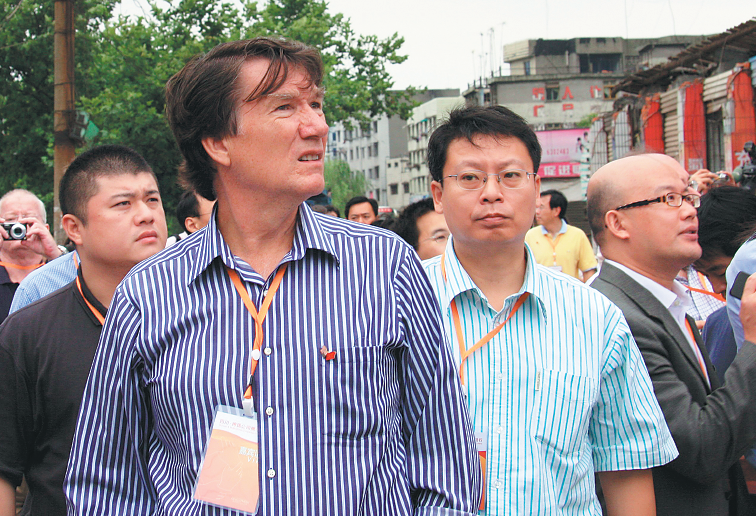
          Foundation leader says nation developed by learning, and now can teach other countries a thing or two
          Dong Leshuo in Washington
          John L. Holden visits Wenchuan county in Sichuan province shortly after the devastating 2008 earthquake. [Photo provided to China Daily]

          John L. Holden, president and CEO of the US-China Strong Foundation, said China was a totally different country when he paid his first visit in 1974. That year, he spent three weeks traveling throughout the mainland.

          "I must say, I was happy to be in China," he said. "The Chinese people were welcoming and friendly. But it was clear to me that China then was experiencing a very difficult time. The country was extremely poor."

          People did not have enough food, and families could not all go out at once because they didn't have enough clothes for everyone, he said.

          Holden, whose foundation seeks to strengthen the capacity of young Americans to understand China, said two major events helped the nation open up: One was United States security adviser Henry Kissinger's secret visit to China in 1971, and the other was Deng Xiaoping ushering in reforms.

          "People at that time did not know what the future was going to be, but they knew one thing: China had to change - there was no doubt about that," Holden said. "There wasn't a clear vision of exactly where China wanted to end up. That's why Deng Xiaoping said, 'We cross the river by feeling the stones'. That empirical experiment-based reform worked really well for China."

          Deng's reform and opening-up began with agriculture in December 1978. Farming in China was decollectivized, and emphasis was put on the household responsibility system, which divided the land of the people's communes into private plots.


          1 2 3 4 5 Next   >>|
          John L. Holden
          Veteran China expert
          EDUCATION:

          1974-76: MA, Chinese language and literature, Stanford University

          1970-74: BA magna cum laude, Chinese language and literature, University of Minnesota Twin Cities

          AWARDS:

          2017: Foreign Educator of the Year, presented by the State Administration of Foreign Expert Affairs; Chinese Government Friendship Award

          CAREER:

          2017-present: President and CEO, US-China Strong Foundation

          2013-present: Nonresident senior associate, Carnegie Endowment for International Peace

          2010-present: Senior adviser, Vermilion Partners

          2014-17: Associate dean, Peking University's Yenching Academy

          2014-17: Professor of management practice, Peking University's Guanghua School of Management

          2008-13: Managing director and senior adviser, Hill+Knowlton Strategies, Beijing

          2005-08: Chairman of China operations, Shaklee Corp

          1998-2005: President, National Committee on US-China Relations

          1986-1998: Various senior management positions with Cargill

          How search for knowledge helped lift China's reform

          Foundation leader says nation developed by learning, and now can teach other countries a thing or two
          Dong Leshuo in Washington
          John L. Holden visits Wenchuan county in Sichuan province shortly after the devastating 2008 earthquake. [Photo provided to China Daily]

          John L. Holden, president and CEO of the US-China Strong Foundation, said China was a totally different country when he paid his first visit in 1974. That year, he spent three weeks traveling throughout the mainland.

          "I must say, I was happy to be in China," he said. "The Chinese people were welcoming and friendly. But it was clear to me that China then was experiencing a very difficult time. The country was extremely poor."

          People did not have enough food, and families could not all go out at once because they didn't have enough clothes for everyone, he said.

          Holden, whose foundation seeks to strengthen the capacity of young Americans to understand China, said two major events helped the nation open up: One was United States security adviser Henry Kissinger's secret visit to China in 1971, and the other was Deng Xiaoping ushering in reforms.

          "People at that time did not know what the future was going to be, but they knew one thing: China had to change - there was no doubt about that," Holden said. "There wasn't a clear vision of exactly where China wanted to end up. That's why Deng Xiaoping said, 'We cross the river by feeling the stones'. That empirical experiment-based reform worked really well for China."

          Deng's reform and opening-up began with agriculture in December 1978. Farming in China was decollectivized, and emphasis was put on the household responsibility system, which divided the land of the people's communes into private plots.

          主站蜘蛛池模板: AV最新高清无码专区| 亚洲欧美日韩成人综合一区| 日韩中文字幕有码av| 久久亚洲人成网站| 无码日韩精品91超碰| 国产色网站| 成人拍拍拍无遮挡免费视频| 妓女妓女一区二区三区在线观看| 99久久精品国产熟女拳交| 国产a在视频线精品视频下载| 欧美成人精品三级网站| 偷柏自拍亚洲综合在线| 99爱在线精品免费观看| 亚洲日本欧洲二区精品| 亚欧色一区w666天堂| 日韩av综合免费在线| 国产成人亚洲综合A∨在线播放| 91精品久久一区二区三区| 国产亚洲欧洲AⅤ综合一区| 亚洲欧美色综合影院| 少妇久久久被弄到高潮| 2020国产成人精品视频| 九九热在线视频观看这里只有精品| 亚洲国产精品综合久久网各| 美女禁区a级全片免费观看| www.亚洲国产| 亚洲精品一区二区天堂| 色翁荡息又大又硬又粗又视频软件| 国产粉嫩学生高清专区麻豆| 蜜桃av无码免费看永久| 精品国产不卡在线观看免费 | 黄色三级视频中文字幕| 国产视频一区二区三区视频| 丁香五月亚洲综合深深爱| 极品蜜桃臀一区二区av| 男女真人国产牲交a做片野外| 国产亚洲精品综合99久久| 99e久热只有精品8在线直播| 把女人弄爽大黄A大片片| 成人无码特黄特黄AV片在线| 琪琪午夜成人理论福利片|