



Nuclear power points way to green future







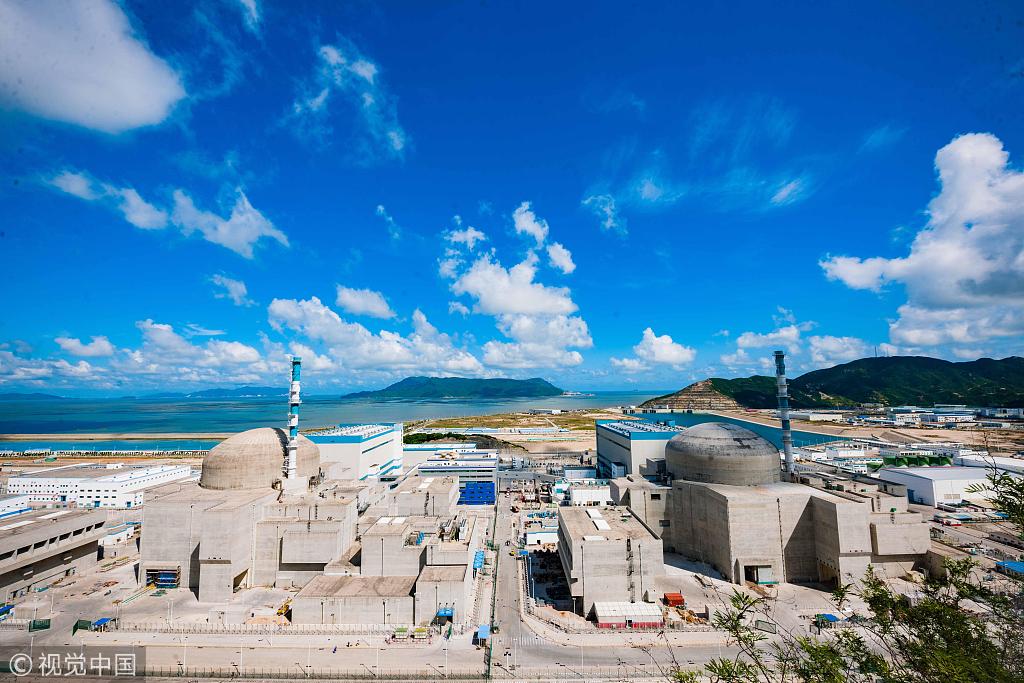
Nation's energy policy shifts from coal to advanced reactors
Twenty years ago, China had just three nuclear power reactors. Today, it has 38, with 19 more under construction.
The country accounts for more than half the new nuclear power investment globally and is expected by 2030 to pass the United States, which has led the world in nuclear power generation for half a century.
After decades of large-scale use of fossil fuels to produce energy, China has recognized the impact this has had on the environment and the health of its people.
Economic losses due to pollution account for almost 6 percent of GDP, according to World Bank estimates.
Today, there is a renewed push for cleaner, greener energy sources.
All aspects of China's nuclear power industry - including design, construction, technologies, maintenance, management, security, investment, returns and future projections - are receiving renewed attention.
He Yu, chairman of China General Nuclear Power Corp, has said that China should build four to six nuclear reactors annually to ensure the installed capacity of nuclear power reaches at least 150 gigawatts by 2030.
China's nuclear power program was put on hold after the Fukushima nuclear disaster in Japan in 2011, with approvals for new nuclear plants suspended and a nationwide safety review launched after the incident.
He said last year that nuclear energy plays an irreplaceable role in China's energy security and energy structure optimization, while it will also help to reduce air pollution caused by coal-fired power generation.
The country added about 8 gW of nuclear power capacity in 2016, boosting its installed capacity to about 34 gW, according to BMI Research, a provider of macroeconomic, industry and financial market analysis.
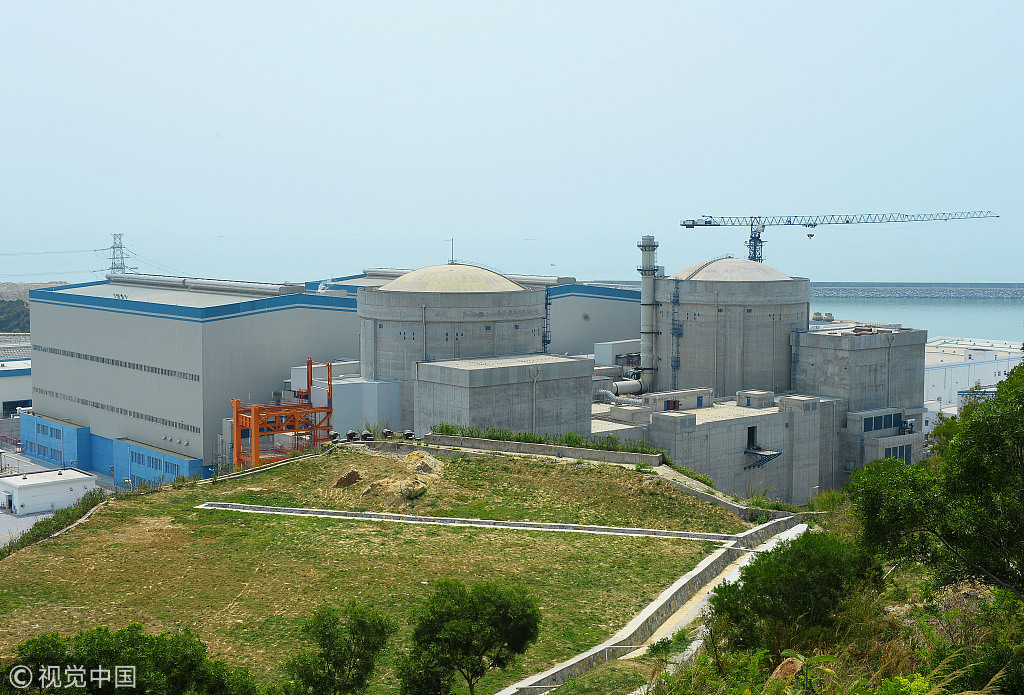
The government has pledged that renewable energy will play an integral role in the push for greener growth, boosting the share of nonfossil energy to 15 percent by 2020 and 20 percent by 2030, with coal consumption reduced to 62 percent of energy use by 2020.
China published a nuclear industry white paper in 2016, detailing policies regarding nuclear emergency preparedness and highlighting a "rational, coordinated and balanced" approach to nuclear security.
The country said it had "the most advanced technology and most stringent standards" to ensure the safe and efficient development of nuclear power.
While developing nuclear power projects in the domestic market, China is actively exploring export markets for its advanced equipment in the sector.
It will profoundly influence what the rest of the world believes about nuclear power and the nuclear fuel cycle, according to Mark Hibbs, a senior fellow with the Carnegie Nuclear Policy Program in Germany.
He believes China aims to move from conventional nuclear power reactors to a "fully closed nuclear fuel cycle based on fast breeder reactors, spent fuel reprocessing and the use of recycled plutonium fuel".
"If China fails, it will reinforce conventional thinking in some countries that nuclear fission is a transitional energy technology likely to be replaced this century by other sources," he stated in his new report "The Future of Nuclear Power in China".
"If China succeeds, prevailing low expectations for nuclear power may instead be dramatically revised."
If that is the case, Hibbs said other countries may follow in projecting that nuclear power will be sustainable for centuries and that the risks associated with an industrial-scale "plutonium economy" are socially, economically, environmentally and politically acceptable.
According to the International Atomic Energy Agency, China stands at the top of the list of expanding nuclear power countries, followed by Russia with seven reactors under construction, India with six and South Korea with three.
In terms of having the most reactors in operation, the United States leads, followed by France, Japan and China.
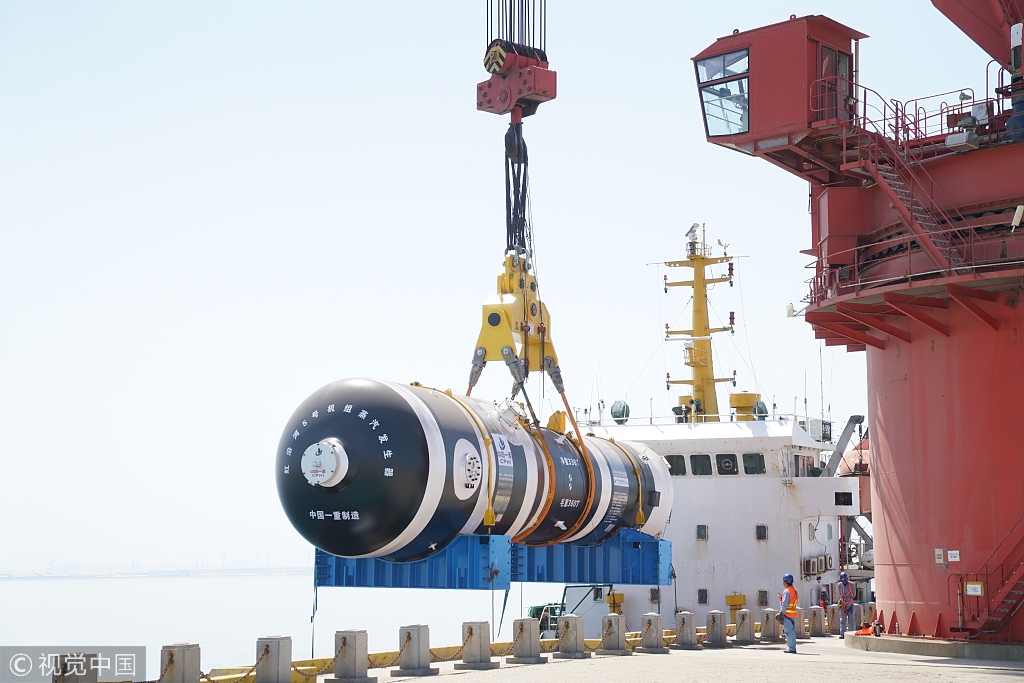
The IAEA said that while China is trying to curb its reliance on coal, which pollutes the air and is hard to transport from mines in the west and north of the country to the economically developed southeast coast, it is building most of its reactors along this coast.
"With nuclear, it plans to increase energy security, lower its reliance on coal and oil, and limit carbon dioxide emissions while keeping up its economic growth," the IAEA said.
In June, three significant announcements were made involving China's nuclear power sector.
The first was on June 8, when China National Nuclear Power and Russian state nuclear company Rosatom signed a multibillion-dollar agreement, the biggest nuclear energy deal between the two countries for more than a decade.
Under the $3.62 billion deal, Russia will build four new-generation Water-Water Energetic Reactors - two at the Xudabao power plant in Northeast China's Liaoning province, and the other two at Tianwan in the eastern province of Jiangsu.
Analysts say Tianwan is regarded as a testing ground for Russian nuclear technology and that the latest deal confirms Beijing's ongoing commitment to a bilateral energy partnership in which Russian technology provides a springboard for a state-of-the-art nuclear industry in China.
On June 29, the world's first EPR, formerly known as the European Pressurized Reactor, in Taishan, South China's Guangdong province, was successfully connected to the national grid. This was followed next day by the announcement that Westinghouse's Sanmen Nuclear Power Plant in the eastern province of Zhejiang had been successfully connected to the grid.
Jonathan Cobb, senior communication manager with the World Nuclear Association in London, said coal still generates about 70 percent of China's electricity.
"China's energy policy seeks to shift away from such high reliance on coal and build more nuclear generation, as well as other low-carbon generation sources," he said.
"This is not only as part of a long-term plan to control greenhouse gas emissions, but also to reduce the terrible health impacts of air pollution experienced today from fossil fuels."
With demand for electricity still growing and such a large capacity of coal-fired generation already in place, it is likely China will still use coal for a substantial proportion of its electricity generation for several decades to come, Cobb said.
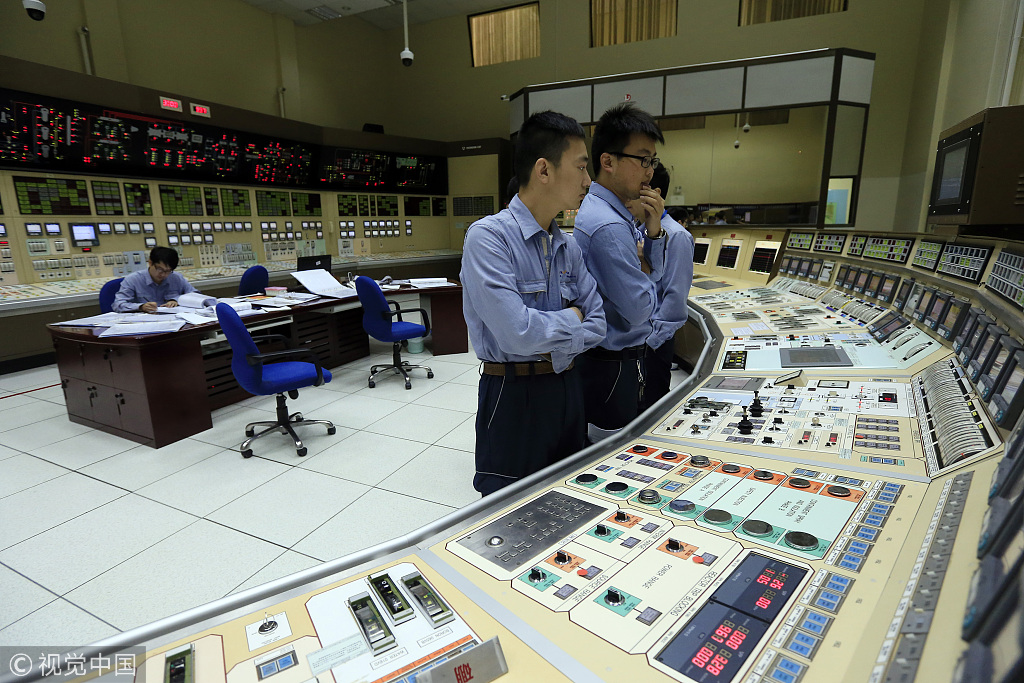
He added that increasing the use of nuclear power in place of coal will have a substantial positive benefit on the environment.
"Each gigawatt of nuclear capacity built in place of coal - about the size of one new nuclear power plant - will avoid the emission of around 8 million tons of carbon dioxide each year, as well as sulfur and nitrogen oxides and particulates.
"This will help the environment in the long term and immediately improve people's health due to the reduction in air pollution," he said.
However, according to Cobb, China relies on coal for much of its electricity generation, and meeting its growing demand for electricity and phasing out coal requires time and a long-term program of new nuclear building.
Trevor Findlay, a senior research fellow at the School of Social and Political Sciences at the University of Melbourne, said that if China is to meet its greenhouse gas commitments under the Paris Agreement and more demanding future agreements, it will need nuclear energy in its energy mix, especially if it is to reduce its reliance on coal.
"But as in other countries, nuclear is likely to only ever account for a relatively small percentage of China's total energy production, mainly because of the cost of nuclear power plants compared to other sources of energy, such as natural gas, wind and solar," Findlay said.
"China is certainly building more nuclear power plants than any other country, so to that extent it is leading the world," he said.
Whether this leads to the deployment of advanced nuclear power technologies remains an unanswered question.
"China has been developing its own indigenous technologies, drawing on its experience with a wide variety of imported foreign models, as it does in many other high technology sectors," Findlay said.
"But to date, this has not resulted in any revolutionary advances. In the export market, it is competing with Russia, South Korea, Japan and France, and there is no guarantee that it will become the predominant supplier."
Findlay added that on the issue of nuclear security and safety, "China needs to ensure that in undertaking such an unprecedented expansion of nuclear energy, the capacity of its nuclear regulatory authority, including the number and quality of its inspectors, keeps pace".
Li Yanfei, energy economist with the Economic Research Institute for ASEAN and East Asia, said that while China does have its own nuclear technology, it needs to focus more on developing it.
Much of the nuclear power infrastructure built so far has used foreign technology, he said.
"Without a mature supply chain to support the building of nuclear reactors, it would be only a blueprint, no matter how good it appears in theory."




















