How colorization has breathed new life into black and white history
In the modern world of social media, photosharing, and celebrity, sharing an image of an executed murder plotter from 1865 may sound like a strange thing to do, but that was the unlikely starting point for what has turned out to be one of the biggest publishing hits of the year.
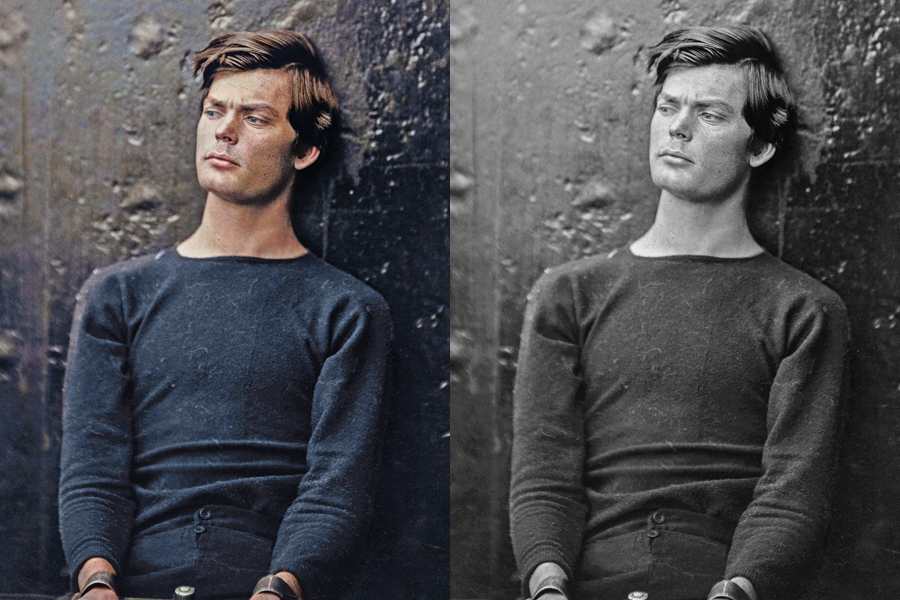
The photo in question was an image of Lewis Powell, hanged in 1865 for his part in the plot to kill United States president Abraham Lincoln, and when photo colorist Marina Amaral digitally colored the picture and shared it, the response was overwhelming.
Two years later, she has now collaborated with English historian Dan Jones to produce The Colour of Time: A New History of the World, 1850-1960, chronicling world events through recolorized versions of black and white photos, and radically transforming readers' understanding and appreciation of some of the most important events and people in world history.
"That picture was remarkable – you'd think he was a model posing in GQ magazine, or something," said Jones. "As soon as I saw it, I thought 'who on earth is doing this, I have to find out'. I messaged Marina, who turned out to be in Brazil, and one of the first things I said to her was 'when are you doing a book?' and then I told my publishers, Head of Zeus. I knew instantly that this was something we had to be involved in, what she was doing was so revolutionary and perfect for our photo-obsessed time."
Amaral is self-taught, having got involved with colorizing photos from the standpoint of being a history enthusiast rather than a photographer, and says carefully researched, respectful colorization of photos has transformed them and opened up their stories to a whole new audience.
"Black and white can definitely be a barrier to some people, it's much easier to relate to someone or something when you see them in color because they become more modern and more human," she explained. "That way, you realize that even though the photo may be from 100 years ago, in so many ways those people were no different to us."
Using thousands of photos predominantly from the Getty Archive, and also others in the public domain, Amaral and Jones managed to narrow things down to a collection of 200 photos dating back to the earliest days of mass photography, to tell a new history of the modern world, in a book that has proved to be hugely popular with book buyers, reviewers, and historians alike.
Right from the outset, they were both determined to tell history in a slightly different way.
"So often, it's hard to tell a historical story accurately because, particularly when you're dealing with things like wars, too many of the images are just from one side," she explained. "It's definitely harder to achieve a balance between both sides, but that's what we wanted to do – and we also wanted to make sure it was a truly world view of history, not just looking at the usual European colonial or US-dominated view."
Jones said that another challenge they, and indeed all historians, faced was the changing nature of what was considered important and worthy of recording over the years.
"Some of the early photographs of the Crimean War in the 1850s look wonderful and are great documentary pictures, but they're all very bloodless and clean – they're pure propaganda, and it's the same with photos of the American Civil War when so many of the best photographers were all on the side of the Union forces," he said. "Also, because of the cost and technology involved, in the early days many photographs were of the rich and famous, because that's what people cared about. Now we're more interested in the history of the everyday and normal people's lives, and the further you go back, the harder it gets to find documentary records of any kind about these people."
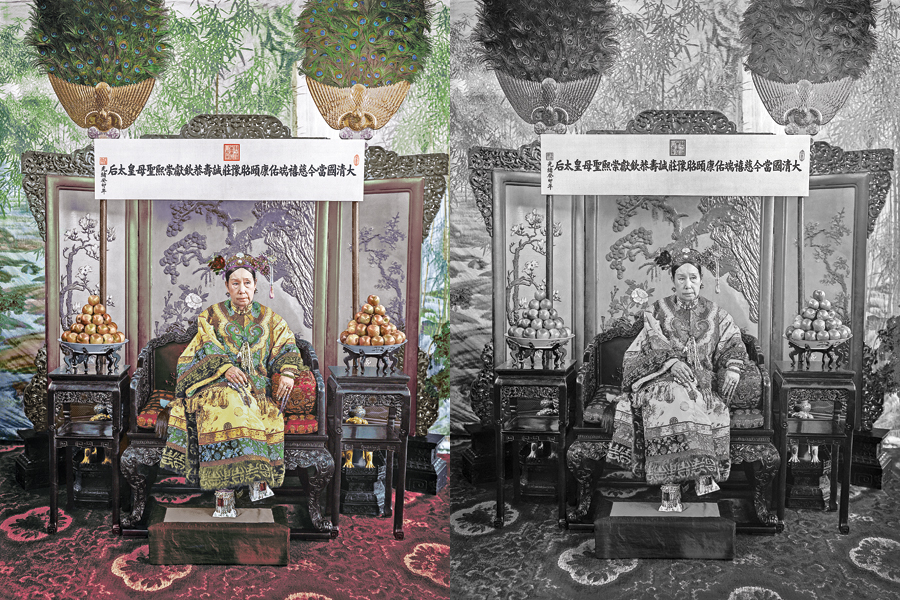
Amaral and Jones were keen to ensure that their book was not just the same old story told from the same old point of view – and Jones says that writing it made even he, a well-known published historian and broadcaster, realize the limitations of his knowledge when it came to countries such as China. The book contains images of Mao Zedong and the Empress Dowager Cixi.
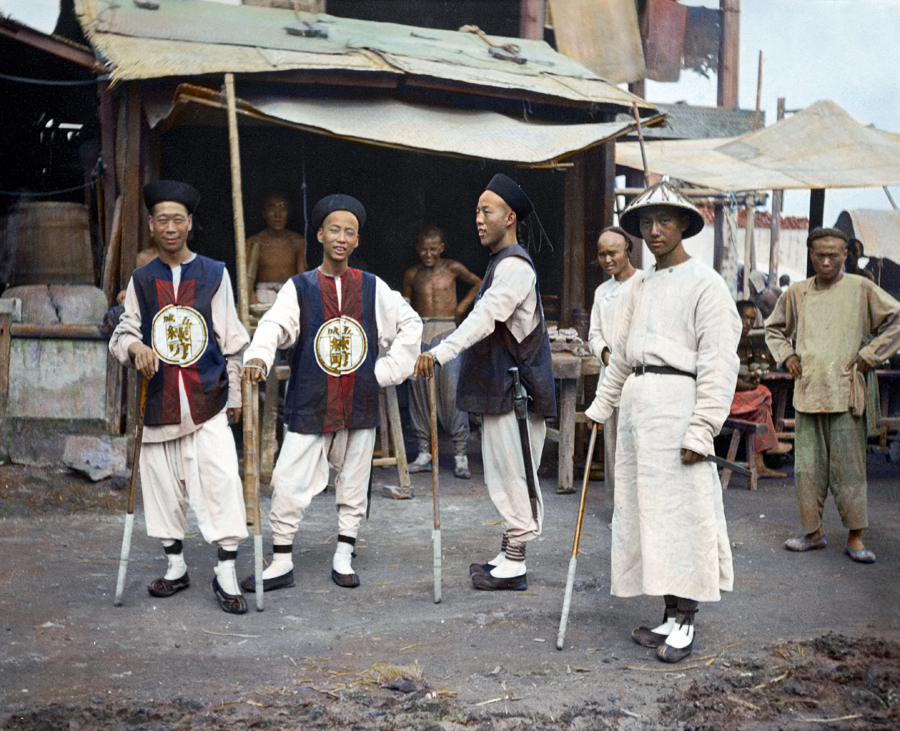
"It's so easy to write a European/US take on world history but we really wanted to make this book cover all cultures and nations, so from the point of view of images, that makes it more challenging as when you start to look at Asia and Africa, there are so few of them in comparison," he said."It also made me realize how ignorant we are of so much history from countries like China, apart from the last few decades.
"Even things like the Opium Wars, which would once have been an essential part of imperial history, even if it was just learning about things from the British perspective – I've not studied that in any depth in school or university, so it would be very easy to grow up in this country with shockingly little knowledge of Chinese history.
"In terms of knowing about and understanding what's happened in the past, that's a terrible failing on our part, and, in terms of being prepared for what lies ahead in the future and China's importance in it, it's absolutely negligent, so I was keen to get in whatever Chinese history we could."
The process of colorization can be a source of controversy. Some colorizers claim they are not so much adding color, as restoring what was there when the original black and white image was taken, but Amaral is not entirely comfortable with this.
"There's no way of knowing exactly what the colors were by looking at the black and white pictures, so I try and envision how it would have looked and do as much research as I can, but inevitably there is some artistic license as I don't know what the photographer saw at the time," she said. "Doing the project has given me a hugely increased appreciation of black and white photography, there were so many more wonderful pictures that we wanted to include but, for various reasons, couldn't, because maybe they didn't fit the story we wanted to create. But working with those ones we didn't use was still wonderful – I can't say I prefer the color versions over the originals, I think that the two versions should both be appreciated, and I hope people feel that way too."
What began as a Twitter exchange has ended up becoming a lavishly illustrated, 448-page, heavy, hardback book that has already been published in numerous European languages, to huge public and critical acclaim, which is only likely to increase as more translations take it to new audiences and countries, including Japan and China. In China, the book is being translated and will be published by China Social Sciences Press.
"The response has been amazing – I keep telling Marina, not many first books are so well received," said Jones. "Readers love it, it's number three in the Sunday Times best-seller list, booksellers have really got behind it and what I think is very revealing is how many people have read about it and see the images shared on social media but still want to come in and buy a physical copy of the book. It's great that people realize what we're doing and that's it's not just a gimmick – it's not a coffee-table book, this is a serious history book. It's bringing in a new audience for history, which is great, but it's also helping people who are already history enthusiasts see things they thought they knew in a different way."
For Amaral, one of the greatest thrills is that colorization is breaking down the barrier of inquiry that the original black and white images may have presented to some readers.
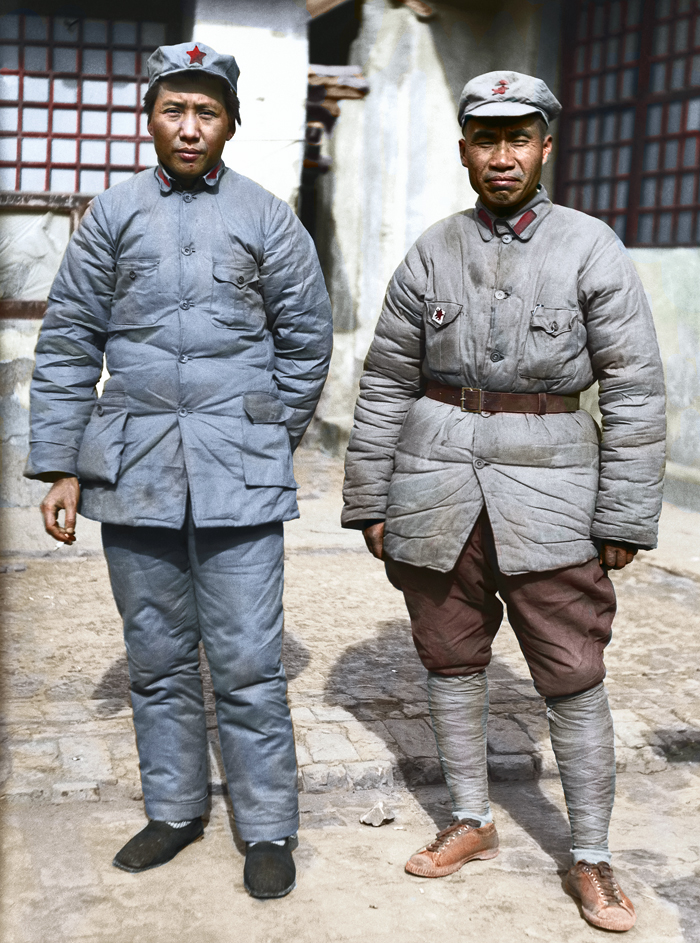
"History teachers have got in touch, saying they are using it as a way of making classes more engaging, and the really good thing is that they say looking at the pictures is then encouraging pupils to go off and do more reading about the subject," she said. "They're now interested in learning about things which they previously didn't even know about, so it's great to see that reaction."
Jones says this is exactly the response he was hoping for.
"For me, the watchword was always 'accessibility' – apart from a few images of scenes like Nazi concentration camps and dead bodies, this is a book my nine-year-old child can dip into. I think it's suitable that it could go into any secondary school library, and anyone with an interest in modern history would enjoy it, and in the case of topics such as Chinese history, come away feeling they've really learnt something from it."
Beauty is in the eye of the beholder, so everyone will have their own favorite image from the book, but for the authors, things are not so clear – or, one could say, black and white.
"My favorite image still has to be the Lewis Powell one, that started the whole project off," says Jones. "That's what gave me the first hit, when something short-circuited my brain between the age of the photo and the immediacy of the gut reaction it produced. I knew this was something special."
"I can't really choose one," said Amaral. "The picture of the nine kings (nine European monarchs gathered together at the funeral of British King Edward VII in 1910) took me such a long time to complete that when it was finished, it was very special, but choosing just one out of all these amazing pictures? It's like asking me to choose a favorite child."
The Colour of Time: A New History of the World, 1850-1960 is published in the UK by Head of Zeus.