


Chongyang: Out with the old, in with the elderly







Over 1,000 years ago, Chinese poet Wang Wei of the Tang Dynasty (618-907) wrote "I know my brothers would, with dogwood spray in hand, climb up mountain and miss me so far away"-to express his nostalgia during Chongyang Festival.
Today, it is still celebrated by people from China, the Republic of Korea and Japan.
The Chongyang Festival, or the Double Ninth Festival, which takes place on the ninth day of the ninth lunar month on the Chinese calendar, falls on Oct 17 this year.
According to I Ching, or Book of Changes, "nine" is a positive-or yang-number. Therefore, the ninth day of the ninth month means "double nine" or "double yang". Since "chong" means double in Chinese, it is also called "Chongyang" in China.
Through records in all kinds of notes and historical literature, scholars have dated Chongyang's history back to the Warring States Period (475-221 BC). It became widely celebrated after the Wei and Jin dynasties (220-420) and was officially declared to be a festival during the Tang Dynasty.
In ancient China, the Chongyang Festival was sometimes seen as a bad omen, as it fell in the late autumn when the weather turns cold and plants wither. So, it was not uncommon for superstitious folk to climb mountains, or find higher ground to avoid some perceived oncoming doom.
Today, customs during this festival include climbing mountains, enjoying chrysanthemum flowers, drinking chrysanthemum wine, eating crabs, wearing dogwood to drive away ghosts and composing poems.
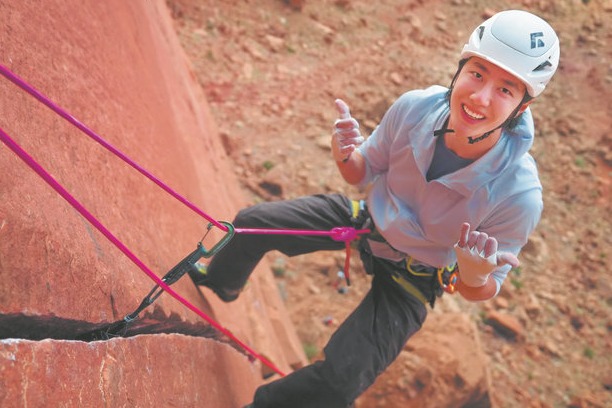
Among all these customs, mountain climbing is the most important one since it is an activity that is believed to help one avoid misfortune. Moreover, standing on high ground and looking far into the distance on a balmy autumn day can help alleviate some of the seasonal depression and anxiety. If you can't find a mountain to hike up, there is another solution: Ascending buildings or towers will, apparently, also work. For example, Wang Bo, a man of letters in the Tang Dynasty once ascended a tower on the Chongyang Festival and wrote his representative work, A Tribute to King Teng's Tower.
Mountains aside, chrysanthemum symbolizes longevity, as well as integrity and chrysanthemum wine is seen as an auspicious drink to enjoy during the festival. It is believed that the custom originates from poet Tao Yuanming who lived during the Eastern Jin Dynasty (317-420) and was famous for his hermit's lifestyle and his special love for the flower.
Special food is usually an indispensable part of festivals, just like mooncakes for the Mid-Autumn Festival and zongzi for the Dragon Boat Festival. So, for Chongyang, crabs are the snack du jour because that's when their meat is at its best. Chongyang cake, made of rice, is also a traditional festival food popular in the eastern part of China.
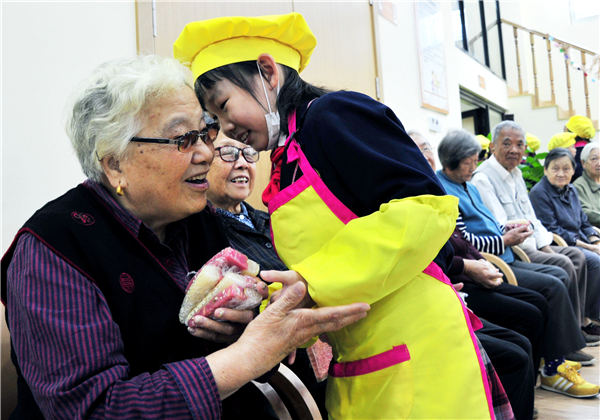
Today, thankfully, the Chongyang Festival has a more positive meaning. Since the pronunciation of nine in Chinese is the same as "eternal" or "forever", the festival is regarded as an especially auspicious day to wish longevity and health upon our senior citizens and people usually visit, or send greetings to, the senior members of their family.
As a result, in 1989, the Chinese government assigned yet another moniker to the festival to promote respect for the elderly: Senior Citizens' Festival.