Healthy mice born to same-sex parents








Chinese scientists have pushed the boundaries of reproductive science by breeding healthy mice using genetic materials from same-sex parents, without the need for males to fertilize eggs as required for mammal reproduction.
The research can shed light on why mammals can only reproduce sexually, as well as provide a better understanding of and possible cure for some forms of infertility and birth defects, scientists said. Such techniques might also be used to preserve critically endangered animals that cannot find a mate.
Some hope this new work could lead to the possibility that homosexual couples would be able to have their own biological children, but such an application faces monumental technical and ethical obstacles that would be extremely difficult to overcome, the scientists said.
Using gene editing and stem cells, researchers from the Institute of Zoology of the Chinese Academy of Sciences created 29 healthy mice pups born to pairs of female mice. The pups lived to adulthood and had babies of their own, according to the study published on Thursday in the journal Cell Stem Cell.
In 2004, scientists in Japan produced the first mice from two mothers using complex genetic manipulations, but the mice that were born exhibited serious birth defects, such as growth retardation and poor motor skills.
The new study said it also marks the first time that pups from pairs of male mice were born. However, most of them died soon after birth, with just two out of the 12 male pups surviving more than 48 hours. Scientists are planning to improve the process so that the male mice can live to adulthood.
Zhou Qi, the paper's co-senior author and the director of the institute, said in a news release on Thursday that the main purpose of the research was to probe why mammals can only undergo sexual reproduction.
In the natural world, certain types of reptiles, amphibians and fish can reproduce without two parents of the opposite sex, but this is extremely challenging for mammals, even with advanced science, he said.
Same-sex reproduction is difficult for mammals due to a mechanism called genomic imprinting, whereby certain genes are turned on or off depending on whether they come from the mother or father, Teresa Holm, a researcher from New Zealand's University of Auckland, said in the study's review. The review was published on Scimex, an online science news portal, by the Australian Science Media Centre.
If these imprints and the pattern they form are not tightly controlled, it can be catastrophic for the embryo, resulting in birth defects or death, Holm said.
The study demonstrates how this barrier could be overcome by deleting problematic imprinting from haploid embryonic stem cells, which have just a single set of chromosomes and are cultured from sperm or egg cells. These edited stem cells are then injected into eggs from the other parent.
"The major impact of this work further expands our fundamental understanding of how imprinting operates in mammals and how it acts as a barrier to uniparental reproduction," Holm added.
In the long term, the knowledge may help infertile couples due to imprinting issues, and even lead to the development of ways for same-sex couples to reproduce healthy children of their own, she said.
But Holm stressed that the current work is only applicable to mice, and future applications in humans still carry significant technical, ethical and safety concerns.
Li Wei, another of the study's authors, said in a news release that the Chinese team is hoping to explore these techniques in other research animals in the future, such as in nonhuman primates.
However, Li said major technical obstacles remain, such as modifying imprinted genes of more genetically complex organisms and concerns for the offspring's health after birth.
Robert Norman, a professor of reproductive medicine at the University of Adelaide in Australia, said in the review that the new technique might help save critically endangered animal species, but there are far too many uncertainties for it to be used in human reproduction.

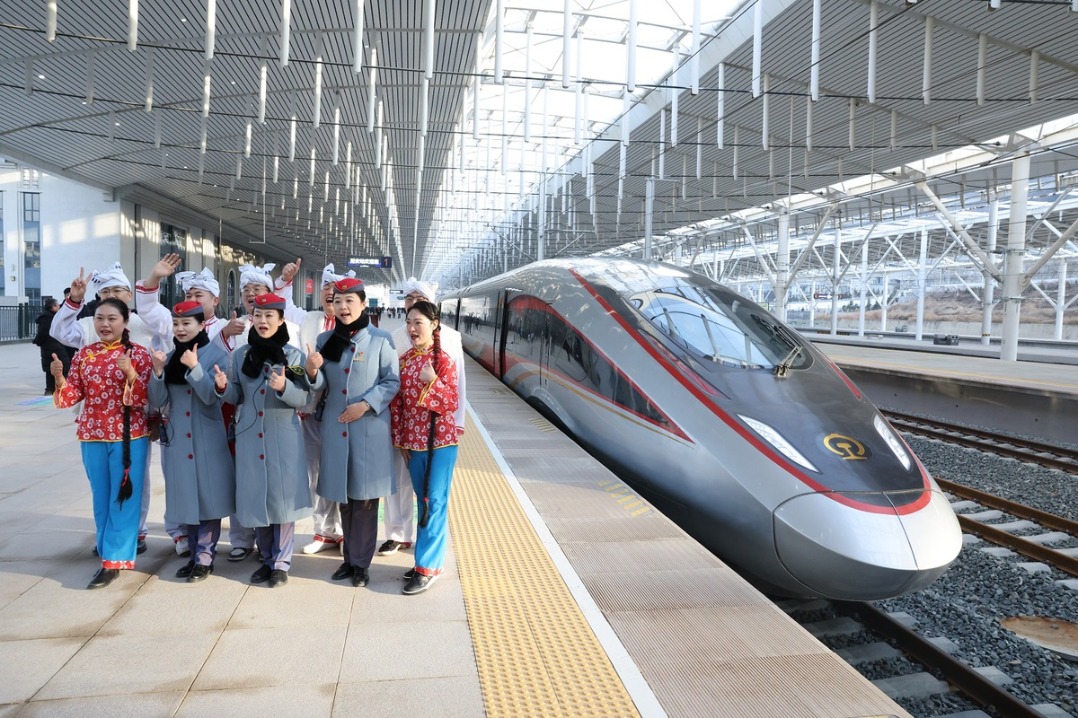




- China's high-speed rail mileage tops 50,000 km
- Quzhou-Lishui railway under construction in Zhejiang
- China's high-speed rail network surpasses 50,000 kilometers
- Tianjin leverages its district's green assets for growth
- China's Long March 8A rocket launches internet satellites
- Stricter race rules planned for second robot half-marathon