

<tt id="6hsgl"><pre id="6hsgl"><pre id="6hsgl"></pre></pre></tt>
          <nav id="6hsgl"><th id="6hsgl"></th></nav>
          国产免费网站看v片元遮挡,一亚洲一区二区中文字幕,波多野结衣一区二区免费视频,天天色综网,久久综合给合久久狠狠狠,男人的天堂av一二三区,午夜福利看片在线观看,亚洲中文字幕在线无码一区二区
          Charlene Barshefsky
          Former chief United States trade negotiator
          BORN:

          August 1950

          EDUCATION:

          In 1972, Charlene Barshefsky graduated from the University of Wisconsin in Madison with a bachelor's degree, majoring in English and political science.

          In 1975, she earned a doctor of laws degree from the Columbus School of Law at The Catholic University of America.

          CAREER:

          She served as United States Trade Representative, the country’s top trade negotiator, from 1997 to 2001, and as Deputy USTR from 1993 to 1996.

          As USTR and a member of President Bill Clinton’s cabinet, Barshefsky was responsible for the negotiation of hundreds of complex market access, regulatory and investment agreements with virtually every major country in the world.

          She is Senior International Partner at WilmerHale, an international law firm, and she is based in Washington, DC.

          US negotiator who was key to China joining WTO
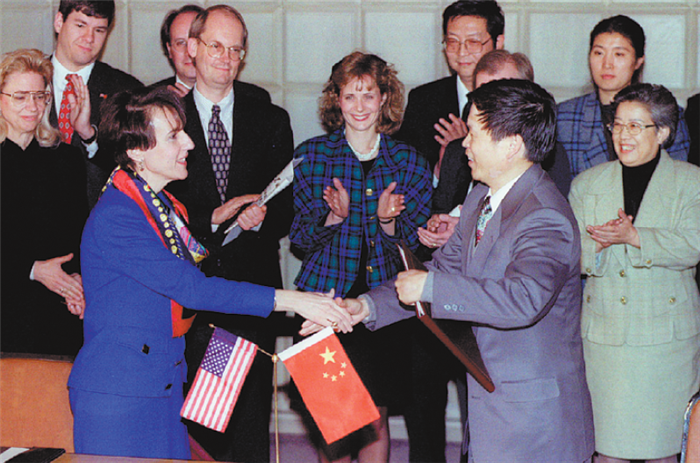
          Charlene Barshefsky paved the way for entry to the global trading bloc in 2001 and says both countries should pursue a 'mutually beneficial, stable relationship'
          Zhao Huanxin in Washington
          Barshefsky and Deputy Foreign Trade Minister Sun Zhenyu (right) shake hands after signing an agreement on Feb 26, 1995, in Beijing to strengthen safeguards against intellectual property piracy in China and widen market access for US companies. [Photo provided to China Daily]

          Globalization benefits US

          The current US administration has been lashing back against the multilateral system, trying to withdraw from or revamp agreements it claims have worked only to the advantage of its trading partners.

          It has portrayed itself as a victim of globalization, and US President Donald Trump has threatened to retreat from the WTO "if they don't shape up", claiming the US has been cheated and taken advantage of by its trading partners.

          The perception in part animates the US administration's policy of renegotiating those agreements under threat, or arbitrarily imposing tariffs, either as a means of gaining leverage or to force US-owned manufacturers back to the US - which Barshefsky doesn't think will happen.

          "It's globalization that has helped to make the US as wealthy as it is, our economy as robust as it is," she said.

          Few countries could have survived the 2008 financial meltdown that the US had to weather, she said. And even though there was a lengthy and slow period of recovery, the US has adapted and adjusted to grow again, and China played a positive role in that.

          "So, no, the US has not been cheated, not by our trading partners and certainly not by China," Barshefsky said, adding that the word "cheated" is neither accurate nor productive. "You can say we've been disadvantaged by certain Chinese practices, and China may believe it's been disadvantaged by certain American practices."

          She also recalled the "critical impact" China has had in difficult times, saying such areas should be acknowledged.

          Well before its WTO accession, China played an important role during the 1997 Asian financial crisis by keeping its currency stable.

          Then, in the 2008-09 global financial crisis, the country became the source of critical demand in a world that was demand-deficient. It was China's economy that helped bring the global economy back to life, Barshefsky said.

          But now there is "substantial friction" between the US and China, she said. "Even amid trade tensions, we cannot lose sight of the important contributions every nation makes - they are to be complimented wherever they come from, as the world works through this intense globalization, intense degree of integration, and all of the frictions and competitive pressures that arise from it."

          'Wrong measure'

          The world's top two economies have been embroiled in blistering trade tensions since early this year.

          "The (Trump) administration has the view that trade deficits are a measure of unfairness in trade," Barshefsky said. "This is not the case. Our deficit goes up the more the economy grows; our deficit goes down when we're in recession. So the US had a trade surplus in the Great Depression - our economy was decimated."

          The US economy and job losses tend not to correlate with trade deficits, she said.

          "So I think the administration is using the wrong measure. What it should do, and as it has done in past, is to identify the practices it believes are 'unfair' and address them, through negotiation preferably."

          In her view, the imposition of tariffs is in effect the imposition of taxes on US purchasers and not an effective policy.

          Barshefsky said she is worried about the uncertainties created by a ratcheted-up and protracted trade war. "It's the creation of economic uncertainty that is extremely difficult for businesses to deal with, and for governments to deal with. This is not in either country's interest, and both countries should get back to the table and try and sort these differences out."

          Among the concerns on the US side, she said, are whether China's economic reform process is becoming more robust and whether policies that it alleges give an "unfair advantage" to Chinese companies will change.


          Charlene Barshefsky
          Former chief United States trade negotiator
          BORN:

          August 1950

          EDUCATION:

          In 1972, Charlene Barshefsky graduated from the University of Wisconsin in Madison with a bachelor's degree, majoring in English and political science.

          In 1975, she earned a doctor of laws degree from the Columbus School of Law at The Catholic University of America.

          CAREER:

          She served as United States Trade Representative, the country’s top trade negotiator, from 1997 to 2001, and as Deputy USTR from 1993 to 1996.

          As USTR and a member of President Bill Clinton’s cabinet, Barshefsky was responsible for the negotiation of hundreds of complex market access, regulatory and investment agreements with virtually every major country in the world.

          She is Senior International Partner at WilmerHale, an international law firm, and she is based in Washington, DC.

          US negotiator who was key to China joining WTO

          Charlene Barshefsky paved the way for entry to the global trading bloc in 2001 and says both countries should pursue a 'mutually beneficial, stable relationship'
          Zhao Huanxin in Washington
          Barshefsky and Deputy Foreign Trade Minister Sun Zhenyu (right) shake hands after signing an agreement on Feb 26, 1995, in Beijing to strengthen safeguards against intellectual property piracy in China and widen market access for US companies. [Photo provided to China Daily]

          Globalization benefits US

          The current US administration has been lashing back against the multilateral system, trying to withdraw from or revamp agreements it claims have worked only to the advantage of its trading partners.

          It has portrayed itself as a victim of globalization, and US President Donald Trump has threatened to retreat from the WTO "if they don't shape up", claiming the US has been cheated and taken advantage of by its trading partners.

          The perception in part animates the US administration's policy of renegotiating those agreements under threat, or arbitrarily imposing tariffs, either as a means of gaining leverage or to force US-owned manufacturers back to the US - which Barshefsky doesn't think will happen.

          "It's globalization that has helped to make the US as wealthy as it is, our economy as robust as it is," she said.

          Few countries could have survived the 2008 financial meltdown that the US had to weather, she said. And even though there was a lengthy and slow period of recovery, the US has adapted and adjusted to grow again, and China played a positive role in that.

          "So, no, the US has not been cheated, not by our trading partners and certainly not by China," Barshefsky said, adding that the word "cheated" is neither accurate nor productive. "You can say we've been disadvantaged by certain Chinese practices, and China may believe it's been disadvantaged by certain American practices."

          She also recalled the "critical impact" China has had in difficult times, saying such areas should be acknowledged.

          Well before its WTO accession, China played an important role during the 1997 Asian financial crisis by keeping its currency stable.

          Then, in the 2008-09 global financial crisis, the country became the source of critical demand in a world that was demand-deficient. It was China's economy that helped bring the global economy back to life, Barshefsky said.

          But now there is "substantial friction" between the US and China, she said. "Even amid trade tensions, we cannot lose sight of the important contributions every nation makes - they are to be complimented wherever they come from, as the world works through this intense globalization, intense degree of integration, and all of the frictions and competitive pressures that arise from it."

          'Wrong measure'

          The world's top two economies have been embroiled in blistering trade tensions since early this year.

          "The (Trump) administration has the view that trade deficits are a measure of unfairness in trade," Barshefsky said. "This is not the case. Our deficit goes up the more the economy grows; our deficit goes down when we're in recession. So the US had a trade surplus in the Great Depression - our economy was decimated."

          The US economy and job losses tend not to correlate with trade deficits, she said.

          "So I think the administration is using the wrong measure. What it should do, and as it has done in past, is to identify the practices it believes are 'unfair' and address them, through negotiation preferably."

          In her view, the imposition of tariffs is in effect the imposition of taxes on US purchasers and not an effective policy.

          Barshefsky said she is worried about the uncertainties created by a ratcheted-up and protracted trade war. "It's the creation of economic uncertainty that is extremely difficult for businesses to deal with, and for governments to deal with. This is not in either country's interest, and both countries should get back to the table and try and sort these differences out."

          Among the concerns on the US side, she said, are whether China's economic reform process is becoming more robust and whether policies that it alleges give an "unfair advantage" to Chinese companies will change.

          主站蜘蛛池模板: 蜜臀视频在线观看一区二区 | 久久五月丁香合缴情网| 国产乱人伦AV在线麻豆A| 极品vpswindows少妇| 老司机免费的精品视频| av在线播放无码线| 97精品国产久热在线观看| 久久精品日日躁夜夜躁| 亚洲综合av一区二区三区| 久久被窝亚洲精品爽爽爽| 体验区试看120秒啪啪免费| 中文无码vr最新无码av专区| 亚洲精品无amm毛片| 亚洲成人av免费一区| 国产又色又爽又黄的视频在线| 日韩精品无码免费专区网站| 国产精品美女免费无遮挡| 99久re热视频这里只有精品6| 亚洲欧洲一区二区精品| 91无码人妻精品一区二区蜜桃 | 成人无码一区二区三区网站| 欧美三级视频在线播放| 国产+免费+无码| 国产91成人亚洲综合在线| 97无码人妻福利免费公开在线视频 | 强奷乱码欧妇女中文字幕熟女| 国99久9在线 | 免费| 97欧美精品系列一区二区| 亚洲永久一区二区三区在线| 91嫩草尤物在线观看| 精品日韩亚洲av无码| 国产一区二区三区啪| 亚洲精品成人一二三专区| 99亚洲男女激情在线观看| 亚洲欧美日韩成人综合一区| 国产精品久久久久久久专区| 亚洲自偷自偷偷色无码中文 | 国产精品亚洲二区在线播放| 精品人妻av中文字幕乱| caoporn成人免费公开| 欧美日韩精品一区二区视频|