



Rapid rail to boost HK growth







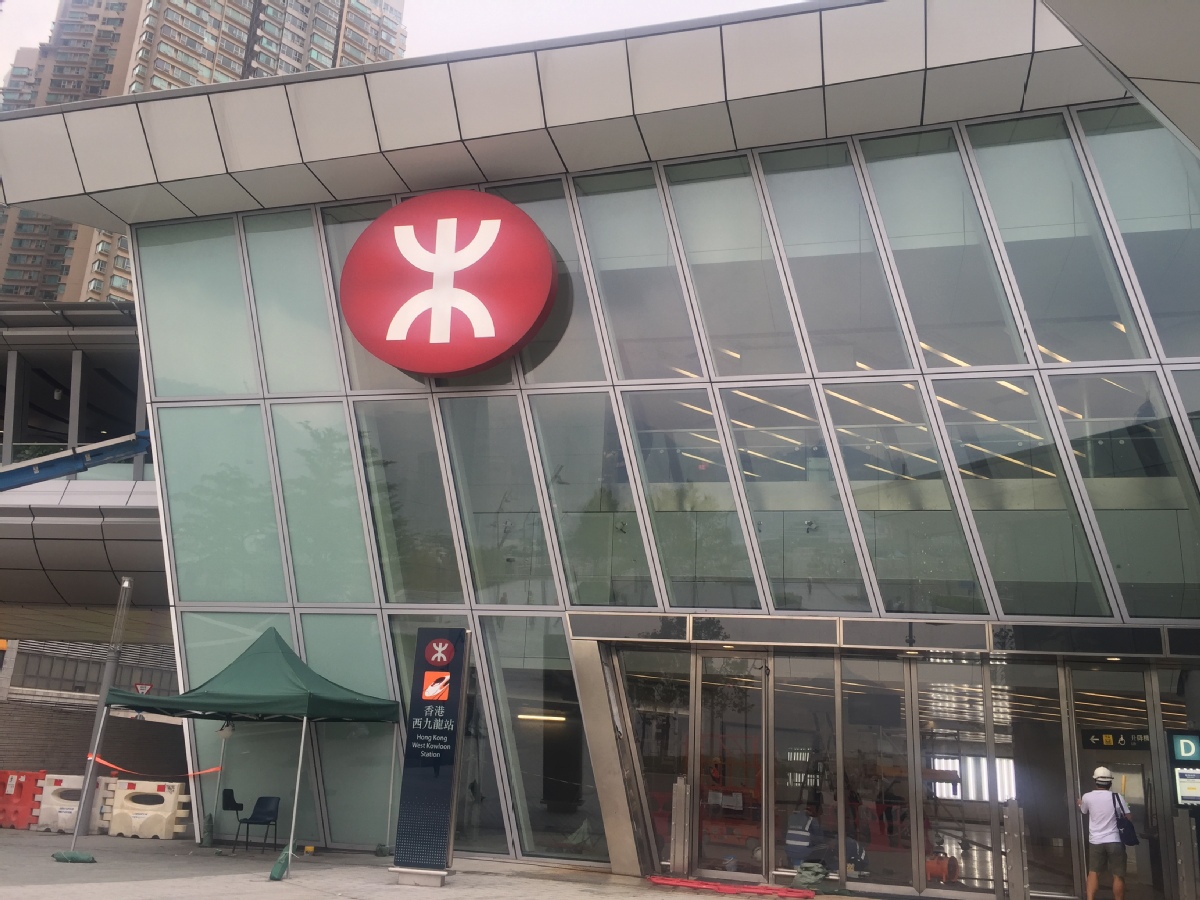
Closer connection will augment prosperity, national integration
The Guangzhou-Shenzhen-Hong Kong Express Rail Link will promote the Hong Kong Special Administrative Region's long-term prosperity and its integration into national development by enhancing people-to-people, economic and trade contacts with the Chinese mainland, according to the head of the Hong Kong and Macao Affairs Office.
Zhang Xiaoming, director of the office, made the comment just days before the Hong Kong section of the cross-boundary high-speed railway, also known as XRL, is to officially open, on Sunday.
"The opening of the XRL will include Hong Kong into the national high-speed railway network. It will bring convenience to the people and benefit Hong Kong with far-reaching significance," he said.
With a "more close and inseparable contact" with the Chinese mainland, Hong Kong will be able to deeply engage in the development of the Guangdong-Hong Kong-Macao Greater Bay Area and the Belt and Road Initiative, according to Zhang.
The overall length of the railroad is 142 kilometers. The Hong Kong section has 26 km of underground tunnels, and high-speed trains will cover the distance between the West Kowloon Station and Shenzhen's Futian Station in only 14 minutes.
The rail link will connect Hong Kong with 44 mainland cities and is expected to transport an average of about 80,000 passengers a day in the beginning.
President Xi Jinping once said the Bay Area will comprise a world-class city cluster full of vitality and international competitiveness. It needs to improve the interconnectivity of infrastructures in the Bay Area to achieve that vision, he said.
"From this point of view, the XRL surely will greatly boost the development of the Bay Area," said Zhang, adding that the commissioning of Hong Kong-Zhuhai-Macao Bridge in the near future and the construction of other infrastructure, including airports and shipping ports, will also add new development impetus to the area.
While enhancing people's sense of happiness by offering a more convenient and quick means for traveling, it will help make the respective advantages of the Chinese mainland and Hong Kong complementary to each other and promote common development, he explained.
Co-location advantage
The co-location arrangement, which designates one-fourth of the SAR rail terminus as the Mainland Port Area, with national laws applied, is considered an important factor for the XRL to maximize its power.
It brings together customs, immigration and quarantine facilities of both the mainland and Hong Kong, allowing passengers departing or arriving in Hong Kong by high-speed rail to finish both mainland and Hong Kong border checks at the West Kowloon Station.
The establishment of checkpoints in Hong Kong for officers from the Chinese mainland to enforce mainland laws is unprecedented. It's an innovation both in practice and institutional arrangements thanks to joint efforts of central government bodies and the SAR government, Zhang said, adding that similar arrangements have been used between the United States and Canada, and the United Kingdom and France.
The co-location arrangement brings "convenience for passengers" and "enhances efficiency for transportation", he said.
"I hope all will be able to experience its convenience, including those who are worried about the opening of the high-speed railway and the implementation of the co-location arrangement," he said. "People will know whether the high-speed railway is good or not simply by taking it."
It is an important innovation that also may point the way for more innovative cooperation between the Chinese mainland and the Hong Kong and Macao SARs, Zhang said.
"I have sincerely believed the co-location arrangement would be successfully put into practice since the very beginning, when it was proposed," he said.
Many positive changes
Zhang's confidence stems from positive changes that Hong Kong has seen since the Canton-Kowloon through train, linking Hong Kong and Guangdong, went into operation in 1979.
Before the operation of the through train, all train passengers traveling between the Chinese mainland and Hong Kong had to change to a train managed by the other side when they arrived at the Luohu Checkpoint. Before the transfer, they had to finish an exit procedure before walking across a long bridge to go through an entry procedure.
Zhang said he heard about the challenges passengers faced at that time from Lu Ping, former director of the Hong Kong and Macao Affairs Office. Lu told him it often took a whole day to go from the Guangdong provincial capital Guangzhou to Hong Kong's Hung Hom Station.
Lu said passengers suffered a lot, especially in summer, from having to move their luggage with the sun beating down. Unpleasant smells from live pigs and chickens transported to Hong Kong often befouled the atmosphere.
When Lu went to negotiate the rail connection in 1978, many people thought it was unimaginable to have a through train between the socialist Chinese mainland and capitalist Hong Kong. The through train, however, was commissioned the next year.
Zhang said social conditions have improved, and Hong Kong people now have a more favorable outlook on the mainland. All difficulties over implementing the co-location arrangement pale compared with the challenges that occurred decades ago when negotiations began for the Canton-Kowloon Through Train.
"I believe residents from both the Chinese mainland and Hong Kong will come to appreciate the co-location arrangement through firsthand experience after the XRL is commissioned," he said.
Zhang said he looks forward to compatriots from Hong Kong who have never visited the Chinese mainland, especially the youth, traveling to the mainland via the train to learn about their country's development.


- China issues action plan to revitalize theatrical arts
- Jimmy Lai sentenced to 20 years in prison
- Beautiful Hebei episode 11: Discover red tourism destinations
- Various extracurricular activities available for students across China during winter vacation
- Jimmy Lai sentenced to 20 years in prison
- Hong Kong court opens session to sentence Jimmy Lai












