



Defending the achievements and principles of globalization through the Belt and Road Initiative







The ancient Silk Road that traversed the Eurasian landmass and spanned from Asia to Europe foreshadowed the deeply globalized world we now live in. That civilizations and ancient empireshad based their relationship on the principles of free movement of goods and people prior to the conception of globalization demonstrates the inclination of nations to pursue prosperity through fair trade, respect diversity by learning from each other’s differences, and coexist peacefully by abstaining from military invasions.
These principles that underlaid the relationship of nations on the Silk Road also are the tenets of modern globalization, which are being doubted and challenged right now. At a time when one of the foundations of the contemporary world order is being questioned, the Belt and Road Initiative serves as both a reminder of the achievements of our deeply interconnected world and a vision of the future based on mutual development, cooperation, and trust.
In essence, the Belt and Road Initiative affirms and reinforces the principles of fair trade and inclusivity that characterize the current global economic order. By stimulating infrastructure, investments, and trade in the less developed regions of the world, the Belt and Road Initiative not only integrates more countries into the global economy; more importantly, it also levels the playing field for developing countries by bringing in opportunities not present before in developing countries. A case in point is the Philippines, which occasionally suffers from port congestion due to the lack of much needed infrastructure. Not only does port congestion delay the arrival of imports which detrimentally affects the operation of businesses in the country, it also delays the shipping of perishable agriculture-based exports that have a shorter lifetime.
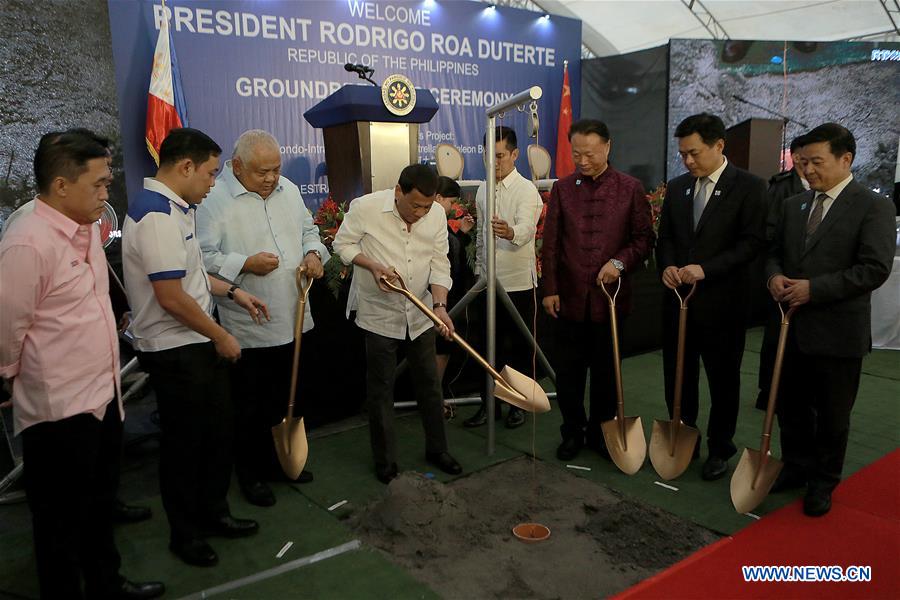
With the involvement of the Philippines in the 21stCentury Maritime Silk Road, the problem of port congestion may finally be resolved following China's port development projects in the Philippines. The Belt and Road Initiative may not be a panacea to the problem of world poverty, but it does provide developing countries with the opportunity to be more competitive, and hopefully catch up with industrialized countries.
Aside from creating conditions conducive to the free movement of goods and capital, the Belt and Road Initiative also facilitates the free movement of people. In the time of the ancient Silk Road, the spread of knowledge and wisdom among different civilizations was facilitated by the movement of people from one civilization to another. In our deeply interconnected world, people-to-people exchange has primarily served as a peace and confidence-building measure among nations.
In the context of China-Philippines relations, the various people-to-people exchanges under the Belt and Road Initiative can be the platform for a renewed and deeper understanding between the Filipino and Chinese people. By creating avenues to immerse into the other’s culture, history, and way of life, the Belt and Road Initiative can help the two identify the sources of their difference in point-of-view, while also discovering the commonalities that they share.
Through the different programs that foster trust and cooperation between the people of China and the Philippines, the antagonism and suspicion that have plagued the relationship of the two countries may finally come to an end and give way to an era of renewed cooperation and partnership. For if the seeds of progress and development were to grow, they can only do so in an environment that is stable and peaceful — an important principle on which our globalized world operates in.
The ancient Silk Road, which predates the concept of globalization, had brought relative peace and prosperity among different civilizations. Meanwhile, our globalized world is also trying to replicate the outcomes of the Silk Road by removing the hindrances to the free movement of goods, information, people, and services. In doing so, it has brought countless benefits to many while marginalizing and frustrating some. Although the project of globalization is still far from being over and its objectives are still far from being fully realized, the current ambivalence toward the enterprise indicates the need to remind ourselves of our vast achievements while heeding the calls for change; it is in these that the Belt and Road Initiative can help us.
In essence, the Belt and Road Initiative affirms the success and reinforces the principles of globalization; on the other hand, it also shows what else can be done and looked forward to. And so, the success of the Belt and Road Initiative should not be considered as the sole feat of one country. Instead, it is the success of all nations who continue to believe in the ongoing project of globalization.
Josef Chrystian S. Doquesa is a student at the Ateneo De Manila University where he is taking up Diplomacy and International Relations with a minor in Chinese Studies.
The opinions expressed here are those of the writer and do not represent the views of China Daily and China Daily website.





