



Chinese prosperity is legacy of economic liberalization







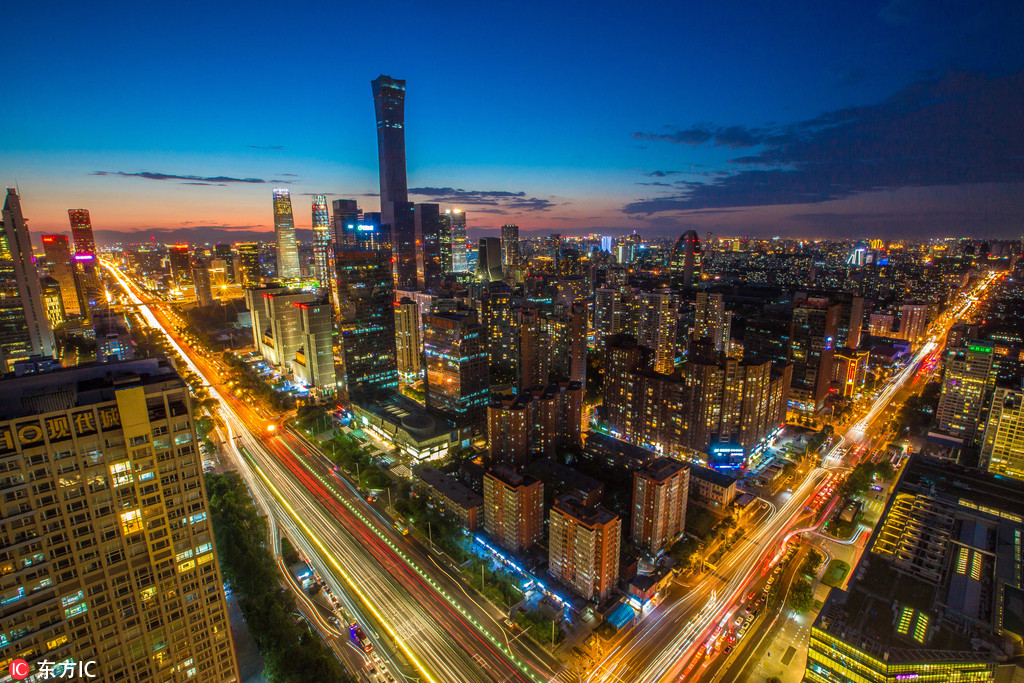
While I was a child, the name "People's Republic of China", broadcasted from the radio, thrilled me. And, I used to imagine, perhaps China is a wonderful country with shining electric lights at night,happiness and prosperity. When I first entered China in 2014, I found China's condition the same that I imagined in my past.
China has steadily woken up and has started moving around the world with the agenda of common economic development. As Napoleon Bonaparte predicted, "China is a sleeping lion. Let her sleep, for when she wakes she will move the world." In December 1978, Deng Xiaoping, a pragmatic leader rather than an ideologue, introduced a market economy - "reform and opening-up", termed "Socialism with Chinese Characteristics." As a consequence, China has achieved great economic progress and its citizens have greater incomes. Certainly, Chinese prosperity is a gift via economic liberalization.
The economic liberalization is a foundation of the Chinese economic miracle as the market economy had encouraged private sector enterprises, Foreign Direct Investment, and export development, de-collectivization of agricultural production. Since 1978 to 2010, China has maintained an annual gross domestic product (GDP) growth rate of 9.9 percent, resulting in its economic size increasing 20-times. Now, China achieved the world's second-largest economic status. Whenthe world suffered in the global economic and financial crisis in 2008, China has continued to grow unprecedentedly and contributed to the global recovery.
With Deng's envisioned policy of reform and opening-up of the Chinese economy, private sectors remarkably contributed about 70 percent of China's GDP product by 2005. According to the All-China Federation of Industry and Commerce, now the private sector contributes more than 60 percent of China's GDP growth and has been creating over 80 percent of jobs. The aforementioned contribution of private sectors and market-oriented, large-scale government planning programs have greatly decreased not only poverty in China, but also decreased income inequality.
Technological innovation and skilled manpower are driving forces of Chinese economic prosperity as it is said, "technological innovation is the most important driving force behind productivity growth and the evolution of economic base in the long run." Its productivity and growth have stimulated modern technological innovations inspired by Chinese ancient inventions. For instance, the compass, gunpowder, printing and papermaking are the greatest technological inventions of ancient China. China's new five-year plan has projected science and technology will contribute 60 percent to economic growth by 2020.
Strategically, China has targeted low and middle classes peoples as her consumers around the world as it produced abundant goods and exported across the world products affordable for all. As a result, it has contributed to China's continued trade surplus.
On the one hand, the FDI is a part of an engine of the Chinese economy as it has stimulated production and export. Under a market economy, FDI is the best way to transfer capital, technology, knowledge and skill from developing and developed countries. The core ideas of the reform and opening-up of the Chinese economy was to import technology, knowledge, skill and investment within China and to export production abroad. Now, FDI has become a pillar of the Chinese economy.
On the other hand, China has the world's largest foreign exchange reserves. According to the World Economic Forum, China has about $3.21 trillion as foreign exchange reserves. Moreover, China's global investment is about $1.2 trillion across Asia, Europe, Australia, Middle East, North Africa, North and South America and Sub-Saharan Africa.
Political stability and vision of leadership also contributed to China's economic development. About 200 years ago, China was one of the greatest economic powers of the world. In 1820, China accounted for about one-third of the world's GDP (IMF, 2001) However, economic dominance did not last. The Chinese economy suffered and declined due to Western exploitation and Japanese invasion, such as the Opium War with Britain and civil wars.
In October 2017, the Communist Party of China set its two-stage goal: To become a top innovative nation by 2035 and a nation with influence on the global level by 2050. President Xi Jinping projected China will become "a global leader in terms of composite national strength and international influence." There is no doubt, China will achieve her goal through its agendas and economic cooperation.
Similarly, civilization and culture both are inspirational factors of development and prosperity, as Chinese civilization and the hardworking nature of its citizens has created a foundation for economic prosperity. The aforementioned factors of Chinese society ultimately greatly contributed productivity and innovative works.
The author is from Nepal. He is a PhD candidate studying at the School of Politics and International Studies, Central China Normal University.
The opinions expressed here are those of the writer and do not represent the views of China Daily and China Daily website.





