



In Oregon hazelnut country, tariffs unsettling







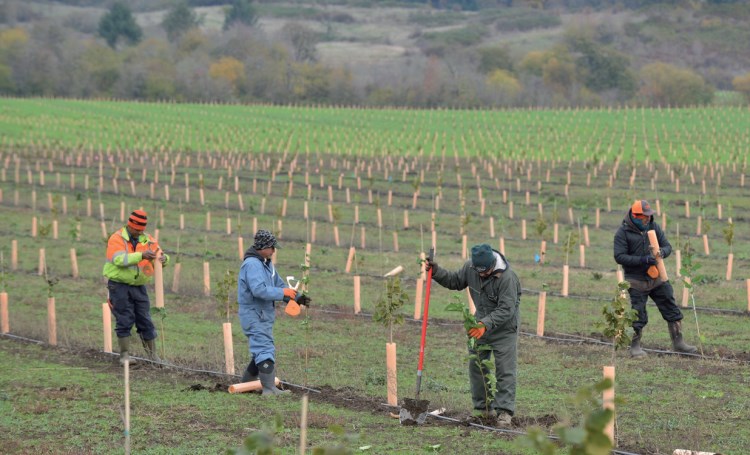
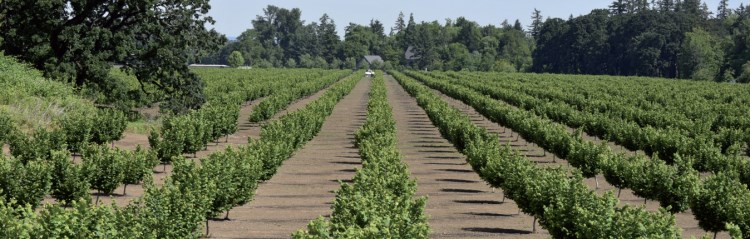
Driving through the Willamette Valley in Oregon, which extends from Portland in the north to Eugene in the south, one can see hazelnut trees as far as the horizon.
The area cultivates 99 percent of the hazelnuts grown in the United States on more than 73,000 acres, yielding a harvest worth $90 million annually for Oregon.
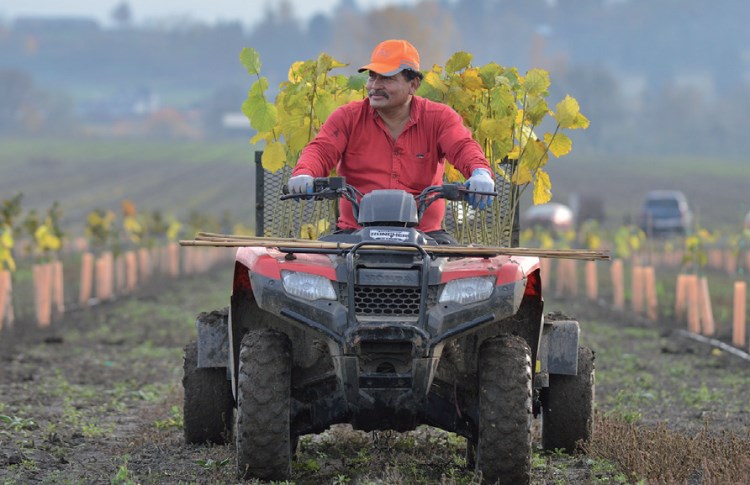
More than 800 grower families on farms nestled along the length of the valley have been raising the trees to support their families.
In the past five years, the number of hazelnut growers in the region has soared while Oregon's hazelnut acreage has more than doubled.
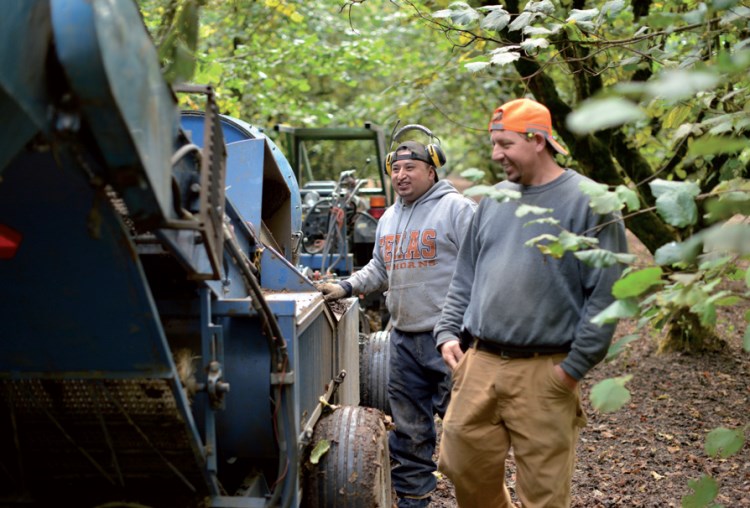
"New crops are seen everywhere now, about another 1,000 new families have started to raise hazelnut trees," Larry George, CEO of the George Packing Co, said with pride.
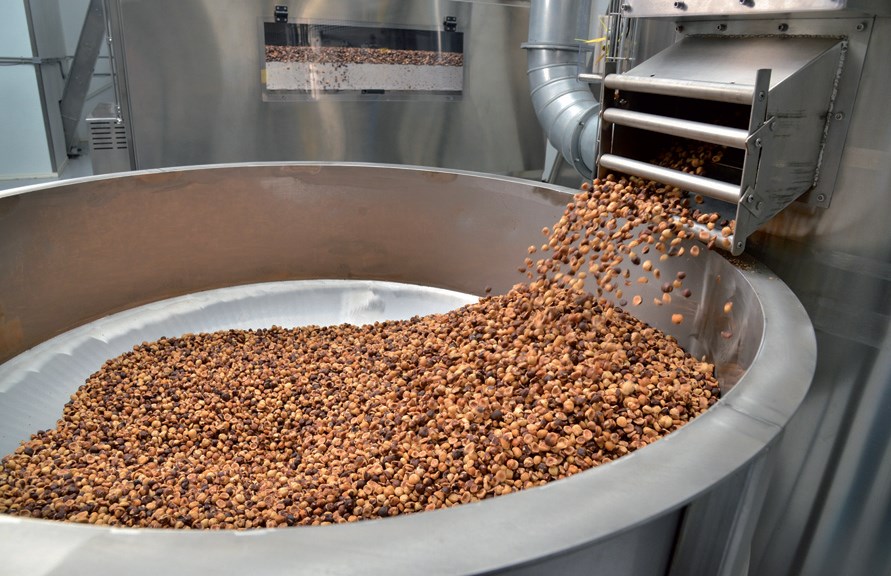
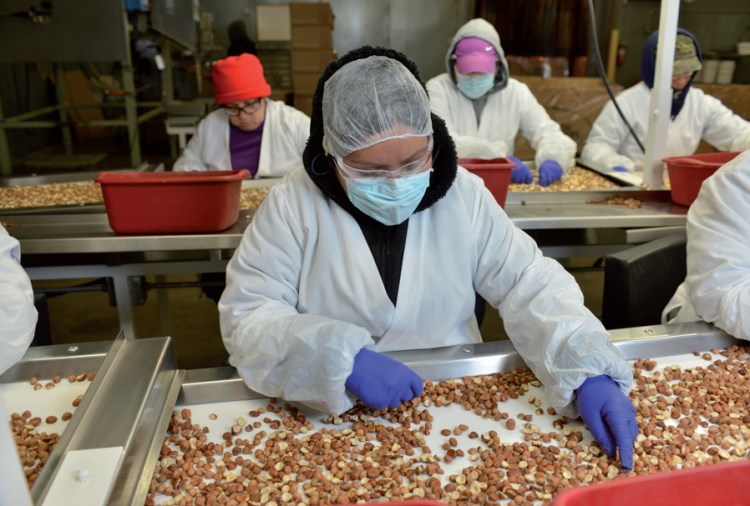
George's company is the largest processor and marketer of hazelnuts in the US and also one of the most technologically advanced. In peak season, more than 150 full-time employees work at the business.
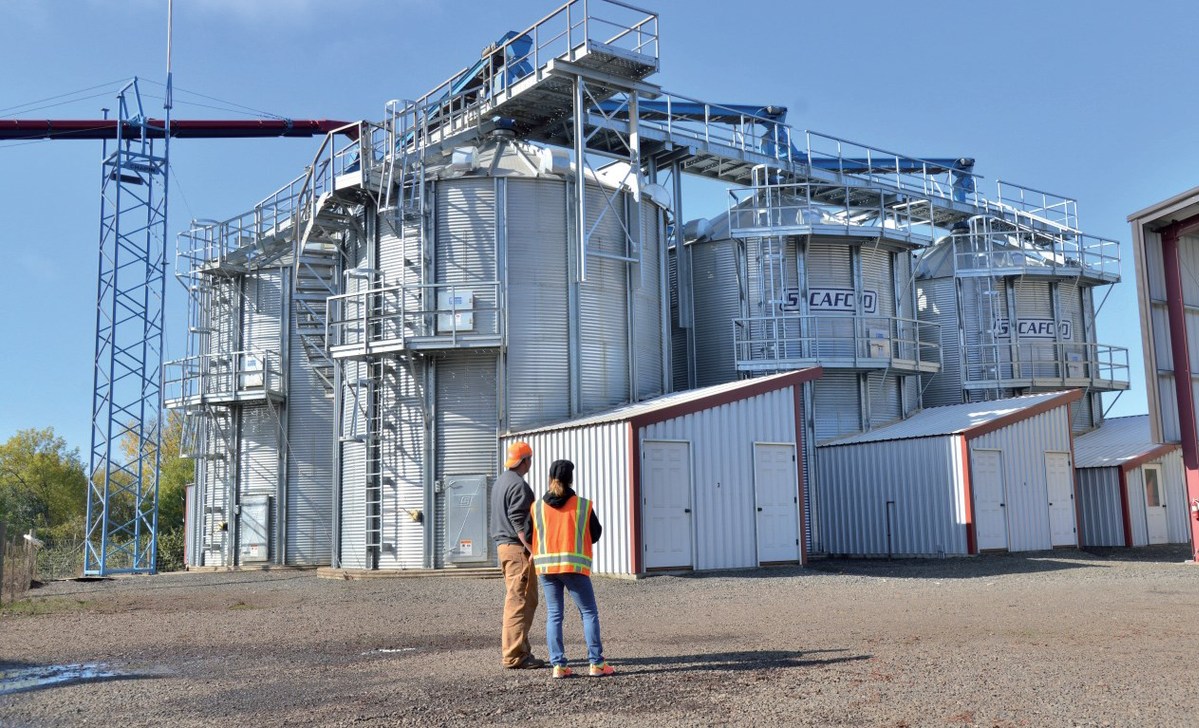
The workspaces are now being painted to prepare for the harvest. But George is concerned about the industry's and the local farmers' prospects.
In response to tariffs imposed by the Trump administration, China tacked an additional 25 percent tariff on US hazelnuts.
Previously, before the tariff increase, Oregon hazelnuts carried a 25 percent tariff plus a 10 percent value-added tax, so with the additional 25 percent plus 15 percent value-added, it will be 65 percent.
Oregon's hazelnut growers export 60 percent of their crop — more than 90 percent of that to China. The additional levies will make it difficult for Oregon growers to compete.
"China is our biggest customer. The families and their employees will be directly affected by high tariffs on hazelnuts. Thousands of small businesses that serve those family farmers will also be affected," George said.
"Some families have other crops, some have other businesses. But for the most part, especially for the newer growers getting into the industry, they depend on hazelnuts for their income," said Polly Owen, director of the Oregon Hazelnut Industry Office.
The Trump administration announced a $12 billion relief package for American farmers to compensate them for the impact of China's tariffs. Oregon hazelnut growers, however, will not be covered in that relief package.
"The reason is that we don't ship hazelnuts directly to China; we are not qualified," said Terry Ross, executive director of the Hazelnut Growers Bargaining Association.
Even before the recent strain in trade relations between the US and China, Oregon hazelnut farmers weren't in a competitive position to export directly to China.
China has imposed a 25 percent tariff on in-shell hazelnuts from the US as well.
To compare, in-shell US pistachios are subject to a 5 percent tariff, and in-shell hazelnuts from Chile face no tariff.
As a result, the domestic hazelnut industry has long shipped the crop to Hong Kong and other neighboring countries, such as Vietnam, where it's then shipped to the Chinese mainland.
Now with the tariff increase, Oregon hazelnuts will get a smaller export pipeline and may lose out on the China market.
To make local growers' voices heard, George has traveled to Washington twice to meet with Trump administration officials.
"My purpose was to let the government realize our industry is growing big (and) how important the Chinese market and US-China relationship are to the farmers of Oregon," George said.
Oregon's US senators Ron Wyden and Jeff Merkley, and US representatives Suzanne Bonamici, Peter DeFazio, Earl Blumenauer and Kurt Schrader spoke out on behalf of Oregon hazelnut growers in an Aug 15 letter to US Trade Representative Robert Lighthizer, US Agriculture Secretary Sonny Perdue and US Commerce Secretary Wilbur Ross.
"US hazelnuts now face even higher Chinese tariffs imposed in retaliation to new US tariffs on Chinese imports," wrote the Congress members. "US hazelnut farmers and producers find themselves at a disadvantage when competing with other producers that are subject to lower tariffs, or are not subject to tariffs at all.
"We urge you to engage with China to level the playing field for our Oregon farmers and therefore help their industry thrive. We encourage you to seek an elimination or substantial reduction of China's burdensome tariffs on Oregon in-shell and shelled hazelnuts as part of any future dialogue with China on tariff barriers to US agriculture exports," the letter said. "The reduction or elimination of these tariffs would make a meaningful difference to Oregon family farmers and US producers."
"Long term, this conversation had to happen, but short term, it could have a very negative impact on the 2018 crop. Those markets are time-sensitive. The problem is trade issues move slowly, but the crop doesn't change its speed," George said.
The hazelnuts will be harvested in September. Consumption peaks during the Chinese New Year in early 2019, but the crop must be shipped by October or November to make the market.
"Hazelnut is one of the main crops we get income (from) for our farm, and China is the main source where the crop goes. The tariffs really impacted our chance to get good prices and stable income for us. We are going into this season not knowing. ... Now the tariffs make the market tight," John Brentano of Brentano Farms Inc said.
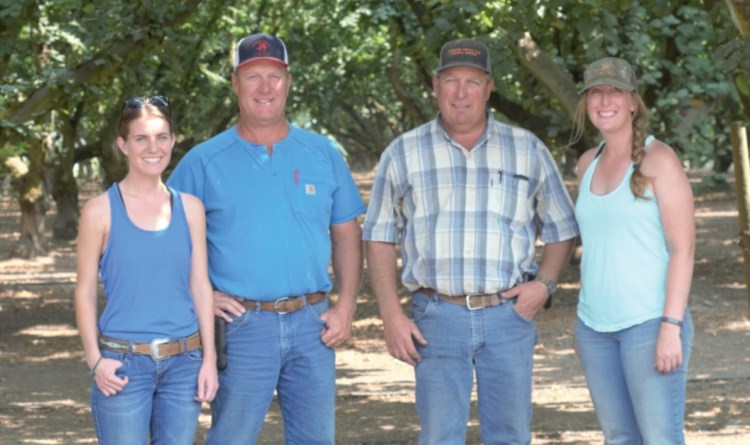
John Brentano and his brother Dan are fifth-generation growers at the family farm in St. Paul, Oregon. The farm is comprised of more than 2,000 acres and grows a diversified variety of crops. Hazelnuts make up 30 percent of their annual income.
John's daughter Stephanie Brentano, 28, and Dan's daughter Laney Brentano, 26, recently joined the management of the hazelnut orchards.
"They will be the sixth-generation growers, carefully handing down the traditions of raising hazelnuts," Dan Brentano said.
For grower families like the Brentanos, hazelnuts are a key part of their income. In a typical year, a harvest, depending on the world market, is worth between $20,000 and $100,000 before operational costs.
In 1856, English sailor Sam Strickland retired from the Hudson's Bay Co and settled in a small Douglas County community, where he planted the first known hazelnut tree in the Northwest.
More than 160 years later, Oregon's Willamette Valley's perfect blend of temperate climate, rich volcanic soils and water flowing from the Cascade Mountains come together to create full-flavored hazelnuts sought throughout the world.
"Famers chose hazelnut trees because we have just the right climate and soil conditions to have trees yield almost twice as much as they do anywhere else in the world," Owen said.
Both George and Terry Ross believe China is a "have-to-have" market.
George said Chinese customers love the Oregon hazelnut for three reasons: It is the largest in the world, has a world-leading quality-control system to keep the good quality, and it has very rich flavor.
Earlier this month, Ross attended the China International Tree Nuts Conference 2018 in Zhuhai, a city in Guangdong province. "It was such an amazing event, and you can see the great potential and growing demand in China's market there," Ross said.
"We don't want to give up the market. Without the China market, the local growers even would have switched to other crops during the great recession in the 1990s. Facing the financial pressure at that time, my father stopped growing hazelnuts, but my brother and I ended up founding a hazelnut packing company. The next year I got a client from Hong Kong, and we survived," George said.
"By reducing or removing the steep tariffs, Oregon hazelnuts would be shipped directly to China. It helps the trade deficit, we will pay Chinese taxes. This can be a win-win for the Chinese consumer, US farmers and both governments," George said.
Ross is concerned about the tariff, but he also sees an opportunity, that the new tariffs will create a dialogue between the Oregon hazelnut industry and the Chinese government.
"We are optimistic. We believe the current situation with the tariff issues between the US government and Chinese government can be resolved soon. We need each other [so we don't] jeopardize our futures," said Ross.
"The most important part for us with the tariff is we can we find a way to instill a legacy not just for my generation but the generations to come. When the tariffs have been resolved, that would really open the doors so that my children and children's children will have a place on this farm as well," said Laney Brentano.
Contact the writer at lindadeng@chinadailyusa.com










