Cities new sources of economic power








The world has a demand problem, and it is dealing with it all wrong. Rather than allowing itself to be harmed by other countries' problematic policies, China must work to create its own demand by making full use of its capacity for policy experimentation, long-term planning, and pragmatic decision-making.
In the decade since the 2008 global economic crisis, advanced economies have leaned heavily on easy monetary policy, hoping that large amounts of liquidity and ultra-low interest rates would generate enough demand to eliminate excess capacity. But this has undermined productivity, encouraged speculative activity, fueled asset bubbles, and exacerbated income and wealth inequality.
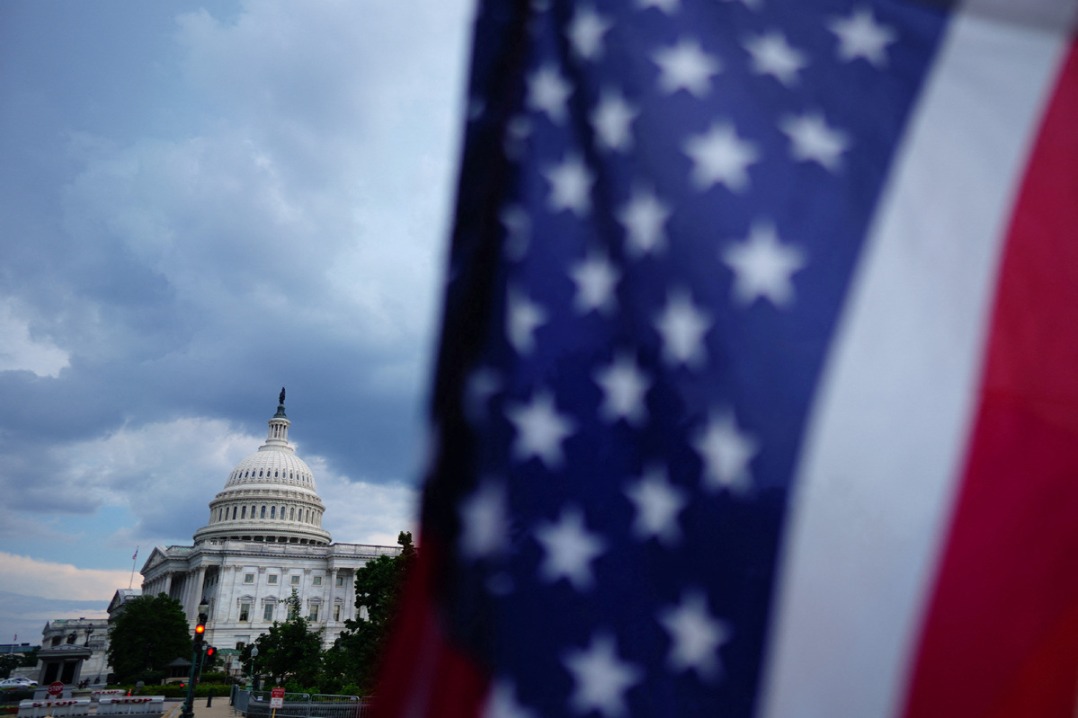
As people in developed countries have become increasingly frustrated with this state of affairs, politicians-in particular, US President Donald Trump-have attempted to appease them with immigration restrictions and protectionist trade measures. While this might temporarily satisfy some segments of people in those countries, it will ultimately make matters worse, by curbing global demand, exacerbating structural imbalances (including trade imbalances), and eventually leading to recession for all.
'BREEP methodology'is the way to success
All of this has significant implications for China, which has become the primary target of the Trump administration's tariffs, amid accusations that it is responsible for global excess production capacity. In this context, it has become even more urgent for China to curb its reliance on foreign demand and high levels of investment, by fostering sustainable domestic consumption.
Success will hinge on China's continued use of what we call the "BREEP methodology", whereby policymakers browse, research, experiment, evaluate, and push forward what works, continually refining their tools and tactics and adapting them to the job in hand.
Since 2000, China's long-term plan for boosting incomes, reducing inequality and protecting the environment has depended on the harmonious progression of innovation and urbanization. Specifically, China hopes to create green and efficient urban clusters populated by increasingly educated workers whose consumption patterns are sustainable in nature.
Exiting economic theories give little guidance on how to achieve the virtuous circle of rising income and rising productivity that is vital to dynamic and prosperous cities. But using the BREEP methodology, China has learned that rejecting one-size-fits-all approaches and promoting competition among cities is a valuable means of achieving breakthroughs in development strategies.
In 2010, the State Council, China's Cabinet, identified three major urban clusters as launchpads for smart urbanization: the Yangtze River Delta, Pearl River Delta and the Beijing-Tianjin-Hebei clusters. By 2014, the PRD cluster had morphed into the Greater Bay Area, covering nine cities around the PRD in southern Guangdong province, plus the Hong Kong and Macao special administrative regions.
China's city clusters have high GDP
As a recent HSBC report notes, each of China's top three urban clusters has a GDP higher than that of Spain; together, they will account for 45 percent of China's total GDP by 2025. Of these, the GBA is the smallest by population (about 70 million), compared with 120 million in the YRD cluster and 112 million in the BTH cluster. Yet the GBA contributes $1.5 trillion to China's GDP-a total of 12 percent-and accounts for 37 percent of the country's total exports. And its GDP growth is significantly higher than the rest of China.
The GBA is home to a high concentration of dynamic private businesses, such as Tencent, Midea and Huawei. It is also China's most innovative urban cluster, generating more than 50 percent of the country's international patent applications. And, according to HSBC, the GBA is the least burdened by inefficient State-owned enterprises and excess capacity.
The reason is simple: the GBA is far more market-oriented than its counterparts, with Hong Kong and Macao much more open to the outside world than any other Chinese cities. Both cities not only permit freer flow of goods, services, capital, technology, talent and resources, but also meet global standards in terms of regulations, business practices and soft infrastructure, even lifestyles.
Of course, China's leaders are not content simply to rest on the laurels of their successful urban clusters. On the contrary, they are working to apply their lessons across the country. For example, beginning in 2013, the National Development and Reform Commission, China's top planning body, clinically analyzed the lessons from Foshan, one of the GBA's most dynamic cities, in order to plan the further development of the cluster with better and more innovative strategies.
The NDRC pored over studies on smart urbanization by the World Bank, McKinsey and other organizations, in order to gain insight into how clustering could support economic growth and innovation. To augment their research, the NDRC planners worked directly with local officials, investors and foreign experts.
From in-depth study to experimentation
Then the experimentation phase began, with the establishment of the Shanghai Free-Trade Zone and the Qianhai-Shekou Pilot Free Trade Zone. Evaluations of those experiences led to last year's announcement of more FTZs, as well as the Xiong'an New Area, an ambitious plan to transform the dusty plains in Hebei province near Beijing and Tianjin into a dynamic green model city, by using cutting-edge technology. In fact, China is currently creating 19"supercity clusters", by strengthening the links among cities. By 2030, HSBC forecasts, those clusters will account for about 80 percent of China's GDP.
China should also work to foster even faster growth in urban clusters that are already successful. Within the GBA, Hong Kong, home to several of the world's top 100 universities, has a clear comparative advantage in basic research. And Shenzhen, Dongguan, Foshan and other GBA cities have a strong capacity for innovative market-oriented research and development as well as manufacturing. Improving connectivity within the GBA will thus support innovation in each segment of the supply chain, which can lead to products that can be sold to China's more than 1.3 billion consumers and adapted to global markets.
The threat of a trade war may not be good news for China, but it will not bring down the economy. The real challenge China faces is to take advantage of dynamic urban clusters like the GBA not only to generate growth, but also to address structural challenges like inequality and excess capacity in financially and environmentally sustainable ways.
Andrew Sheng is a distinguished fellow at Asia Global Institute, University of Hong Kong, and a member of the UNEP Advisory Council on Sustainable Finance. And Xiao Geng, president of Hong Kong Institution for International Finance, is a professor at Peking University HSBC Business School and at the University of Hong Kong's Faculty of Business and Economics.
Project Syndicate