Scientists led by Fudan University develop new imaging technique







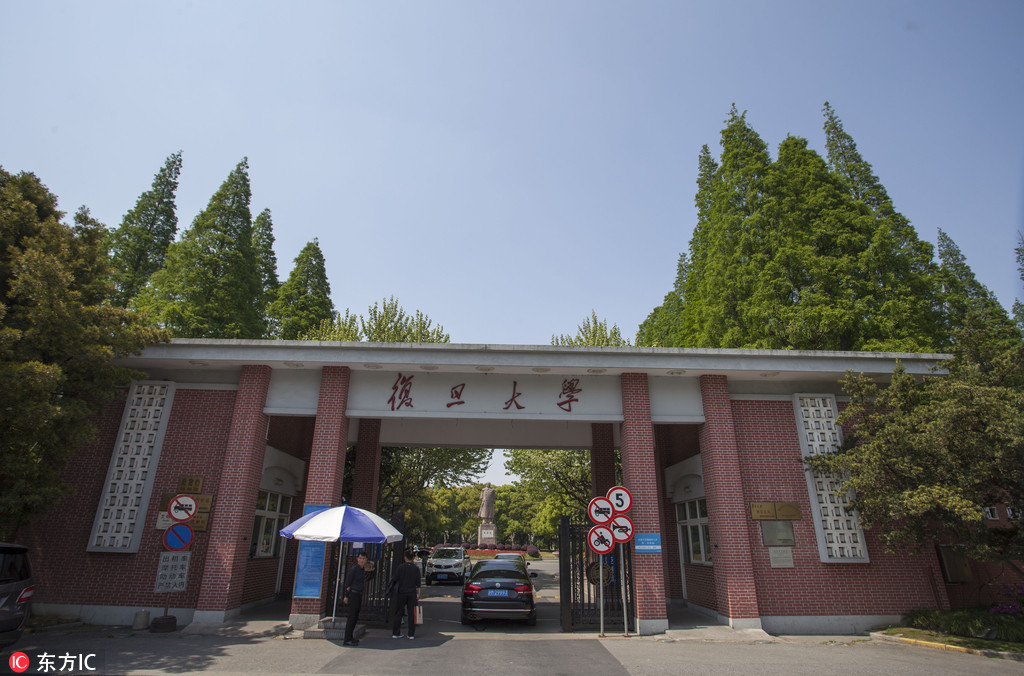
Researchers led by a team from Fudan University have developed a new form of nanoparticle and associated imaging technique that could change the way medical professionals detect disease biomarkers, including cancer.
The study, which is titled Lifetime Engineered NIR-II Nanoparticles Unlock Multiplexed in Vivo Imaging, was published in Nature Nanotechnology on August 6. Professor Zhang Fan from Fudan University's School of Chemistry is the lead author of the paper.
Presently, doctors have to perform a surgical procedure or biopsy on a patient to extract tissue which is then sent to a laboratory for testing. This new method developed by the researchers could pave the way for a less invasive diagnosis process.
Apart from Fudan, the international team of researchers also hail from the ARC Centre of Excellence for Nanoscale BioPhotonics (CNBP), Macquarie University in Sydney, Australia.
"The use of nanoparticles for bio-imaging of disease is an exciting and fast-moving area of science," research author Dr. Yiqing Lu at CNBP was quoted as saying on scientific site Phys.org.
"Specially designed nanoparticles can be placed in biological samples or injected into specific sites of the body and then 'excited' by introduced light such as that from a laser or an optical fibre," he adds.
"Disease biomarkers targeted by these nanoparticles then reveal themselves, by emitting their own specific wavelength signatures which are able to be identified and imaged."
Researchers say that they have already been able to detect different forms of breast cancer tumors in mice using this new technique.
"We're extremely excited where this work is taking us," said Zhang.
"This technique has the potential to provide a low-invasive method of determining if breast cancer is present, as well as the form of breast cancer, without the need to take tissue samples via biopsy.
"Ultimately our novel nanoparticles will enable quantitative assessment for a wide range of disease and cancer biomarkers, all at one time. The technique will be able to be used for early-stage disease screening and potentially utilized in integrated therapy."



- China launches satellite to aid in early extreme weather detection
- Report on mining accident that killed 6 suggests accountability for 42 individuals
- Law aimed at bolstering standard Chinese language education passed
- Connecting cities, changing lives
- World's longest expressway tunnel opens to traffic
- Taiwan lawmakers vote to pass motion to impeach Lai