



Cleanup after sloppy mountaineers a must







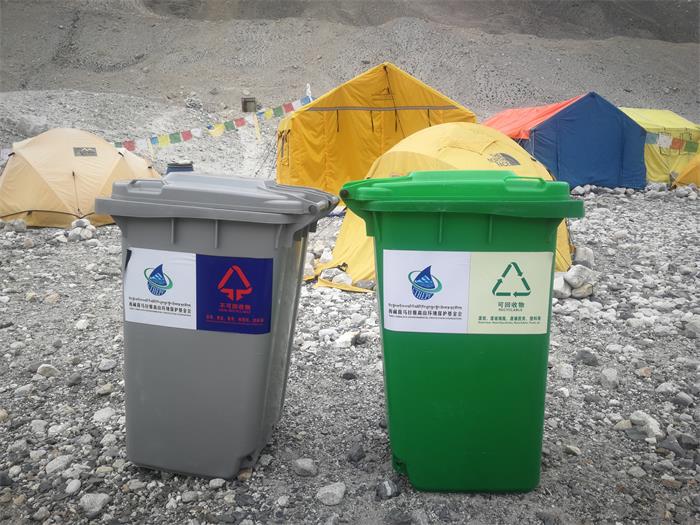
The Tibet autonomous region is taking steps to protect the environment of its mountaineering destinations, an official with Tibet's Mountaineering Management Center said.
The region began environmental protection work in mountaineering areas in 2003, and has stepped up the effort in recent years, the center's deputy director, Pema Trinley, said.
The region has five mountains above 8,000 meters, more than 70 above 7,000 meters, and more than 1,000 above 6,000 meters.
"Only 46 peaks are open to mountaineers, and cleaning is required whenever a climbing activity takes place," Pema Trinley said.
This year's cleanup campaign targeted human waste left by mountaineers at the Qomolangma Base Camp — at an altitude of 5,200 meters on the world's highest mountain, known as Mount Everest in the West — and at altitudes above 6,000 meters on it and two other mountains, the center said.
"The simple dry latrines at the Qomolangma Base Camp were cleaned first during this year's spring climbing season, and the toilets at the base camp were renovated with simple toilet seats," said Pema Trinley, who is also deputy chairman of the region's mountaineering association.
The 37-year-old said people tend to excrete less at high altitudes because of the high-protein diet, and, with proper supervision, the excrement on the mountains does not become a threat to water sources.
The human waste collected this year was that left behind by climbers this spring, he said, because no human waste from previous years remained on the mountain.
One difficulty they faced during the cleanup was finding someone to carry the human waste, because most locals believed carrying excrement on their yaks would bring them bad luck. Monetary and other inducements encouraged some to participate.
The business brought by mountaineers means residents in the Qomolangma area generally support the activity.
The center said cleaning of areas between the altitudes of 5,200 and 6,500 meters is mostly carried out by locals, with the cleaning of areas above 6,500 meters carried out by mountaineering professionals.
Nearly 400 people participated in the cleanup this year, including mountaineering guides, local villagers, mountaineering expedition companies, and staff from the regional sports bureau and NGOs.
Pema Trinley said four local people with yaks were hired to work as environmental protection coordinators in the Qomolangma area, collecting waste every day during the entire spring climbing season, and more locals were hired temporarily in other locations where climbing took place.
He said every climber is required to carry 8 kilograms of waste back down a mountain, with anyone who does not fined, and those who carry extra rewarded.
The waste above 5,200 meters was produced by climbers, while that lower down the mountains was mostly produced by locals and tourists.
"Local Tibetans have a tradition of throwing old clothes on the mountains, and some litter while herding on the mountains," Pema Trinley said, adding that some old waste on the mountains was also uncovered by glacial movement.
Tibetan mountain climbers have a tradition of hanging prayer flags at the summits of mountains. Nowadays, when they replace the old flags with new ones they are required to bring down the old ones to protect the environment.
Pema Trinley said there is an urgent need to train more locals to carry out the main work of waste collection next year, and training in environmental protection and rescue skills is also needed.
"Also we have to raise the standards of locals in such positions," he said. "They need to get certificates, with improved service standards and better awareness, and the quality of the work has to be improved.
"Our goal is encourage all the locals to become snow mountain protectors, which will generate income for them," he said, adding that it would also encourage them to abandon traditional practices that damage the environment.
Contact the writers at palden_nyima@chinadaily.com.cn


- Investigation uncovers mismanagement of donated artifacts
- Gold mine accident kills 7 in East China
- Defense minister greets foreign military envoys at Chinese New Year event
- Judicial efforts lead to decline in China's pollution cases
- SPP steps up food and drug safety oversight
- Visually impaired student's rail journey goes viral












