The future of US-EU relations







Transatlantic relations, or US-European Union (EU) ties, are the most important bilateral relationship in the world. For the past seven decades after World War II, this relationship has gone through many ups and downs. As both the US and the EU are major partners for China, a realistic judgment of its movement as well as its nature can have an important impact on the decision-making behind its foreign policy.
Brothers in battle
Soon after World War II, the US wasted no time in rebuilding Western European economies by implementing the Marshal Plan. Officially known as the European Recovery Program, this plan was supported by the US capital in the amount of $13 billion, nearly $110 billion in 2016 (adjusted for inflation).
During the Cold War, the US and its anti-communist European allies defeated the Soviet Union, leading to the fall of the Berlin Wall on November 9, 1989, and the subsequent disintegration of the first socialist country on December 25, 1991.
In overthrowing the Gaddafi regime and imposing economic sanctions against Russia's take-over of Crimea, among others, the US and the EU members united together over common interests.
As two of the most modern, most developed economies, the US and the EU decided in February 2013 to negotiate an ambitious, comprehensive, and high-standard trade and investment agreement called the Transatlantic Trade and Investment Partnership (TTIP). If and when negotiations conclude, TTIP will bolster their bilateral economic relationship and even raise their economic growth rates.
A rocky relationship
However, history shows that the transatlantic ties haven't always been on good terms. For instance, former French President Jacques Chirac and German Chancellor Gerhard Schr?der expressed their strong opposition to the US-led war in Iraq in 2003. In reaction, former US Defense Secretary Donald Rumsfeld said, "You're thinking of Europe as Germany and France. I don't…I think that's old Europe." The "old Europe" label caused uproar and anger in Europe at that time.
According to Edward Snowden, a former US Central Intelligence Agency employee who leaked numerous global surveillance programs to the media, the US had been bugging German Chancellor Angela Merkel's mobile phone for several years.
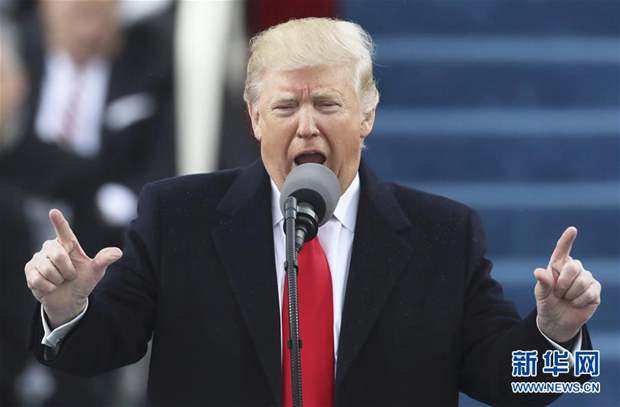
After Donald Trump came to power, transatlantic ties have encountered unprecedented challenges. He has repeatedly called for NATO's European members to increase their defense expenditures and even threatened to reduce the US military's presence in Europe if they fail to do so.
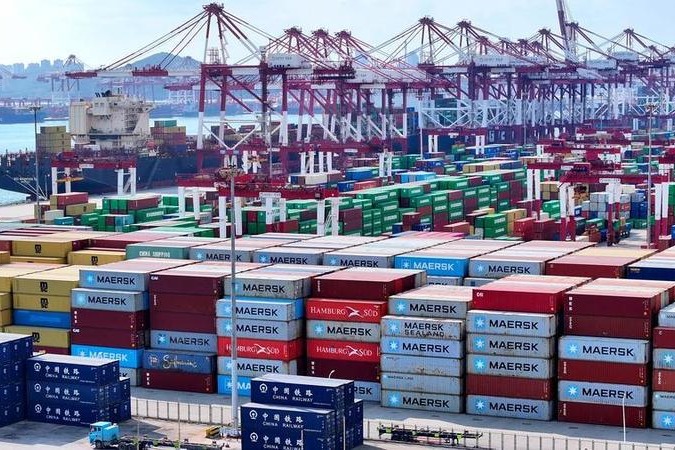
Trade conflicts between the US and Europe are not rare. For example, there is currently a trade war happening between the two sides. On June 1, 2018, the US applied a 25 percent duty on steel and a 10 percent duty on aluminum produced by European companies. EU Commissioner for Trade Cecilia Malmstr?m said of the tariffs that "today is a bad day for world trade."
As a matter of fact, the longest trade war in the world trade system occurred between the US and the EU at the end of the 1990s. Lasting for 17 years, this trade war was related to the "favored nation status" of bananas, granted by Europe under an international treaty, the Lomé Convention, to 71 African, Caribbean and Pacific countries, most of which are former European colonies.
Describing "the capricious assertiveness" of the Trump administration over issues including Iran, Gaza, trade tariffs and North Korea, European Council President Donald Tusk tweeted the following on May 16, 2018: "Looking at latest decisions of @realDonaldTrump someone could even think: with friends like that who needs enemies. But frankly, EU should be grateful. Thanks to him we got rid of all illusions. We realise that if you need a helping hand, you will find one at the end of your arm."
An optimistic outlook
Henry John Temple (1784-1865), a British statesman who served twice as British Prime Minister in the mid-19th century, once said, "We have no eternal allies, and we have no perpetual enemies. Our interests are eternal and perpetual, and those interests it is our duty to follow." Later on, it was re-paraphrased as "A country has no eternal friends, only interests."
Can this quote be applied to the transatlantic allies? The answer is definitely "Yes."
Despite what Trump has done and said to Europe, it would be na?ve to say that the transatlantic ties, the most important bilateral relationship in the world in the past and today, have come to a dead end. Rather, due to the following reasons, the US and Europe will continue to maintain their special strategic partnership.
Politically speaking, the US and Europe have common values to protect and common goals to cherish. This commonality was the foundation of their bilateral relations in the Cold War era, which continues to be the case today.
Regarding the economy, the US and EU are each other's most important partners. Their two-way trade and investment supports 15 million jobs. Neither side can afford to hurt their economic relations.
Indeed, NATO is where the rift is most often seen, casting doubt over the stability of the transatlantic ties. However, this military alliance will continue to provide security for Europe in the foreseeable future. Different opinions regarding the shared budget obligations should not be seen as the way towards its disintegration, but as a direction for a more powerful future.
Even in the areas of maintaining non-traditional security, such as fighting against terrorism and cyber-crimes, there is no doubt that the US and Europe share the same or similar positions.
In conclusion, it is counter-productive to cherry-pick the negative facts and examples surrounding the recent developments of the transatlantic relationship and rush to a simple conclusion that it is in the danger of breaking up. In the political and economic battles between the West and the rest of the world, the transatlantic allies will continue to be a united pair of powers.
The writer is a columnist with China.org.cn.