US tech claims biased and baseless








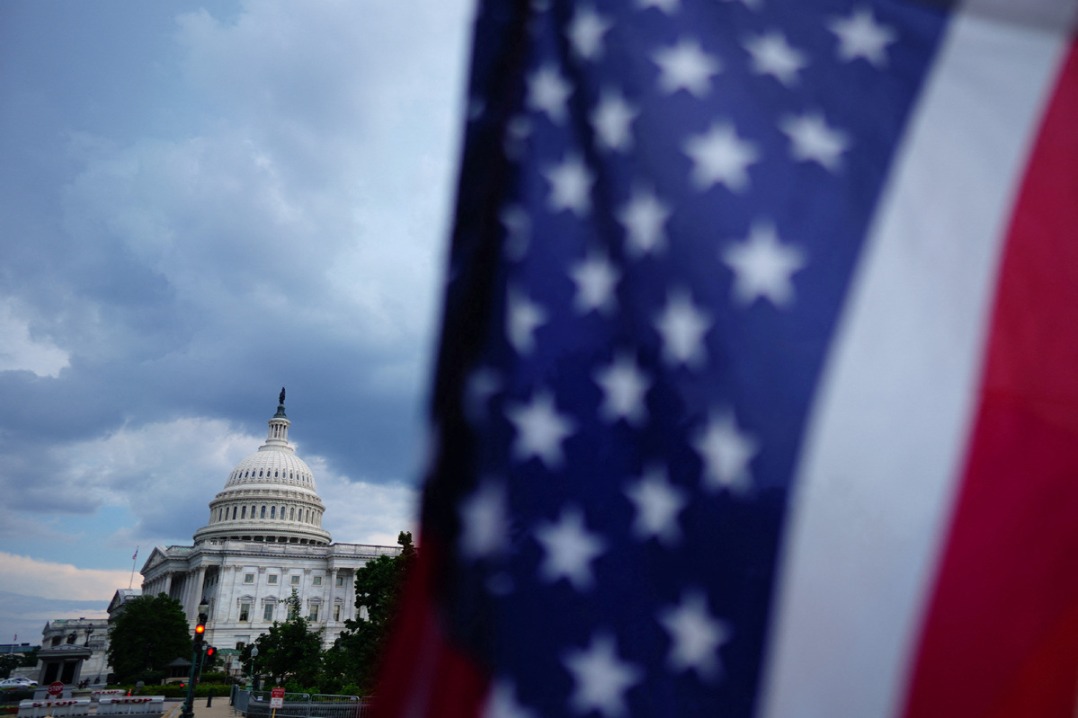
After the White House website published a report on June 19, accusing China of resorting to "economic aggression", "economic coercion" and "technology theft", the United States has used the ever-intensifying trade conflict to launch a "targeted attack" against China.
But groundless verbal accusations can never resolve trade disputes between any two countries, let alone between China and the US. They can be settled only through objective and rational analysis of the causes followed by sincere negotiations.
Many economies, especially newcomers to globalization, have used (and are still using) foreign capital, advanced technologies and management experiences to integrate into the international production system and its sales and services network. To expedite their economic development, these economies have also gradually opened up their market to the rest of the world. As for patent owners, the wide application of their technologies is an inherent requirement to maximize their economic value and get more returns on their innovations."Markets for technology" refers to transactions for the use, diffusion and creation of technology and knowledge. And its aim is to circulate existing technologies, or to produce or co-produce new technologies.
Science and technology have no frontiers. To some extent, civilization is a history of mutual learning and common progress of societies. And to ensure continuous progress, the societies have to learn from each other. Lest the US forgets, it became the technology powerhouse it is today because it utilized to the fruits of British and German industrial revolutions while also using them for "re-innovation" of technologies.
The US claims to attach great importance to global scientific and technological cooperation. Way back in 1999, the US National Science and Technology Council said in its annual report that the key demand for maintaining national security and keeping its global leading position determines the necessity of international scientific and technological cooperation for the US.
Aside from introducing knowledge from other countries, the US also attaches considerable importance to introducing scientists and technology experts from abroad to boost its innovation capability and consolidate its leading technological position. It is estimated that more than one-third of frontline researchers in the US were born in other countries, and the number of non-native US Nobel laureates was as high as 63 between 1901 and 2015, one-fifth of its total Nobel Prize winners. This makes the US' accusation that China introduces foreign talents and encourages overseas Chinese students to return home to boost its technological development not only ludicrous but also immoral.
Japan and the Republic of Korea are also good examples of the markets for technology model. During its industrial development, Japan encouraged people to learn advanced technologies from the US while vigorously promoting engineering and technological innovation, which helped it to become a manufacturing powerhouse. The ROK went through a similar course. So by pointing the finger squarely at China, the US is once again displaying its bias against China.
China has always attached importance to the protection of intellectual property rights while applying the markets for technology model. It also has been gradually bringing itself in line with international rules by revising relevant laws and regulations, and improving the domestic business environment. Since joining the World Trade Organization in 2001, China has not had any law or regulation that compels foreign companies to transfer their technologies as a precondition for getting market access, and introduced foreign technologies based on IPR transactions on a fair and equitable basis. And since 2001, the fees China has paid for using foreign intellectual property have grown on average 17 percent a year to reach $28.6 billion last year.
Thanks to its vast market, rich factor endowment, further opening-up and effective protection of foreign investors' rights and interests, China has attracted more foreign investment than any other developing country for more than 20 consecutive years. According to the latest World Investment Report, China is still the world's second-most preferred destination for investment by foreign-based multilateral companies.
True, China has benefited a lot from its economic and technological cooperation with the US over the past decades, a fact it has never denied. But the US, too, should appreciate that China has been following international rules, protecting IPRs and, more importantly, applying the markets for technology model to produce win-win results.
Economic data from the US itself indicate that between 2010 and 2015, the Chinese market accounted for a third of the increase in the global sales of the overseas branches of US-funded enterprises, and the average return on investment in China was higher than that in the US. And more than one US-based multinational has said the steady growth of the Chinese market helped them survive the 2008 global financial crisis.
That "opening-up brings progress" is a profound lesson and valuable experience China has learned from practice. No matter how and to what extent the external environment changes, China will unswervingly promote open innovation and engage in technological cooperation with other countries.
Exchanges and cooperation over the past 40 years have forged a friendship and mutually beneficial economic and trade relations between China and the US and between their peoples. So, when dealing with their trade conflict, the two sides shouldn't forget they shoulder the important global responsibility of steering the world toward stable development, which is possible only if they settle their trade disputes amicably and manage their differences effectively. This is also necessary to avoid losing the hard-won fruits of Sino-US cooperation.
The authors are researchers at the Development and Research Center of the State Council.