Turning tourism into a cultural industry







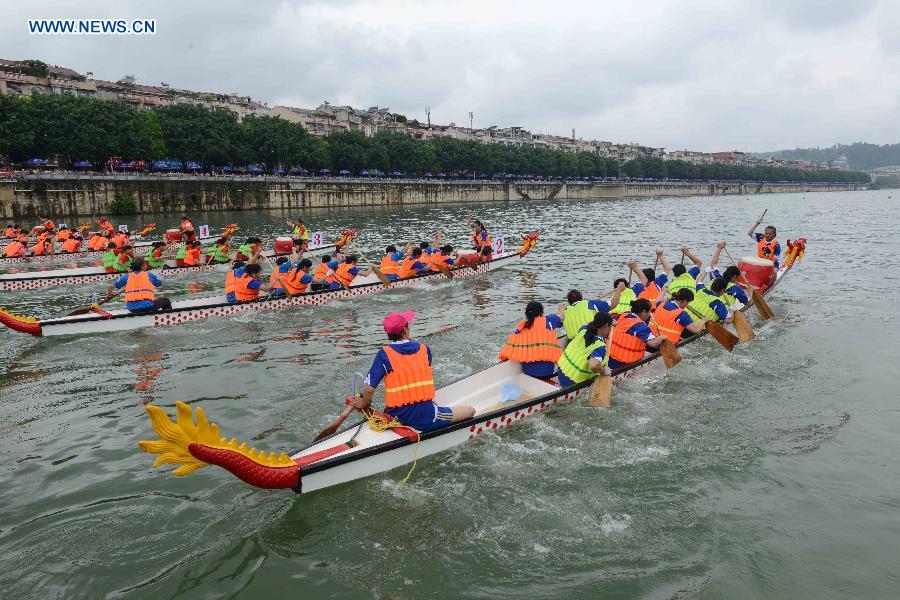
With Dragon Boat Festival round the corner, it's time to think about how to enrich tourism with traditional culture.
As part of the Party and State institutional reform, a key move in the year marking the 40th anniversary of reform and opening-up, the former Ministry of Culture and China National Tourism Administration were merged into one. The merger of the two departments under the State Council, China's Cabinet, is important for three reasons.
The merger of the two departments will boost Chinese people's confidence in their own culture and improve China's soft power. It will also help solve the long-term problem of overlapping duties and unclear functions of and the lack of coordination among departments at the local level.
As President Xi Jinping said in his report to the 19th National Congress of the Communist Party of China, the principal contradiction the country faces today is the contradiction between "unbalanced and inadequate development and the people's ever-growing needs for a better life". Addressing this contradiction, the merger will help the people, who no longer fancy superficial tourist trips thanks to their rising incomes, to explore the history behind and cultural importance of natural landscapes and other tourist attractions.
As such, the merger of the two departments will not only meet the needs of the people, but also conform to China's development priority. And the new Ministry of Culture and Tourism is expected to facilitate the integrated development of the cultural and tourism industries, as well as motivate relevant enterprises, organizations and the public to explore Chinese culture hidden in tourist sites. To achieve that goal, the authorities need to pay attention to several factors.
First, the cultural riches at tourist sites should be fully explored. As Xi stressed in his speech at the UNESCO headquarters in Paris, we should classify the traditional cultural resources, and let the cultural relics stored in palaces, the legacies spread across China, and the characters inscribed in ancient works come alive.
Second, modern technology should be used to promote the integrated development of the cultural and tourism industries. In fact, a new app called Dashijie, developed to better explain and promote the cultural importance of tourist attractions, including the Confucius Temple in Qufu, Shandong province, has already made a breakthrough in this filed.
Third, a new way of thinking is necessary for revitalizing the cultural assets at tourist sites. For instance, the Taoxichuan ceramics-themed community in Jingdezhen, Jiangxi province, was created on the site of an abandoned ceramic plant, with cultural centers, galleries and restaurants bustling with tourists injecting new vigor into the old ceramic plant.
Fourth, tourist brands should be established to promote the long-term development of cultural tourism. In this regard, Guizhou and Zhejiang provinces have set good examples, by establishing the tourist brands of "one cigarette, one tree and one mountain" and "impressions of West Lake", respectively.
Moreover, to enhance the experience of foreign tourists, special attention should be paid to certain factors. The authorities, to begin with, should increase their communication and exchanges with relevant departments in other countries so as to better understand the needs of foreign tourists. They also need to take measures to improve the tourism services in China not only to cater to foreign tourists but also to better serve domestic tourists. And they should find effective ways of spreading cultural awareness among foreign tourists so the latter can understand and enjoy Chinese culture even if they cannot speak Chinese.
Wang Xuebin is an associate professor at Party School of the CPC Central Committee. The article is an excerpt from his interview with China Daily's Liu Jianna.