Wetland protection, migratory birds are priorities in Tibet







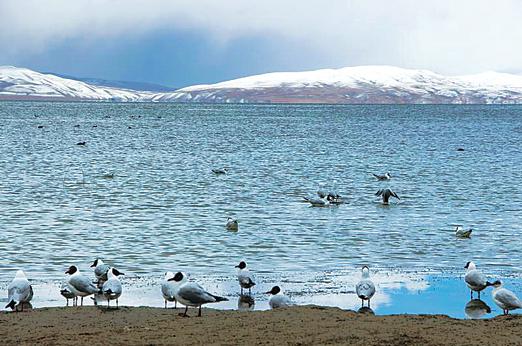
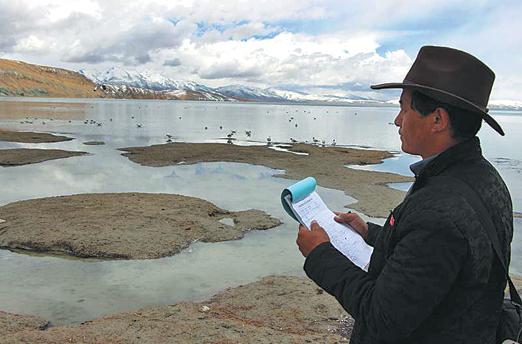
Pema Wanggyal used to earn his living as a herdsman in Shongpa, Tibet autonomous region, but three years ago he was given a promotion and a key role in protecting the environment.
His job since 2015 has been as a ranger at Lake Manasarova, known as a "holy lake", and his duties involve safeguarding the natural habitat around the body of water.
Each summer, Pema Wanggyal patrols the lake by motorcycle every two or three days. During the 30-kilometer trip of three to four hours, he stops now and then to peer through binoculars for animal carcasses or damaged grassland. He also collects litter left by tourists and religious pilgrims.
The 30-year-old is one of 18 rangers at the Jiwu Protection Station, one of six stations set up around the Lake Manasarova Wetland Reserve to protect its fragile ecosystem.
Lake Manasarova sits 4,500 meters above sea level in Purang county, Ngari prefecture. Snow melt from the Gangdise Mountains hugging the lake is the source of the nearby Yarlung Zangbo River as well as the mighty Ganges.
The wetland is a key "climate regulator" on the plateau and home to more than 400 rare species including the black-necked crane and the Tibetan wild donkey, said Tsewang Tengyal, deputy head of the Purang forestry bureau.
Enshrined as "holy lake and sacred mountain" along with Mount Kailash - or Gang Rinpoche, the second highest peak of the Gangdise Mountains - Lake Manasarova attracts a large number of pilgrims as well as tourists from home and abroad, especially in summer.
"I feel a big responsibility on my shoulders as Lake Manasarova represents not only the image of Shongpa village, but also that of Tibet," Pema Wanggyal said.
"I'm preserving the beautiful environment of the lake for future generations."
However, although visitors provide an income for villagers, they also pose a potential threat to the natural environment. "Some visitors throw trash such as old clothes and bottles on their journeys, and sometimes illegal fishing and bird poaching occurs," said Guru Tesring, a Shongpa villager.
The ecosystem around the lake is also under threat from overgrazing.
"The wetland is the habitat for wildlife and is closely linked with the lives of humans. It is affected by human activities," Tsewang Tengyal said.
To protect the ecosystem and biodiversity of the wetland, the habitat was listed as a pilot area for an ecological compensation mechanism funded by the Ministry of Finance.
Under the pilot program, impoverished herdsmen are employed by the Purang forest bureau as rangers to patrol the wetland. This has placed the wetland under protection and provides job opportunities for struggling families. Pema Wanggyal and other rangers receive a monthly salary of about 2,000 yuan ($315).
In addition to hiring rangers, subsidies are given to herdsmen to compensate for the economic losses incurred from grazing restrictions.
In 2016, 25 million yuan was used to finance the wetlands eco-compensation program in Tibet. The efforts paid off as residents have more impetus to protect the natural environment.
"We no longer litter the pasture with garbage when grazing livestock," said Ukin, a villager in Shongpa.
"More and more water birds rest at the lake."
Pema Gyalpo, former Party secretary in Shongpa, added, "As every blade of grass and every tree is protected, the natural environment in the wetland has improved, drawing an increasing number of visitors and bringing more income to villagers."
In July, the Lake Manasarova wetland was upgraded to a national-level reserve, and more efforts are expected to maintain the pristine environment of the "holy lake".
"We will enhance the self-sustaining capability of the reserve and build a scientific and efficient management system to build the Lake Manasarova wetland into a beautiful international park," Tsewang Tengyal said.




- Shanxi ends province-wide blanket fireworks ban
- Audit: China fixes bulk of fiscal problems tied to 2024 budget
- China reports major gains in circular economy
- Chinese lawmakers review draft revision to banking supervision and regulation law
- Top legislature to study draft laws on environment, ethnic unity, national development planning
- Administrative organs must secure people's interests: senior judge