China upgrades spacecraft reentry and descent technology







BEIJING - China has successfully tested its new space program's reentry and descent technology, which makes landing heavier spacecraft possible.
Current spacecraft landing methods such as parachute and airbag landings can not satisfy the deceleration needs of heavier manned spacecraft reentry missions, according to China Aerospace Science and Technology Corporation (CASC).
The CASC successfully conducted three experiments, involving upgraded parachute and airbag landing techniques as well as the inflatable reentry and descent technology (IRDT).
It published the test results on its website earlier this week.
The upgraded parachutes proved reliable with strong structure and performance and can be used to slow down a spacecraft at the initial stage of reentry.
According to the test results, the upgraded airbag landing technology uses high-impact materials to cover spacecrafts during landing and can increase the current deceleration capacity.
IRDT is a brand new integrated inflatable heat insulating deceleration system that CASC has deployed in experiments.
Future recoverable capsules based on IRDT technology can land spacecraft without heat shields and parachutes.
IRDT-based recoverable capsules will be able to provide buffer and protection to spacecraft when landing while inflating air bags which cover the spacecraft.
The technology will be used in deep space exploration and the quick return of space stations, scientific experiment satellites and space freight, said the CASC.

- Beijing community leads the way in grassroots governance
- HKSAR govt extends thanks to various units for supporting people affected by residential complex fire
- Influencers barred from vulgar, false, or harmful content
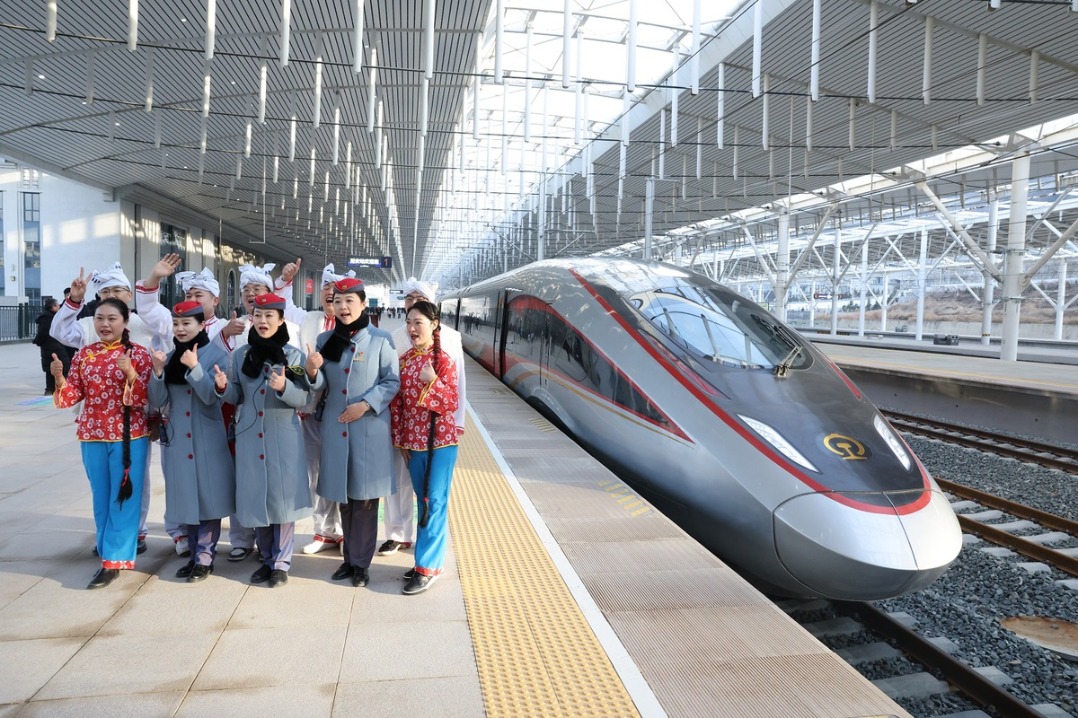
- Hangzhou–Quzhou High-Speed Railway begins operations
- China records rise in survival prospects for child and adolescent cancer patients
- Ministry unveils draft revision of the national air quality standards