Public-sector investors plan to increase RMB holdings







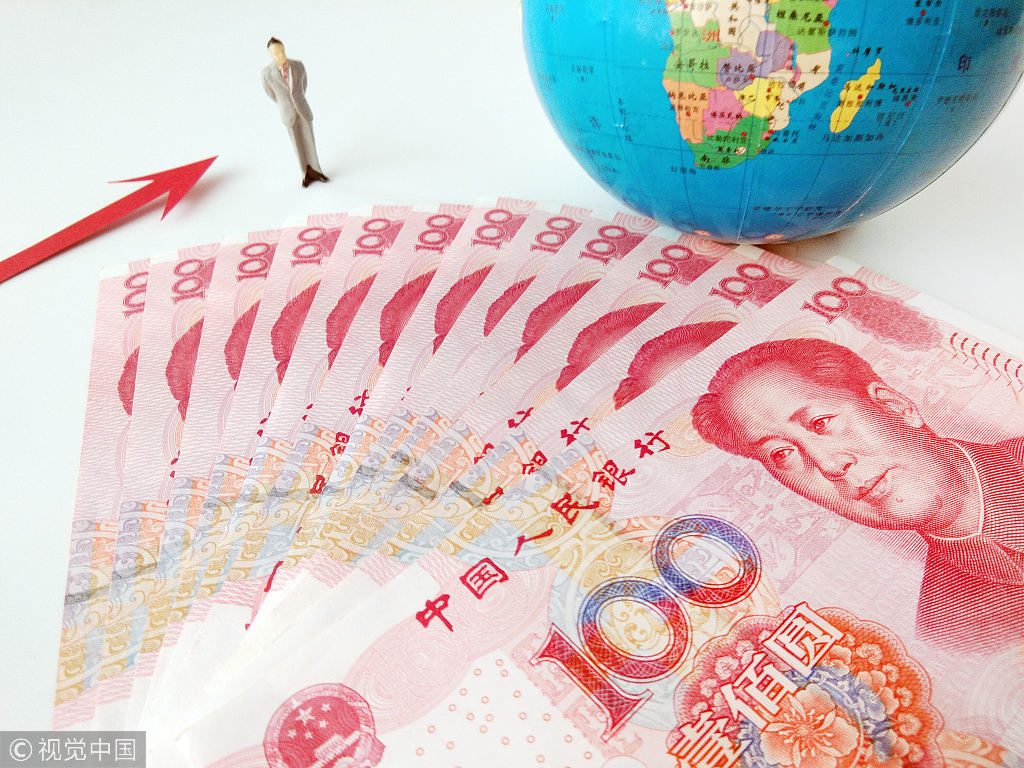
A significant portion of the world’s largest public-sector investors have said they will grow their holdings of renminbi-denominated assets during the next 12 to 24 months, according to a new survey by the London and Singapore-based think tank Official Monetary and Financial Institutions Forum, which is also known as OMFIF.
The survey shows 18 percent of respondents expect to increase their RMB asset holdings.
The dollar ranks in second place. Although 20 percent of respondents said they would either increase or significantly increase their dollar holdings, 11.43 percent of respondents said they will reduce their dollar holdings.
None of the respondents said they would reduce their RMB holdings.
The pound ranks in the third place in the survey, with 11.76 percent of respondents indicating they plan to increase their sterling stocks, and 2.94 percent indicating they will decrease their stockpile.
The respondents were selected from the world’s 120 largest public-sector investors, which includes central banks, sovereign funds, and public pension funds. Together, the respondents captured by the survey have $11.6 trillion in assets under management.
“The biggest demand for renminbi was from central banks. Their demand for the currency is motivated by its growing use in international transactions,” said Ben Robinson, deputy head of research at OMFIF.
The survey came just a week before the imminent inclusion of Chinese A-shares in the US-based MSCI Index, a move that is expected to significantly boost the RMB’s use as an investment currency, something that will encourage investors to hold more of it.
Meanwhile, a huge number of RMB-funded infrastructure projects in the region impacted by the Belt and Road Initiative have been lined up in Asia and the Middle East, something that will also boost demand for RMB, the survey concluded.
“All of these factors boost the importance to central banks of holding renminbi as a reserve asset, to ease any short-term balance of payments pressures that may arise with China, and to ensure liquidity,” Robinson said.
The respondents’ strong demand to hold RMB assets comes at a time when China is actively taking steps to allow international investors’ access to RMB-denominated assets, such as stocks and bonds. In November 2017, China decided to open its ?nancial sector and allow foreign banks, securities ?rms, fund managers, and life-insurance companies to own domestic assets.
International investors’ holding of RMB was traditionally low, due to the currency’s lack of convertibility. This changed in 2008, when the financial crisis pointed out the dangers of the world economy’s over reliance on the dollar as the dominant currency.
In the years that followed, the Chinese government took active steps to internationalize the renminbi, which involved both allowing overseas investors to invest in China’s domestic financial products, and the integration of China’s financial markets with others globally.
The International Monetary Fund’s decision to include the RMB in its Special Drawing Rights basket of currencies in 2016 was a milestone that acknowledged the progress, and which boosted investor confidence to grow RMB asset holdings.
So far, central banks, the largest holders of RMB funds, have $123-billion-worth of RMB holdings, which is relatively a low base. But that represented a 35 percent growth of value between the fourth quarter of 2016 and the end of 2017, the OMFIF survey said.