Hong Kong begins to embrace a 'smarter' lifestyle







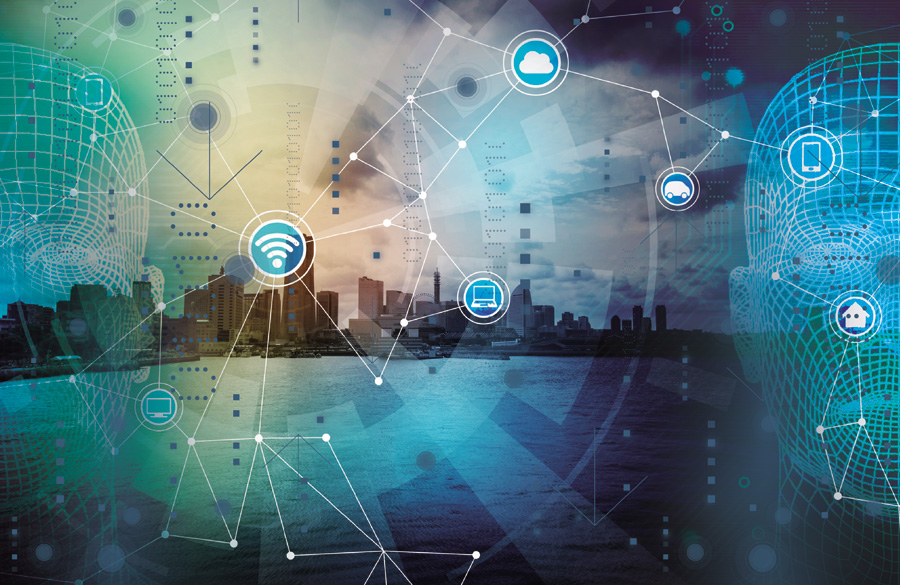
Transportation and healthcare are just two of the sectors that are benefiting from the appliance of science, as Wang Yuke reports.
As new technologies begin to penetrate most aspects of existence, Hong Kong is riding high on the global list of "smart cities" as it looks for new ways of making life safer, easier and more comfortable.
The Smart City Blueprint was only released in December, but efforts are already underway to assess the most promising aspects for incorporation in the city's daily life - and there are a lot of new technologies to choose from.
In February, Google and the research organization Verily Life Sciences unveiled studies that suggested retinal scans that employ Google algorithms are becoming increasingly accurate at diagnosing high blood pressure, strokes and heart attacks, and some physicians are using the scans to confirm their own diagnoses.
One of the acknowledged leaders in the field is Huawei Business Group. Zheng Zhibin, general manager of the company's Smart City Global Business Department, sees great potential for wearable devices that can spot hypertension and even heart disease, and send early warnings to potential patients.
Wireless medical devices can produce electrocardiograms, and monitor respiration, blood pressure, pulse and other physical signs.
"They can send the health data to the city's medical center or to hospitals. If the system spots an abnormality, the patient can be warned before they even notice the problem."
Wearables could also signal the end of grueling journeys to healthcare centers, because they can send patients' information to the medical professionals via the internet. Moreover, a smart healthcare cloud platform can arrange routine checkups, and Zheng predicted that soon doctors will be able to send prescriptions through the platform, which will minimize contact between physicians and patients in the case of minor ailments.
Transportation
The Smart City Blueprint is also set to ease transportation problems in the city.
At one time, travelers using Hong Kong International Airport were required to show their passports or identity cards at least three times before catching a flight. Now, they only need to show their documentation once - at the first point of contact - for a facial scan, which captures a full biometric profile. The scan is checked against the passenger's travel documents and a "travel token" is produced which allows the passenger through the remaining stages of boarding.
"Your ID is your face," said Vivian Cheung, deputy director of aviation development for the Airport Authority Hong Kong, which has streamlined procedures to help passengers, including foreign visitors, get on their way as quickly as possible.
The "Smart Departure" system, launched last year, allows travelers to use biometric-enabled e-gates at outbound immigration checkpoints. Visitors arriving from 74 countries are issued with a landing slip bearing a "Smart Departure" logo. When they leave, they need only to present their landing slip. Facial recognition technology compares the passenger's face with the image taken on arrival and the photo on their passport or ID card to confirm their identity.
In another development, the airport is testing robotic, driverless trucks to transport baggage from terminals to aircraft, according to Eric Yeung Chuen-sing, convener of the Smart City Consortium. He believes the driverless vehicles, which run via artificial intelligence, are more reliable than those driven by humans.
He said there is little likelihood that the robots will make mistakes, because they are programmed to travel along specific routes, while human errors frequently cause delays.
The same technology is also set to be used on Hong Kong's roads.
Alok Jain, from the independent think tank Civic Exchange, said vehicles will "talk" to each other through the city's fifth-generation communication system, which features the fastest-ever rate of data transfer, measured in terms of gigabits per second rather than megabits, as happens in 4G systems.
That means 5G is 100 times faster than 4G, and networks that use the technology can process high volumes of data with minimal transmission delays or interruptions. Relying on 5G wireless technology, information can be exchanged between vehicles, or even buildings, which is seen as essential for coping with the city's worsening congestion and the corresponding risk of more traffic problems.
However, the changeover will happen slowly because the 5G network is still undergoing early-stage testing and standards have yet to be established.
According to Yeung, only when all the vehicles on the city's roads have been fitted with the transmission equipment will intervehicular communication become really effective.
The combined use of the 5G wireless network and geofence technology will also help to eliminate congestion. Geofence technology uses GPS and Wi-Fi nodes or Bluetooth beacons to create electronic boundaries that can be placed around buildings or protected areas and issue an alert whenever a person or vehicle enters or exits the bounded area.
That means traffic managers can create electronic alerts that can be transmitted to oncoming vehicles in the event of road construction work, congestion, accidents or other hazards.
Tunnel vision
Looking ahead 20 years, Jain said vehicles will travel through underground tunnels at high speed, and the public transportation system will carry passengers on electric "skates" at speeds of between 200 and 240 kilometers per hour.
The Boring Company, an infrastructure and tunnel construction outfit founded by US entrepreneur Elon Musk, is developing tunnels and hyperloop trains to make the plan a reality.
In theory, drivers will park their cars on pallets, known as "skates", and the vehicles will then be carried along the tunnels.
However, the concept has provoked skepticism, especially as the cost of digging the tunnels is potentially enormous, estimated to be about $1 billion per 1.5 km.
According to Musk, his technology could reduce the cost to $250 million per 1.5 km, with the diameter of the tunnel reduced by a factor of two or more, and he believes it would be possible to stack the skates on top of each other to increase capacity.
Wilfred Lau, chairman of the Association of Consulting Engineers of Hong Kong, agreed that the concept could work: "Tunnel transport is suitable for intercity travel."
Lau has a vision of a hyperloop tube running from Hong Kong's Central district to Shenzhen, Guangdong province, with one or two stops in Kowloon and another in the New Territories before the line terminates at Shenzhen.
Zhang Lei, a researcher at the Division of Smart Cities at Hong Kong Polytechnic University, warned that it would be difficult to burrow deeper underground to make a sprawling tunnel network: "It's more challenging in Hong Kong, which is mountainous and has a high population density."
Those factors mean the city is vulnerable to subsidence and landslides, while earthquake-prone areas and places where fracking for oil is taking place are susceptible to instability. Deep tunneling could cause varying levels of damage to surface buildings and potentially create safety hazards, Zhang said.
Privacy concerns
Despite the prospects painted by the smart city experts, one persistent concern remains - privacy. Any device that connects to the internet has flaws that may be exploited by hackers, and the "smart city" concept is based on sharing, collecting and analyzing data. In the worst-case scenario, private information related to income and bank accounts could be at risk.
Yeung, from the Smart City Consortium, believes a balance must be struck between smart technologies and potential dangers. "If we don't share personal information on mobile devices with the internet, there's no big data and the technologies become useless. But if we share, there's a potential risk," he said.
Businesses are probably most vulnerable to cybersecurity threats, according to Jain, from the Civic Exchange think tank.
Last year, the average cost of global cybercrime was $11.7 million per organization, a report by Accenture and the Ponemon Institute noted. In 2016, the figure was $9.5 million, and it has risen by 62 percent in the past five years.
Last year, nearly 70 percent of business respondents from Hong Kong experienced losses as a result of cybercrime, according to The State of Cybersecurity in Asia-Pacific, a survey conducted by Palo Alto Networks, a business security company.
However, even though companies can create effective protection systems, risks will always remain. The reality is that even if a business does not wish to be part of the movement, its personal data will have already been recorded digitally and is therefore vulnerable.
"Companies' future business models and their success will depend on how effectively they implement cybersecurity measures," Jain said.
According to Yeung, while Hong Kong is ahead of many places in Asia in terms of protection of online privacy, more must be done to provide better security.
He is working with the Hong Kong Productivity Council on the implementation of a security standard for the internet of things that will offer guidance to customers choosing IoT devices. Suppliers of IoT products can participate in the program if they choose.
"Customers must want to buy products with recognized safety labels, which will enhance credibility and serve as an incentive for producers of IoT devices to improve their security measures," he said.
Eric Chong, president and CEO of Siemens Hong Kong and Macao, said: "Hong Kong has well-enforced rules to protect data privacy. With regard to the changing landscape, the data privacy laws are stringent and they will be reviewed from time to time to keep up with the city's development."
Practical issues
Zheng, of Huawei, said a number of practical issues will need to be resolved before Hong Kong can become a truly "smart" city. For example, popularization of driverless vehicles would prompt a sea change, such as massive layoffs across the industry.
In addition, Yeung noted that factors such as finance will need to be considered before progress is made, because building a smart city is a costly enterprise - a fact that is especially true for Hong Kong.
"The city was quite well-developed before the smart city concept was introduced, which means we will need to replace the old infrastructures and the aging installations with smart ones," he said.
Contact the writer at jenny@chinadailyhk.com




- Pact to boost China's gold market
- Annual lantern festival opens in Shanghai
- Work teams dispatched after earthquake hits Diebu county in Gansu
- Zhangjiajie National Forest Park transforms into a winter paradise
- Thousands enjoy freshly cooked laba porridge in Sichuan
- Short videos highlight the beauty of Hebei