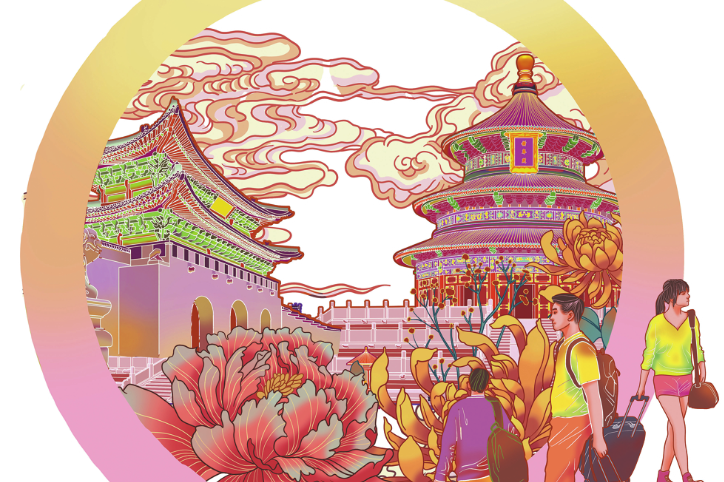
When the dragon and the tiger work together…







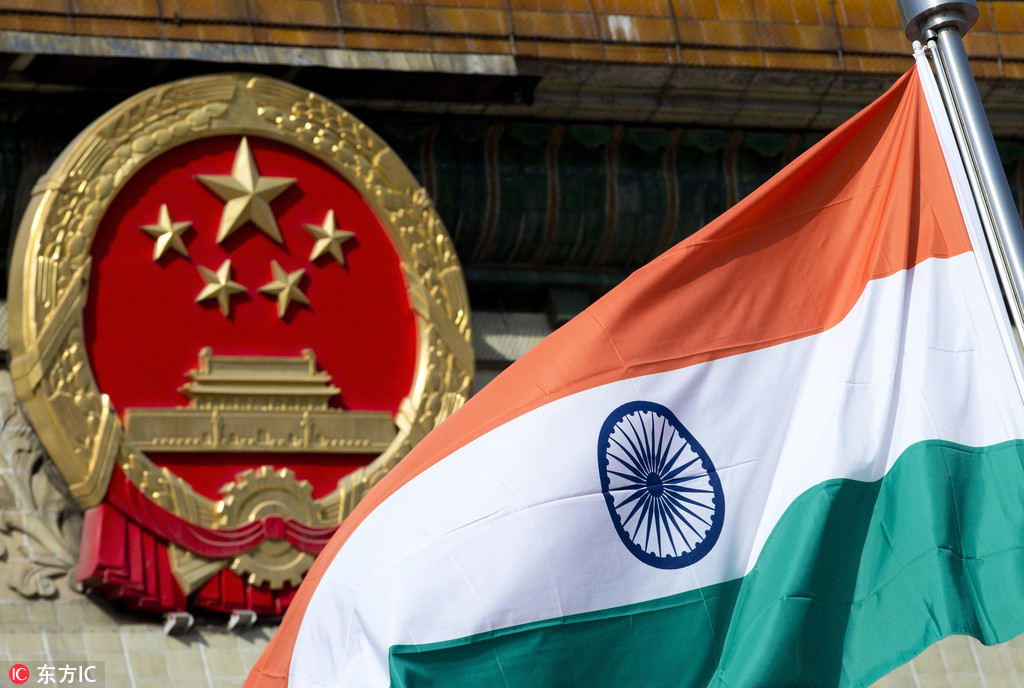
The dragon and the tiger are two ancient Asian symbols that express dynamism and strength in both China and India. The ancient Chinese science of geomancy or feng shui always necessitated having dragon and tiger elements in balance and synergy to assure both prosperity and peace. According to Hindu tradition, the god Vishnu assures maintenance, sustainability and prosperity of all existence, by floating dreamlike upon a bed of entangled Naga or serpent dragons.
Such symbolic innuendo will not be lost among the leaders of two nations that share over five thousand years of unbroken history, cultural and economic exchange among themselves, having both served as main sources of our world's heritage and culture. As China's President Xi jinping and Indian Prime Minister Narendra Modi meet in Wuhan on April 28-29, 2018, it potentially heralds a re-start of the ancient Silk Road.
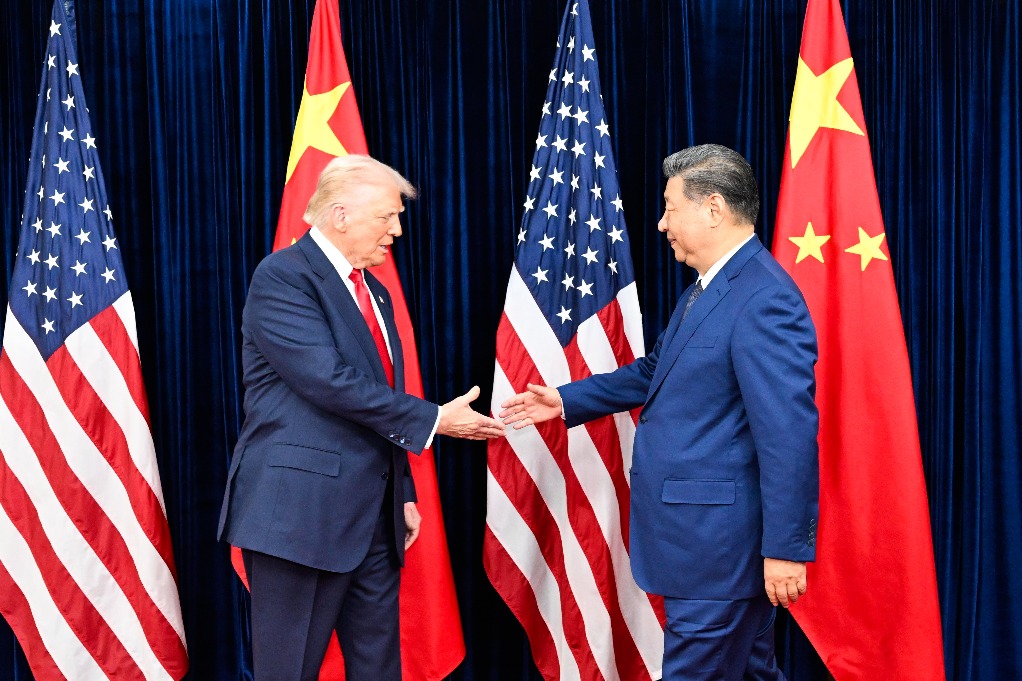
For millennia the Silk Road network of trade and commerce represented the economic order of our planet. From the historical perspective of both China and India, the two-hundred plus years of colonial, post-colonial and neo-liberal eras that sidelined these traditional exchange routes, marked only a very brief disruption in the overarching sequence of their shared history. Now it is time, to bring it all back. As President Xi and Prime Minister Modi shake hands in Wuhan this weekend, it could represent a historic moment. Yes, an ancient yet new strategic alliance that could prove a global game changer.
These two powers through policy coordination could implode a regional mega-trend of smart infrastructure integration, enhanced through technology, telecommunications, and digital finance. Today China stands as the largest single global investor in artificial intelligence and quantum communications. India is the world leader in software outsourcing and IT consulting. Both nations are the largest innovators and users of digital financing networks and cell phone banking systems, pioneering financial empowerment into the most isolated villages where their low-cost smart phone penetration is already strong. The future of innovation is no longer in Silicon Valley, but rather in the arc spreading from China's Great Bay (Shenzhen-Hong Kong) to India's Bangalore. The question now, is how to better integrate it.
China's Belt and Road offers a blueprint for integration. So does India's Act East policy. For consecutive years, the Himalayan Consensus Summit held annually in Kathmandu has called for both policies to become integral and synergistic rather than viewed as separate and isolated from each other. To say that India is not a participant in China's Belt and Road Initiative (BRI) is to ignore the fact that alongside China, India is the second largest investor in both the Asian Infrastructure Investment Bank and the (BRICS) New Development Bank. Both serve as the leading financial institutions for the BRI. In the area of infrastructure and communications, both nations will only gain from coordinating and synergizing their respective development policies. Such new infrastructure will need to be smart, green and blue. Certainly China and India are now leaders in scaling renewable energy innovations as viable commercial solutions.
Environment and climate change are the most critical issues requiring information and policy coordination. Both nations are the treasurers of our planet's vital resource, the Himalayan glaciers. River systems from shared glaciers are the main water source for one quarter of the world's population stretching across Central, South and Southeast Asia. Thousands of trans-boundary river systems pose challenges of both water supply and sanitation. As the two leading regional powers, both China and India must act together in averting imminent water crisis that could pose unprecedented costs of water, food and health security along with natural disasters, migration, and regional instability.
For this very reason, Professor Mahendra Lama, one of India's Eminent Persons and member of Himalayan Consensus board, proposed at the 2016 Himalayan Consensus Summit that an alternative people-to-people and think tank mechanism should be established to mitigate crisis and avert conflict by addressing root causes rather than effects. At the 2018 Himalayan Consensus Summit, Nicholas Rosselini UN China Regional Coordinator announced the launch of the UNDP-Himalayan Consensus "Silk Road Dialogues" focusing its 2018 agenda on environmental and technology discussions aimed at improving China-India relations. Nirupama Rao, former Indian Foreign Secretary and member of Himalayan Consensus board, called for a Himalayan Charter for the establishment of a Himalayan Council where regional governments can convene on climate concerns as proposed by ICIMOD Director General, David Molden, also Himalayan Consensus board member.
In this time of global volatility, when western leaders and policy makers are lost amidst political myopia, disregard of both long-term climate and human dignity in favor of short-term greed, our planet is in search of a new direction to avert climate crisis and war. That voice of sanity may very well come from two ancient nations who have historically offered the world some of its deepest philosophical foundations. Europe may need to think about rebalance. Africa, whose largest inbound investors are China and India, can see the equation clearly. South America may be thinking along the same lines.
This is a time when no nation can put itself first, and everyone must coordinate and work together for the sustainability if not existence of our planet. It is time to realize a "community of shared future for mankind" as a vision to shared among us all. Maybe now is time to "act East" and not look west.
Laurence Brahm is Founding Director of Himalayan Consensus, an environmental think tank, and International Research Fellow with the China Center for Globalization.