The art of success








The architecture business revolves around more than just good design – it’s about treating the people right. Acclaimed US architect Arthur Gensler speaks to China Daily USA about his winning formula
When Arthur Gensler set up his eponymous architecture firm 52 years ago, he had just $200 to his name. He had a wife, Drue Cortell, and two sons. He was living from pay check to pay check.
Apart from his wife, who helped with administrative matters, Gensler had only one employee named Jim Follett, a draftsman. All he had in his tiny sublet office space located near Jackson Square in San Francisco was four drafting tables.
Today, the Gensler architecture practice is the largest in the world, hiring more than 5,500 people in over 45 locations. The firm’s revenue for 2016 was in excess of $1 billion.
But ask the genial 82-year-old how he managed to accomplish this rags-to-riches feat, and he’s unlikely to wax lyrical about the poetics of space, or how light and architecture share a symbiotic relationship in design.
To Gensler, what matters most is not how ground-breaking a building or interior design is — it is all about the people, be it the employees or the clients.
“There is no such thing as the perfect design. Some people might like it. Some might not,” he said.
“I’m not a complicated person. One thing I get upset about is how architects like to use fancy words that don’t mean a thing. If I don’t know what they’re talking about, clients could not possibly know what all these stupid terms are,” he added.
Gensler was in Shanghai on April 17 to share his principles behind running a successful practice. He also launched the Chinese version of his 2015 book Art’s Principles: 50 years of hard-learned lessons in building a world-class professional services firm during the trip.
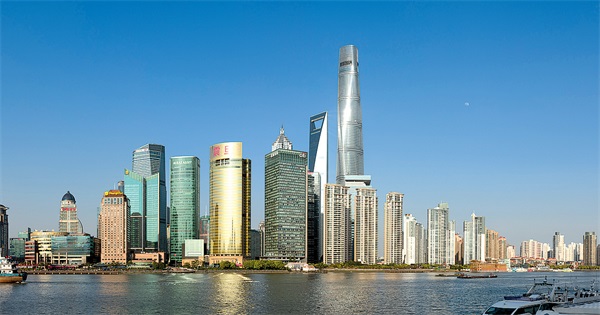
His firm has undertaken numerous projects in China over the past few decades, including the Shanghai Tower, the second highest building in the world, and the interior design for the Starbucks Reserve Roastery in downtown Shanghai.
He is the winner of the 2016 Shanghai Magnolia Award, which is bestowed to outstanding foreign individuals who have made significant contributions to the city.
The octogenarian’s penchant for simplicity is clearly evident in his book, which is devoid of architecture jargon and filled with rudimentary but quirky illustrations. The writing is snappy. He even has several pages that are in point form.
His firm’s values are no different.
“We have a very simple philosophy. A lot of architects and designers talk using ‘me’ and ‘I’. Here at Gensler, we see it as a collaboration between us and our clients. It’s ‘us’ and ‘we’ instead of ‘me’ and ‘I’,” he said.
This emphasis on the people is what Gensler says has helped the company become what it is today. He spoke passionately about the importance of turning a company into a family.
He wants each individual, even the tea lady and the receptionist, to feel a sense of belonging, as if they are co-owners and not merely employees.
One of the ways he has strived to achieve this is allowing staff to own stock in the company. He also advocates paying the company leaders last when it comes to bonuses. In times of financial uncertainty, he insists that companies should not axe the annual staff parties but instead turn to other measures of cost-cutting.
“Some companies have a few stars who call the shots. Here at Gensler, we have a constellation of stars. This allows us to provide quality service in every area. Don’t be afraid to hire someone you think is smarter than you. I think I have often surrounded myself with people who are far smarter than I am,” he laughed.
“I’m pretty good at some things, but there are things that others are much better at. I’m probably behind the curve when it comes to technology. Just this morning my son had to teach me how to turn the light on for my iPhone. I also didn’t know how to set an alarm on the phone.”
Another unique trait of the firm is its profit-sharing approach. While most companies split profits based on work units, something he said promotes “silo thinking”, Gensler does so on a firm-wide basis. He said this makes offices in different countries more willing to share their clients, in turn fostering greater bonds within the Gensler family.
He does however believe that work and life should be cast in their own silos.
“When I get home I never talk about business. When I’m at home I want to talk about family matters, holidays, baseball games and having fun,” he said.
“I think you need to compartmentalize your life. When you work, work like crazy. When you play, forget the work and just play.”
Born during World War II, Gensler’s fascination with architecture started when he was just six. Then, he would draw floor plans and build models using Lincoln Logs, a popular toy set featuring miniature logs that children used to construct buildings. He even built his own car to compete in the local soap box derby. In his book, Gensler wrote: “The Derby had everything I loved: design, hard work, and competition.”
He is particularly vocal about the last factor. Competition, he said, should be based on the quality of design and service — not pricing. Haggling is not in Gensler’s DNA. Honesty is.
“Fifty of the top law firms in the world are our clients. Two hundred of the top 500 companies in the world are our clients. We don’t negotiate with them. They pay a fair fee,” he said.
“Winning for us is to have a wall full of pictures of our projects. And behind each picture is a happy client who will hire us again and again. We may charge higher than some people, but we provide a better product and better service, and this is what this firm is built on. We didn’t become the biggest firm in the world by competing on price point.”
One of the company’s repeat clients was tech virtuoso Steve Jobs. Gensler designed most of Apple’s office spaces until Jobs was fired. When the Apple founder returned, he contracted Gensler again to build the company’s first hundred stores.
Gensler still vividly remembers his dealings with Jobs. After all, Jobs was the first person to ever give him the sack.
But there are no hard feelings. In fact, Gensler wasn’t afraid to admit that his company had messed up.
“One of our people started working with Microsoft and Steve called me up one day and told me that I was fired. I had never been fired before in my career. He fired us because he didn’t think we should have worked for Microsoft,” he said.
“(Working for Microsoft) probably was the wrong thing to do. We shouldn’t have done it.”
Gensler might be well into his twilight years and occasionally has problems getting up from the chair, but his vivacious mind doesn’t reflect his age. His son, David Gensler, said that his father’s source of energy comes from his inquisitiveness and an unwavering dedication to service quality.
“He gets so much energy because he has this incredible amount of curiosity. Even today, when we go to see clients, he’s always asking questions. He’s always looking at things to make sure that we can help the client become better,” said David, who was formerly one of the CEOs of the Gensler firm.
Looking back to his humble beginnings, Gensler said he never once felt poor. Even today, he doesn’t feel rich — because his focus has never been on money. He encourages the entrepreneurs of today to adopt the same mindset.
“Don’t worry about how much money you’re going to make. Worry about your product instead,” he said.
“Create a product that has the best quality and best value for the client and you would naturally be successful.”
Contact the writer at alywin@chinadaily.com.cn