Policy decisions not because of US threat







Most media, everywhere in the world, cater to their domestic audiences by stoking the fires of nationalism. This is no extraordinary insight: human beings, rooted in common evolutionary history, are territorial and tribal animals; we take pride in our home countries, just as we do in our home sports teams (the word "fan" is short for "fanatic"). Patriotism, taking pride in one's country, is laudatory and energizing, but if excessive, misdirected or blinding, it backfires and becomes counterproductive.
In covering the claims and counterclaims, moves and countermoves of the United States and China in what some label "a looming trade war", some media outlets like to frame the question in terms of a tough-guy metaphor-"who blinks first?"-as if international economics is the children's game of staring each other down.
But "who blinks first?" is a myopic viewpoint, mischaracterizing as a weakness what may be a strength-a sophisticated, nuanced pathway that can lead to a mutually beneficial, win-win solution. Win-win does not mean compromise, though it often involves compromise, or at least appreciating the other side's way of thinking. Winwin means optimization, non-zero-sum, where the gain to your side does not require a compensating loss by the other side.
President Xi Jinping's closely watched keynote address at the 2018 Boao Forum for Asia on Tuesday, given at a moment of high tension between Washington and Beijing, sought the virtue of win-win optimization. Certainly, Xi's overarching mission, as is the mission of every head of state, is the wellbeing of his own people and country. Yet, due to China's huge and growing powers, Xi recognizes that in today's interconnected world, concern for less-developed countries as well as care for the global commons is essential.
To appreciate Xi's words, we need to look at the conditions just prior.
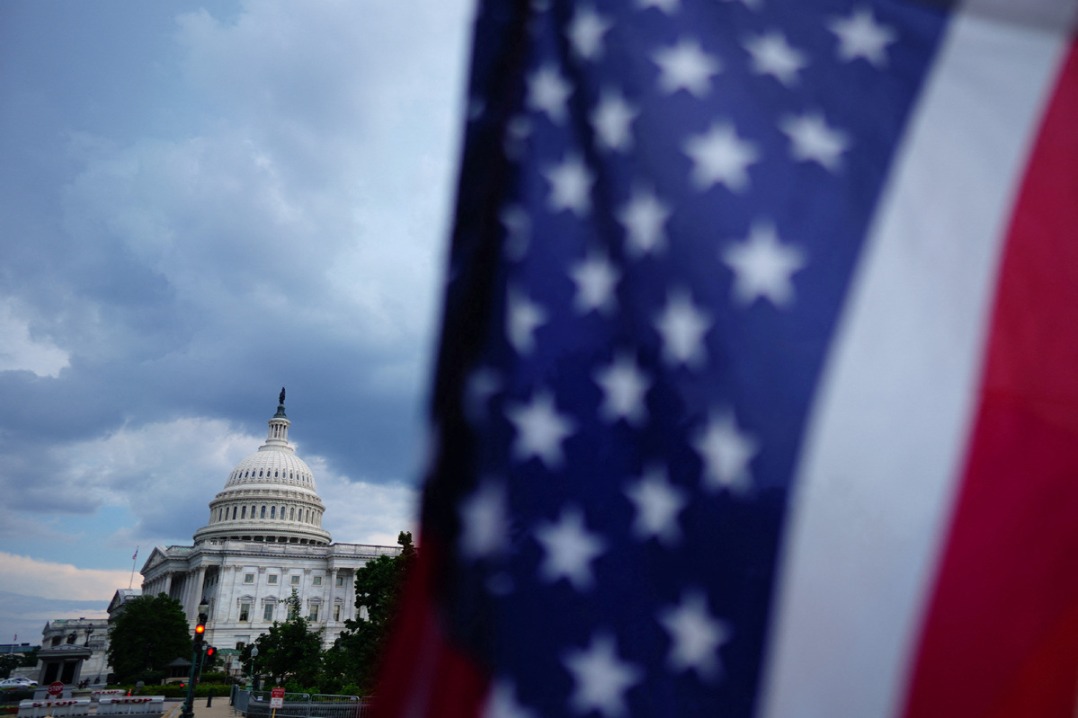
On April 3, the Donald Trump administration released a 58-page list of 1,300 Chinese imports worth $50 billion that would be subject to new US tariffs of 25 percent. The US accused China of "economic aggression", setting unfavorable and unfair conditions for US companies and of industrial cybertheft.
Most US economists and business executives reject sweeping tariffs targeting China, disagreeing vehemently with Trump. Tariffs are taxes on US consumers who will have to pay higher prices, they say, prop up old industries and impede the industrial transformation the US needs to create the new economy. At the same time, these same American experts and leaders broadly condemn "the negative economic impact of China's industrial policies and unfair trade practices". On getting "tough with China", I have not seen such consensus between both ends of the US political spectrum.
A storm seems to be brewing: the seas of China-US relations do not look calm.
On April 4, China's Ministry of Finance declared that it would impose 25 percent tariffs on 106 US products worth $50 billion in 14 areas, including soybeans, automobiles and chemicals, with the effective date of the new tariffs depending on when the US tariffs on Chinese products go effective. In addition, China filed a complaint with the World Trade Organization, questioning the legality of the US tariffs, and asked WTO member states to "lock arms with China".
On April 5, President Donald Trump doubled down by threatening to impose tariffs on an additional $100 billion of Chinese imports. On April 6, China's Ministry of Commerce responded by reiterating that China will fight to the end to defend its legitimate interests and is willing to pay any price if the US sticks to unilateralism and trade protectionism.
And on April 10, President Xi spoke at Boao, addressing concerns that some have regarding China's rise. China upholds, not undermines, the international, rules-based order, he said. China will not threaten anyone, nor attempt to overturn the existing international system, and will not seek spheres of influence, no matter how much it develops.
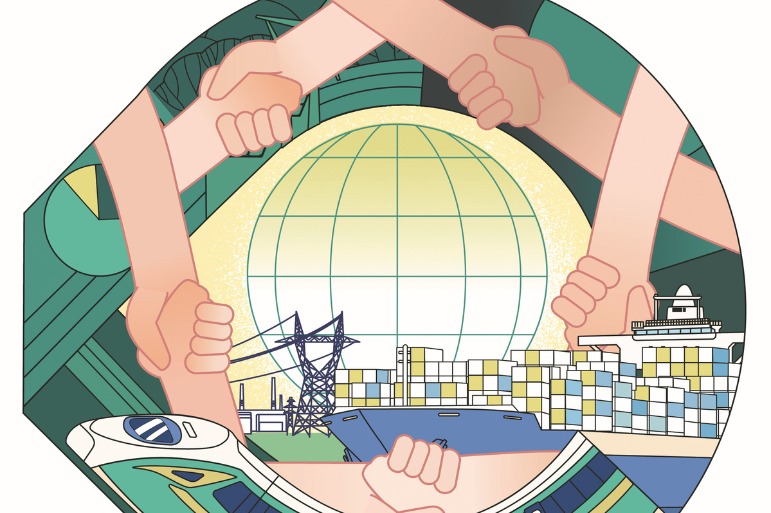
Everyone who watches China expected Xi to propound his grand vision of a community with a shared future for humankind, highlighting reform and innovation, inclusiveness and responsibility, harmony without uniformity, and openness and connectivity. What they were waiting for was what, if any, real reforms Xi would announce because, having consolidated power, whatever he announced would have a higher likelihood of actual implementation.
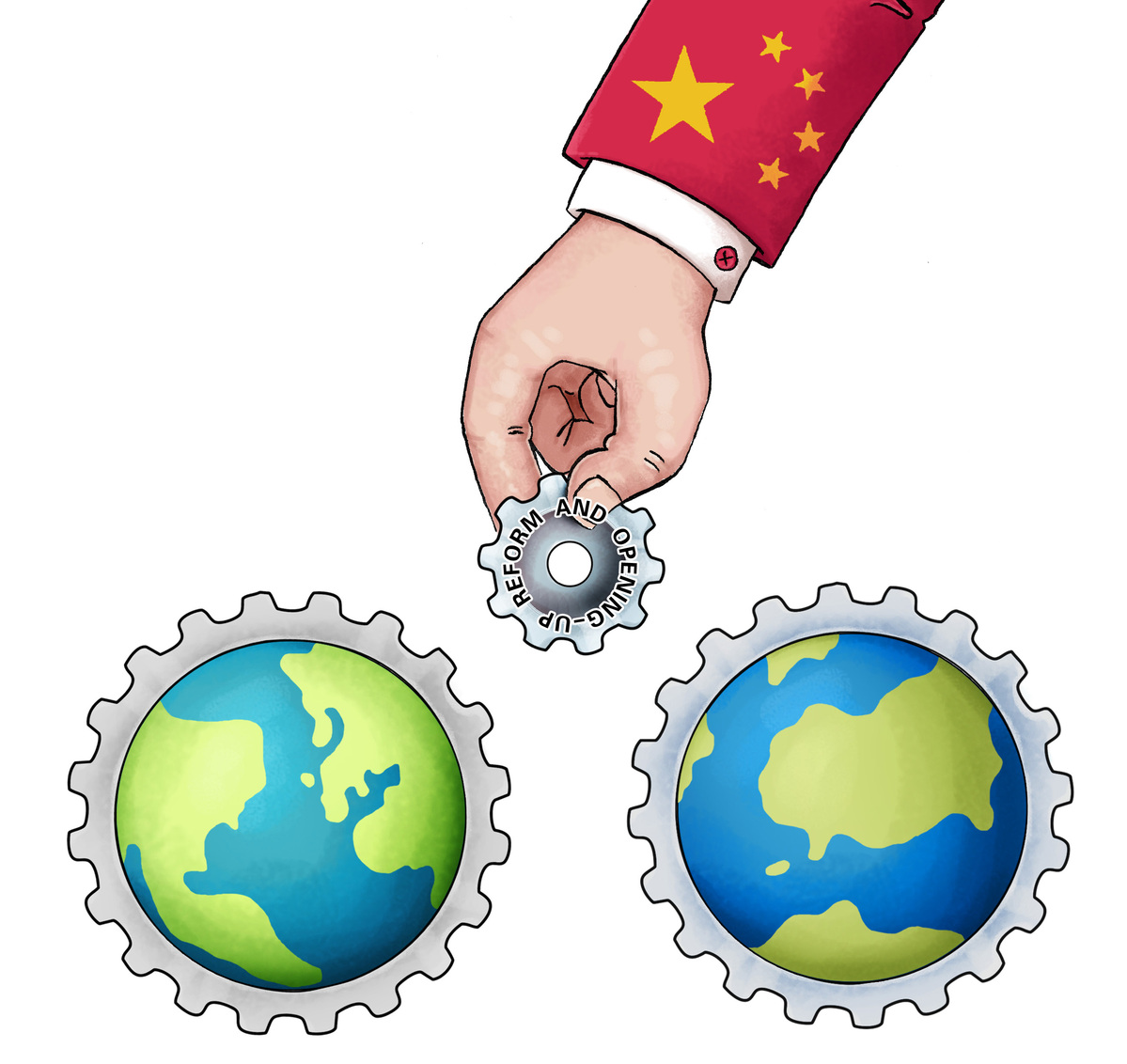
Xi did not disappoint. He put forth five areas where China would reassert its commitment to intensifying reform and opening-up, especially in this 40th anniversary year of those policies.
First, significantly broadening market access in the financial sector and in certain manufacturing areas, particularly automobiles (where foreign companies would be able to exceed the current 50 percent cap on ownership).
Second, significantly lower import tariffs for vehicles and a reduction of import tariffs on some other products.
Third, an increase in import products which are competitive and needed by the Chinese people, with the first China International Import Expo to be held in Shanghai in November.
Fourth, protecting intellectual property rights, Xi said, is the centerpiece of the system for improving property rights protection and will provide the biggest boost to enhancing the competitiveness of the Chinese economy. "Stronger IPR protection is the requirement of foreign enterprises and even more so of Chinese enterprises," Xi noted.
Fifth, making the investment environment in China more attractive to foreign companies by cutting bureaucracy, permits and the like.
Although each of these five reforms addresses specific concerns of the international community, it was the totality of the pledges that triggered a worldwide surge in stock markets. Trump immediately tweeted his approval. Speaking of Xi, he said: "We will make great progress together!"
Lest anyone think that Xi was succumbing to US pressure, he stressed that all the measures were taken "of our own accord to open up the Chinese markets". No one doubted that all of his moves are designed to better the lives of Chinese consumers and, in the long run, build the competitive strengths of Chinese companies. What is critical to appreciate is that all these reforms are first and foremost good for the Chinese economy, even if they also respond to foreign concerns.
So, "who blinks first?"
Let's look at human biology, where the real-life purpose of blinking is to protect the eyes by spreading tears across them, and to remove irritants from the surface of the cornea. Blinking may also have attention-related benefits. So, don't be afraid to blink first.
The author is a public intellectual, international corporate strategist and investment banker, and China commentator. He is the author of How China's Leaders Think and he is co-creator (with Adam Zhu) and host of CGTN's Closer to China with R.L. Kuhn. The views do not necessarily reflect those of China Daily.