



Influence of trade friction on China's macro economy limited: analysts







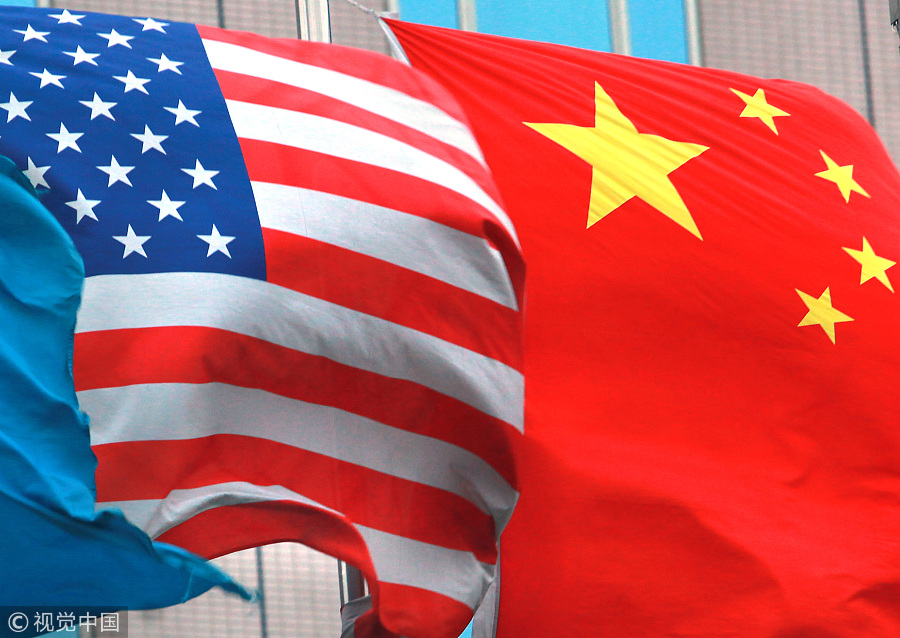
BEIJING - The ongoing trade frictions with the United States will have limited negative influence on the Chinese macro economy, experts said.
"China's economy is running stable and maintains good momentum for growth. The trend is expected to continue for the long term. The Chinese market has great leeway, strong growth impetus and resilience," said Wang Changlin, vice-president of the Academy of Macroeconomic Research of the National Development and Reform Commission.
The trade friction with the United States will exert some influence on the Chinese economy, but will be limited in general, according to Wang.
The United States on April 3 announced tariffs on a proposed list of Chinese goods worth $50 billion. The list was authorized by the US Trade Representative's office, which in August 2017 initiated an unfounded investigation under the Section 301 of the US Trade Act of 1974 to probe China's intellectual property and technology transfer practices.
According to an initial estimate, declines of exports up to $50 billion would drag China's GDP growth rate down by less than 0.1 percentage point, Wang said.
China is still fully capable of achieving its annual growth target of around 6.5 percent this year and maintaining the surveyed urban unemployment rate within 5.5 percent while creating more than 11 million new urban jobs.
"The industries targeted by the proposed US tariff increases are not labor intensive, which means that export declines in these sectors will not cause large-scale layoffs," said Wang.
New overseas markets will be developed, as will the potential of the domestic market, further diminishing the negative influence of tariff increases, he said.
Wang also believes China's plan to impose additional tariffs on US goods, including soybeans and pork, will have a minor influence on inflation.
China imported 32.85 million metric tons of soybeans from the United States, accounting for more than one-third of China's total soybean imports. Tariff increases will make US soybeans uncompetitive, causing them to be replaced by products from Brazil and Argentina, according to Chen Yang, a researcher with the Chinese Academy of Agricultural Sciences.
If there is a price hike of 25 percent on soybeans, the consumer price index (CPI) will be raised by about 0.25 percentage point. The CPI control target of around 3 percent this year will still be reached, analysts said.
For the United States, however, it will be hard to find an alternative buyer like China for its soybeans.
Also, the burden of the proposed US tariff increases on Chinese products will be shouldered by the whole industrial chain, putting pressure on exporters, raw material providers and retailers, as well as US buyers, rather than by Chinese enterprises only, according to Wang.
China's financial market will also remain stable, given that the country's economic growth is stable, business efficiency is improving and consumer prices are running in a low range, according to Wang.
He suggested China continue to take good care of its own affairs and avoid being misled by others.
China will not surrender to external pressure, Vice-Finance Minister Zhu Guangyao reiterated earlier this month.
"Looking at it another way, external pressure is the driving force for innovation and development," Zhu said.
China's trade surplus with the United States grew 13 percent year-on-year to 1.87 trillion yuan last year, data showed.
The trade imbalance between the two countries is structural, with China exporting more commodities to the United States while importing more services, according to Minister of Commerce Zhong Shan.
China has repeatedly voiced its commitment to further opening up and support for economic globalization to facilitate both domestic and global development.




















