Green route is the only way forward







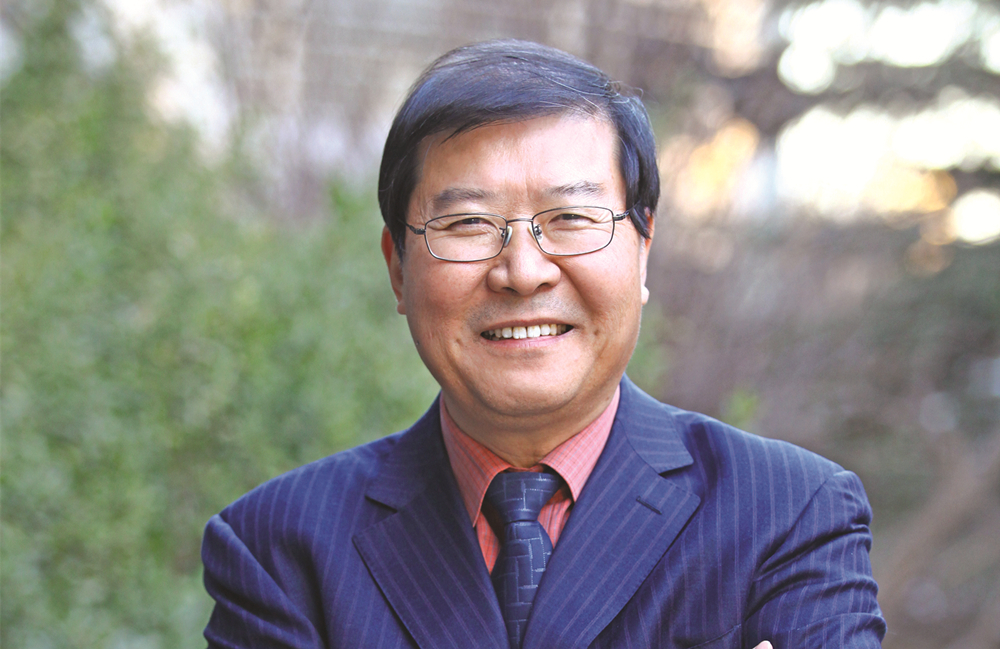
Scientist acknowledges China's efforts toward environmental conservation, and says Africa is well-placed to follow its example
Targeted conservation-related policies and regulations, together with consistent funding for research, have set China on the path toward reining in pollution. Africa can learn from this, helping it meet sustainable goals and reduce pollution-related deaths, says Liu Jian, chief scientist of the United Nations Environment Programme.
Pollution has become the world's No 1 killer, jumping to the top of the priority list, says Liu. According to a World Health Organization report, at least 12.6 million people died in 2012 of environmentally related deaths. Air pollution accounted for half of these deaths.
Nevertheless, China's strong leadership and commitment are reversing the trend, while promoting investment in the green economy. During the third UN Environment Assembly Forum, held in December, Chinese environmental projects and one individual won the UN's top environmental awards. The winners were Saihanba Afforestation Community, Mobike and Wang Weibao, chairman of Elion Resources Group, who won the Lifetime Achievement award.
"Private business has a key role to play in cutting pollution," Liu says. In its efforts to transform the country into "Beautiful China", its government has worked closely with scientists and corporate enterprises.
Such cooperation within the UNEA is long overdue, says Liu. During the previous session, the private sector was left out, and Liu was determined to change this. Only a year into his job, it fell upon him to organize a forum that would discuss achievable ways of cutting emissions. "I wondered whether the policymakers and scientists were enough to meet our green solution goals," he says.
Liu was aware of the Emissions Gap Report, produced by the UNEP and released in 2017. It said joint efforts between the government and the scientific community can only meet one-third of the commitments made in the Paris Climate Agreement. Partnership with the business sector was therefore urgently needed. "Unless businesses change their water utilization, energy production using coal, and soil management, pollution will persist. No one is to be left out in this campaign," says Liu.
Since 2006, Achim Steiner, the former executive director of the UNEP, has promoted the green economy concept, says Liu, adding that the idea started to catch on. "This concept is a paradigm shift, since it forces all players to address pollution from the source and not the end. Air pollution can only be curbed by solutions designed from the source. This is revolutionary and has triggered several green investment opportunities," he says.
Therefore, the dynamics of the UN Global Science-Policy-Business Forum on the Environment on Dec 2 and 3 had changed. "We created an opportunity for the private sector to engage with the policymakers and scientists in seeking to enable policies and attractive incentives that will increase green investments for new businesses," says Liu.
Enthusiasm was high in the business community. Only 400 people were expected to take part, but Liu's team received around 1,900 application. Only 800 participants were allowed, with an emphasis on the private sector. The forum was self-financed.
"The private sector is decent and smart and it is time to tap into their knowledge and resources to reach sustainability goals. Most of them are surprisingly on our side and have proved to be farsighted and visionary. Look at the solutions they are implementing in developing countries, and most of them agree that green is the avenue toward sustainability. They say that if you are not turning green then your business is facing a dead end, with no hope. That is why I believe the popularity of the forum will increase, especially among the business community. We are learning from the World Economic Forum but not limiting ourselves," he says.
During UNEA 3, participants agreed that, for the world to have cleaner air, $18.6 billion of investment is needed. Liu says that, for this to happen, there is a need for stronger political, intellectual and entrepreneurial leadership.
First, environmental conservation needs to be prioritized in global business forums, he says. "During the recent World Economic Forum in Davos, only two heads of state-India's Prime Minister Narendra Modi and French President Emmanuel Macron-addressed environmental issues. The environment is important, since it dictates sustainable development," he says.
Second, scientists need to proactively identify sources of pollution and solutions in terms of innovation and technology, linking with entrepreneurs for implementation. "Only when you put these three groups together will results be seen," says Liu.
He says that his office is working with the governments of the United States, China, Europe and India to reach out to the business community. Multinational companies such as IBM and Philips are highly receptive, he says.
"We are keen to expand this conversation to nonstate actors, and hence the need for a new name. We are still consulting but we are thinking of naming it the World Environmental Forum, to give a voice to everyone and also promote leadership in innovation. Perhaps by April we will have a way forward."
On Africa, he says the continent is in the pole position to be the launchpad of a green revolution. "Africa is the land of hope. It has more potential than China and India, and even the US and Europe. Comparisons can be made on per capita net resources, and Africa ranks first in water, for example, followed by China, then India. Africa is rich when it comes to renewable energy potential. Research shows that a solar farm covering a third of the Sahara desert could power the world six times over."
Africa is yet to exploit its hydro power potential on its two biggest rivers, the Congo and the Nile, he says. It has huge bio-mass potential in addition to a young, educated and cheaper workforce as the rest of the world enters the aging phase.
"This is the land of hope," he says. "There is no reason Africa cannot do better in green economy. There is already a blueprint, and some countries, such as Kenya, are already setting the pace. Otherwise, the continent will replicate previous mistakes."
Efforts should be made in controlling car emissions by setting standards on exhausts, and China is already doing it, Liu says, adding that such moves need courage. This should start from increasing investment in research, he adds.
Previously in China, there were discrepancies between investment in science and technology and economic growth. In 1987, a national program called the National Knowledge Innovation Program was launched, thus increasing investment in science and technology to about 10 times that of the previous 20 years. "China is now knocking on the door as an innovative country. Its long-term investments are showing benefits in the economy. It has a competent team that meets the needs of the economy," says Liu.
Africa, and particularly Kenya, is in the best position to build such a team, he says. "Not necessarily to cover every aspect, but to support the essential part of the economy that holds a comparative advantage, similar to what Denmark and the Netherlands have done. Investing in science is costly but rewarding."
Among the most discussed topics during the UNEA 3 forum was the Belt and Road Initiative and the effect the huge infrastructure project will have on the environment. Liu says countries will have to implement different approaches and policies to increase the success rate of the initiative. "Strategies around conserved sites such as national parks and water bodies will be different from those for bare land and will thus need site-specific designs. The one-model-suits-all approach will not work. Plans will have to adjust to the socio-economic needs of host countries, too."






- HK bets on integrated hub to enhance TCM profile
- China widens net in battle against graft
- New US dietary guidelines trigger widespread concern
- China eyes space leap with record satellite filings
- Team formed to investigate the loss of 29 cultural relics
- Investigation into school uniforms confirms safety of waterproof layer