Key to CPEC success







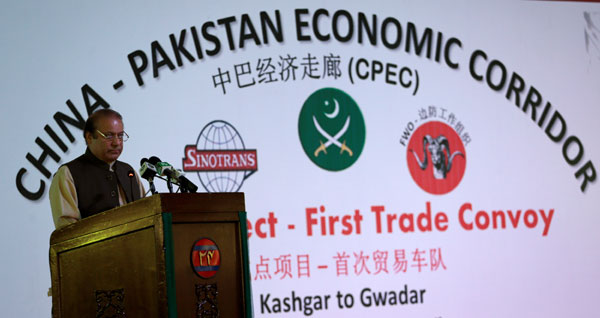
The China-Pakistan Economic Corridor (CPEC) is a flagship initiative of the One Belt, One Road (OBOR) initiative of China. In the annals of modern history, OBOR is recognised as one of the largest initiatives of its own kind as it presently involves 65 countries and more are expected to join. Already it caters to more than half of the world’s population.
CPEC is one of the six planned economic corridors and being the first one has been declared the flagship project. Both China and Pakistan are giving it the highest priority and commitment to make it a prototype for the rest of the corridors.
Pakistan has taken several measures for the smooth execution of CPEC. One of them is learning the Chinese language. Currently, there are four Confucius institutes in Pakistan dedicated to the teaching of Chinese language and culture. Several thousand Pakistanis are already enrolled there. There are a few more Confucius institutes in the pipeline. There is a need to open many more language institutes in Pakistan to meet the exponentially growing demand for learning the Chinese language. In addition to Confucius Institutes, there are Confucius classrooms as well. These classrooms are more flexible and contributing to the teaching of the language to Pakistani youth and familiarising them with Chinese culture.
Around 19 universities in Pakistan have established China Study Centres. The purpose of establishing such centres in the leading universities of the country is to create awareness about China, conduct research on various aspects of China, OBOR and CPEC. Some of these centres are teaching courses on China, the Chinese language and Sinology, etc. These centres are producing human resource required for CPEC.
There are more than three dozen private institutes of various sizes and capacities in Pakistan. Many of them are owned by Chinese, few serve as joint ventures and the remaining are owned by Pakistanis. These private institutes are even more useful as they are flexible in their timings, in courses and some of them actually provide services at the doorstep. They cater to people who are already working and specially those who cannot afford to be full-time students. Sometimes, these institutes offer tailor-made programmes as per the needs of small groups or companies. They also provide teachers to go to companies and teach their employees Chinese — all within their office premises.
As a matter of fact, they are more productive and adding more value. They may charge more money but are more suited to the requirements of the working class. Sure, it is good business as well and private institutes are making good money.
However, currently there are around 20,000 people in Pakistan who are learning the Chinese language — which is still lower than the current demand. The estimated demand for 100,000 persons exists with some level of Chinese language. This demand will grow rapidly as CPEC enters the next phase of mass industrialisation. Already there are around 20,000 Pakistanis who have graduated from Chinese institutions and around 25,000 Pakistani students who are currently enrolled in China in various programmes. They might be learning engineering, natural sciences, social sciences, health sciences, etc, but also learning the language and culture of China and their systems at the same time.
We are optimistic, with intensified efforts, the gap between demand and supply of Chinese language in Pakistan will be overcome soon.
Language will play a pivotal role in understanding China and communicating with its nationals. It will ensure the success of the China-Pakistan Economic Corridor. Let us join hands to further strengthen our inter-action, understanding and cooperation in all dimensions.
The article was first published in The Express Tribune, March 22, 2018.