How far will Trump's trade war go?







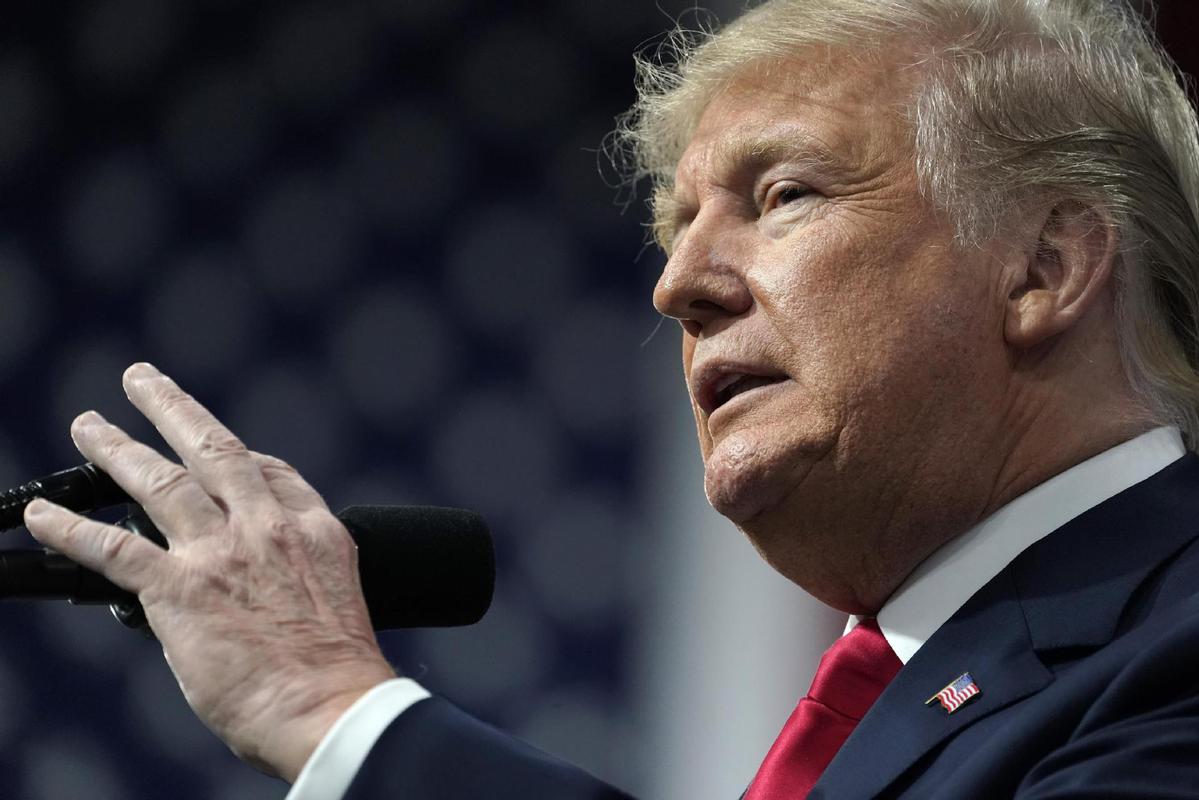
This year, the Trump administration's trade friction with China escalated. The US sped up the regular trade investigations such as countervailing, antidumping, and Section 337 investigations. At the same time, non-regular trade protection measures, such as Section 301, 201, and 232 investigations, global safeguard measures, and a reciprocal tax directed at trade partners, were also taken. The friction caused by these attempts to "change the imbalance in China-US trade" has become more serious.
Trump claims "America First", "fairness", "equality" and "reciprocity" are the reasons for his economic policy and trade protectionism. For more than a year since Trump became president, 94 items from more than 10 countries have been under "unfair trade" investigations, a sharp increase of 81 percent. At the beginning of 2018, the White House also listed China as a "focus" of 2018 US trade policy. All these underline Trump's belief that "China rebuilt itself with money drained out of the US", and points to a more aggressive trade policy.
Trump's aggressive trade policy bears three characteristics. First, after the "free trade" during the Clinton and George W. Bush administrations, and the "fair trade" of the Obama administration, the Trump administration has turned to trade sanctions, and even threatened its trade partners with a trade war, forcing them to have bilateral talks so as to obtain better deals in its favor, so-called "equal trade (interests)" and "reciprocal trade (interests)", through bargaining.
Second, economic security is pushed up to the level of national security. The US Department of Commerce believes that imported steel, iron, and aluminum seriously hurt domestic industry, and threaten national security. It suggests imposing restrictions on these commodities from China, Japan, and the European Union, including measures such as high tariffs and import quotas. In fact, Trump has overprotected domestic products in the name of "national security," going far beyond general economic interests.
Third, the multilateral trade system has been comprehensively weakened. The US trade agenda released by the US Trade Representative's Office in 2017 already made it clear that the US took "America First" as the starting point rather than WTO rules, saying that "trade policy should protect national sovereignty" and stressing strictly enforcing US trade law.
The Chinese and US economies are still very complementary. China's exports are mostly consumer goods while the US' exports to China are mainly capital and technology products. It is not an easy thing for China and the US to target each other through a trade war without hurting their national interests, nor is it realistic to think that the bilateral trade imbalance can be eliminated with a trade war.
In reality, the potential structural contradictions between China and the US will get more and more prominent in the future. China's trade surplus with the US not only exists in labor-intensive product markets, but also in the capital-and technology-intensive product markets. With a new round of global high-tech competition beginning, trade frictions in the capital-and technology-intensive industries will become normalized. The competition will inevitably escalate further in major areas such as large aircraft, integrated circuits, new materials, aircraft engines, gas turbines, 5G and new energy vehicles.
The US think tank, the Center for Strategic and International Studies, anticipates that the Trump administration's main target will be China's industrial policy. For example, starting from the "Made in China 2025"plan to upgrade China's manufacturing, the Trump administration has shown a great deal of concern about China's policies in many areas such as autonomous vehicles, medical equipment, semi-conductors, artificial intelligence, and robots. So, the real target of the Section 301 investigation into unfair trade practices on intellectual property is "Made in China 2025".
Besides, the White House is considering laying down a "reciprocal investment system" aimed at China. This idea proposed by US Trade Representative Robert Lighthizer and USTR General Counsel Stephen Vaughn will restrict Chinese enterprises' investment in the US. If the proposal is put into effect, the most serious consequence is that the Chinese government will in turn restrict US investment in China and impose an industrial investment ban.
The escalation of aggressive trade policies will make Sino-US cooperation unprecedentedly difficult. It is certain that China-US economic and trade relations are entering a new stage and will develop into a more competitive relationship. This kind of relationship will inevitably produce normalized frictions and conflicts. Exploring ways to realize mutual benefits and win-win cooperation through negotiations is particularly urgent for China and the US to avoid damaging tit-for-tat exchanges.
The author is a researcher with China International Economic Exchanges Center. Courtesy of chinausfocus.com