Yangcheng Lake crabs losing their appeal







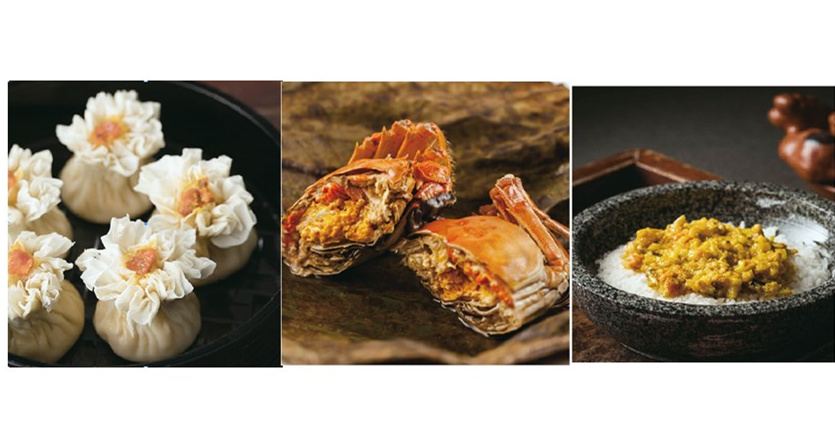
While hairy crabs from the famous Yangcheng Lake northeast of Suzhou in Jiangsu province are still widely considered to be the best in China, some top chefs in Shanghai no longer view them as the indispensable ingredient for their autumn/winter menus.
At Yong Yi Ting, a two Michelin-starred restaurant in the Mandarin Oriental Hotel in Shanghai, acclaimed Chinese chef Tony Lu is not at all concerned with the origins of the hundreds of kilograms of crabs that arrive at his kitchen every day.
"As a chef, I would rather spend more time creating new dishes than pursuing a so-called authentic Yangcheng crab," said chef Lu, one of the first chefs in China to develop a menu centered on the hairy crab.
New creations from his crab feast this year include chilled hairy crab meat jelly with champagne and caviar, and oven-baked hairy crab meat souffle with green vegetables.
Shanghai is the biggest market for hairy crabs in China, consuming an average of between 80,000 to 100,000 metric tons every year - about 10 to 12 percent of the national total - according to the Shanghai Restaurant and Cuisine Association.
The crabs from Yangcheng Lake are so reputed for their taste that unscrupulous vendors in 2003 flooded Shanghai markets with more than 100,000 tons of crustaceans that bore fake origin stamps claiming they were from the lake. The lake's maximum output that year was only around 2,000 tons.
In order to meet the soaring demand for this crustacean, which retails for between 60 to 200 yuan ($9-30) each at the wet market, a growing number of farmers from other freshwater lakes in China have in recent years started to breed their own crabs.
Ke Wei, a businessman who runs a farm in Taihu Lake, is one of those who has found great success despite not breeding his crabs in the famous lake.
"Raising hairy crabs is not rocket science. It's just about respecting and restoring nature - having the right water and the right ecological system," said Ke, who first started his farm in Yangcheng Lake before relocating about a decade ago.
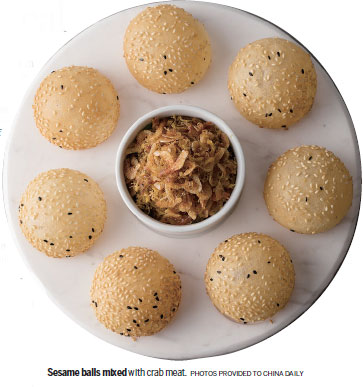
Today, Ke is one of China's largest exporters of hairy crabs and the owner of a crab-themed restaurant chain in Shanghai called Cheng Long Hang.
This year, Yangcheng Lake intentionally lowered its output so as to improve the quality of the freshwater crustacean. According to the Yangcheng Lake Crab Association, the reduction of the breeding zone by half to 10.7 square kilometers has allowed farmers to better manage production. The 20-sq-km lake is estimated to produce 1,200 tons of crabs this year, down 43 percent from last year.
This new measure, which has been labeled as the most extreme one ever implemented, comes on the back of criticism that the crabs are not given enough time to grow in the lake because overwhelming demand forces farmers to shorten the breeding period.
After conducting a spot check in September, the Agricultural Commission of the Suzhou city government said that the reduction in breeding space has resulted in the crabs becoming "slightly fattier", which in turn means they should taste better.
But even this improvement in quality has not prevented Gao Xiaosheng, a chef at Shangri-La Pudong's Gui Hua Lou restaurant in Shanghai, from turning his attention to other lakes.
"Authentic crabs from Yangcheng Lake are undoubtedly good, if not divine," said Gao.
"But other regions are catching up in terms of quality so it's not necessary to get all our crabs from Yangcheng Lake."
The 53-year-old, who has been cooking crab dishes for more than three decades, said that he will for the first time ditch the reputed Yangcheng crabs in favor of those of the same breed from Gaoyou Lake for his autumn/winter menu.
The decision to do so is a part of the Hong Kong luxury hotel group's campaign to showcase one of China's most beloved ingredients in a more local and versatile method, instead of simply focusing on the source of the food.
Chefs from nine of the group's properties across eight cities, mainly in east China where crabs are more popular, have been encouraged to source for these crustaceans in their vicinity. Shen Hongfei, one of the masterminds behind the country's most watched food documentary A Bite of China, has also been invited as the consultant for this seasonal campaign.
"Crabs from Gaoyou Lake are characterized by a yellower, creamier roe, while the famous Yangcheng ones are known for their slightly sweet flesh," said chef Gao, a native of Yangzhou, Jiangsu province.
"Also, the young and wealthy Chinese today are not really interested in spending time to dissect a hairy crab just to taste that little bit of flesh. They prefer dishes that feature crab roe," he added.
On Gao's autumn/winter menu this year, the traditional Huaiyang pork meatball, also called "lion's head", is given an upgrade with the addition of premium ingredients such as crab roe and Spanish ham.
The hairy crab season in east China usually starts between late September and early October before concluding in mid-December, but this is also dependent on the weather conditions. Weather plays an important part in the breeding process as many farmers believe that these crustaceans taste better when temperatures are lower as their bodies create more fat to keep warm, resulting in a richer taste.
This year, the season kicks off slightly later in mid-October and is expected to last till the end of December.





- Chinese sailor forced to halt Antarctic expedition after robbery
- French, Chinese artists revive industrial heritage in Hunan
- New engineering academicians vow to advance scientific innovation
- Former top railway official expelled from CPC
- Mainland says Taiwan's Lai a 'peace breaker' and 'troublemaker'
- New materials reinforce Nanjing war truth