Wuhang's impending curtain call







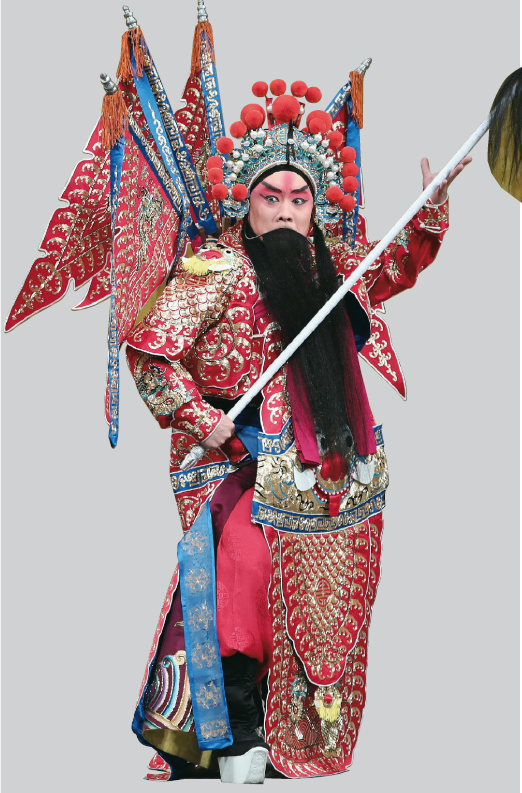
The martial arts element used to be one of the main draws of Chinese operas, but this performance medium is quickly fading away and could soon be lost forever
He may already be 59 years old, but Xi Zhonglu still hones his craft every day, practicing martial arts moves and hitting the gym to do weight training.
"You need to train at twice the intensity of the actual show before you can even stand on the stage," said Xi, the leading wuhang artist at the Shanghai Peking Opera Troupe.
Wuhang refers to the martial arts segment in Chinese operas where actors don colorful and elaborate costumes and perform stunts with weapons. Male and female performers are called wusheng and wudan respectively.
Born in Tianjin to a family of Peking Opera singers, Xi developed a passion for wuhang when he was just 11. Inspired by greats such as Yang Xiaolou and Gai Jiaotian, he went on to win many national awards and recognition in the industry.
"I was listening to the drum beats and melody of Peking Opera even before I was born," he said. "My mother used to perform on stage even when she was pregnant with me."
But Xi's rigorous training regime could soon become redundant -Wuhang's presence in Chinese operas is quickly diminishing.
"Traditional arts and crafts such as Peking Opera are losing their popularity in this modern age. Things are becoming especially hard for martial arts-oriented actors," he said.
Apart from the dip in interest levels, the nature of the industry today has also limited his chances to be on stage. Xi noted that every province now has its own opera troupe, in contrast to the past when artists used to travel around the country to perform.
To exacerbate matters, scholars and industry insiders have found that the number of martial arts acts has been decreasing in Peking and Kunqu operas. The level of quality has also waned. Some troupes don't even have wusheng and wudan anymore.
"We might be the only Kunqu Opera troupe in China that can present a show featuring wuhang," said Wu Peng, deputy director of the Shanghai Kunqu Opera Troupe.
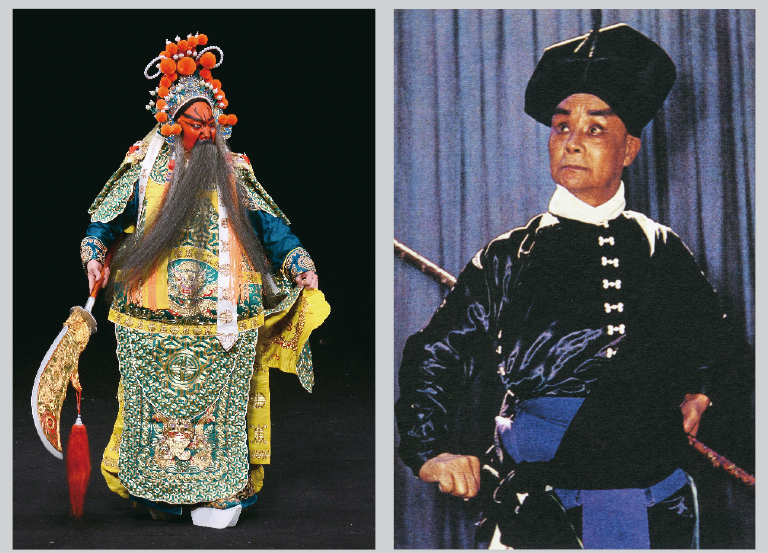
The origins of wuhang
Martial arts is considered an integral part in Chinese opera performances regarding war. The visually arresting nature of wuhang was one of the main reasons why crowds flocked to opera houses in the early 1900s. Some of the most popular stunts include jumping off a 3-meter structure and doing mid-air somersaults. Actors would also showcase dazzling combat movements involving weapons such as swords, long spears and hammers while dressed in heavy costumes and platform shoes with soles that are up to 10 centimeters thick.
But the beauty of wuhang also lies in the nuances in gestures. For instance, the movement of the colorful wigs would be used to depict emotions such as frustration and despair while a deliberate stroke of the long beards would signify dignity.
Fu Jin, the head of the academic council of the National Academy of Chinese Theatre Arts, said that martial arts performances in traditional Chinese operas come with their own set of distinctive aesthetics and charm that set them apart from conventional acrobatic stunts.
"Modern entertainment options such as film, TV and CG technology don't have much to do with the decline of martial arts acts in traditional Chinese operas," said Fu.
"The charm of Peking Opera and wuhang go far beyond just stunts and visual stimulation."
One of the most prominent wuhang actors in China is Yang Xiaolou (1878-1938), who was frequently summoned to the imperial palace to perform for Empress Dowager Cixi (1835-1908). Rumors later surfaced that he and the empress had an affair, and Yang was said to have converted to Taoism and become a monk as part of efforts to quell the gossip.
Yang was so well-loved that when he died at the age of 60, the massive crowds attending his funeral left streets congested. He is today recognized as the greatest wusheng in Peking Opera.
Yang also enjoyed a good relationship with legendary opera actor Mei Lanfang (1894-1961). Mei used to speak about the impact that Yang had on him. He once said that "Yang's interpretation brought the performance of Chinese opera toward completion". The pair collaborated in the Peking Opera Farewell to My Concubine, a classic that was considered to be the career-defining moment for both artists.
Wuhang's decline
Interest in wuhang started to wane around the 1950s when the new Chinese government then made the decision to "purify the theater scene". As a result, plays that depicted bloodshed and violence were banned.
Another factor was the government intervention in the abusive practices that were prevalent in wuhang apprenticeship. Before the founding of the People's Republic of China in 1949, poverty-stricken parents would send their children to opera troupes in hope that their child could become a wuhang star and make a fortune.
Troupe masters during those times were notorious for their disciplinary methods. Beating a child who was rebellious or did not perform up to standards was common. The children were also often made to perform dangerous stunts with little safety measures in place.
The new Chinese government outlawed these acts and reviewed the training programs of opera troupes, removing dangerous stunts from the training curriculum. While this intervention was the humane thing to do, Fu said that it also resulted in an overall decrease in the quality of wuhang performances.
Perils of the trade
Wuhang also started to become a less attractive career option because of the risks and sacrifices involved, said Xi.
"Even a seasoned wusheng or wudan could sometimes get injured. A colleague of mine recently hurt his ankle performing a jumping stunt," he said.
To illustrate what it takes to be a wuhang star, Xi shared the story of Gai (1888-1971), another of China's most famous martial arts opera actors.
Xi recalled that Gai, who received critical acclaim for his portrayal of the tiger-catching hero Wu Song from the classic novel Water Margin, was chasing another character when he fractured his leg during a jump from a height. He carried on with the performance and collapsed only after the curtains came down.
Gai was later treated by a surgeon who failed to remedy the fracture properly. Knowing that he would never be able to perform on stage again if his leg was left to recover in that state, Gai deliberately broke it again by slamming it into the bedstead. The next surgery he underwent was successful.
He also went on to play the role of Wu Song in the movie version, which was made under the instruction of then Chinese Premier Zhou Enlai.
Keeping hope alive
In today's context, Xi is wuhang's most prominent flagbearer. Though he only features in less than 10 performances with the Shanghai Peking Opera Troupe, Xi proactively seeks out roles in other troupes. He has been performing in more than 50 shows annually for the past few years.
When he is not busy looking for performances to be a part of, he is giving talks about the craft to college students and getting involved with public education projects.
He has also taken in a bunch of apprentices so that he can pass on his knowledge and skills to the next generation.
Xi's dedication to the craft has earned him praise.
"He is indeed a rare artist of his generation," said Gu Haohao, head of the Peking Opera and Kunqu Opera Art Center in Shanghai.
"He is still looking for performance opportunities and has managed to stay in impressive shape despite his age."
Gu also noted that not all is lost for the future of wuhang. Traditional Chinese operas, she said, look to be gaining popularity among the younger generation today, and this could in turn spark interest in the craft.
"We are still in the process of introducing the beauty of Peking Opera to audiences. I believe as they learn more about China's opera art, they will naturally be attracted by the wide variety of characters, especially those that perform martial arts," she said.
Gu, who was herself a national award-winning wudan, pointed out that mastering the craft would require immense dedication and decades of hard training. As such, wuhang is a part of Chinese culture that is worth preserving and applauding.
"To be a wusheng or wudan, you have to pay a steep price in the form of a lifelong commitment to the craft," she said.
"Such devotion deserves to be known and appreciated."
zhangkun@chinadaily.com.cn


- Xizang's remote villages gain access to express delivery services
- Egyptian man explores 460-year-old fair in Tianjin
- 10,000-ton electric container ship tests off Jiangxi province
- China's construction sector sees drop in energy use, emissions during build phase, rise in operations
- Guangdong sees surge in holiday arrivals as travel pattern shifts
- International commercial court established in Guangzhou