Links with heritage







Editor's Note: China is divided into as many culinary regions as there are different ethnic groups. Its geographical diversity and kaleidoscopic cultural profiles contribute to the unending banquet of flavors.
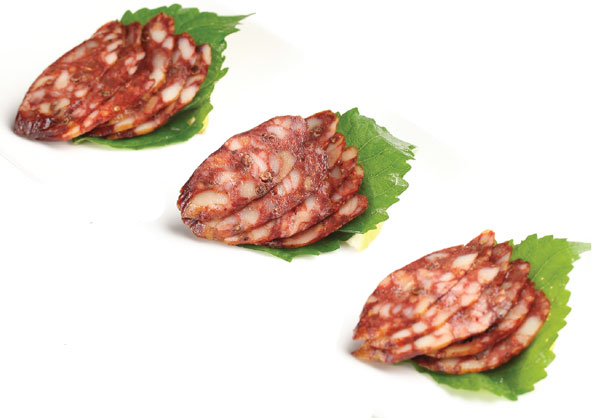
Chinese sausages are very different from the usual Western varieties. They are very firm, dense and intense, and closer to salami, pepperoni or chorizo.
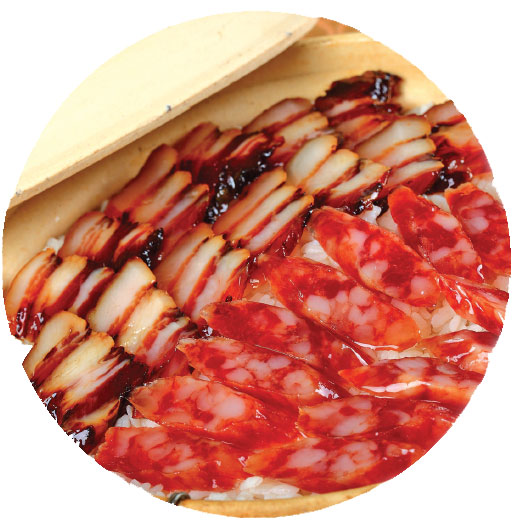
Depending on regions, they can be sweet and salty, like the wine-scented Cantonese sausages, or spicy and savory like the red peppered links of Sichuan and Yunnan.
| Chinese sausages can be sweet and salty, like the wine-scented Cantonese sausages, or spicy and savory, like the red peppered links of Sichuan and Yunnan. Photos Provided to China Daily |
But Chinese sausages are almost never eaten fresh.
Instead, they are hung up to dry thoroughly in the brisk north winds of winter until they are thoroughly cured and dried. Then they are sliced thinly, steamed or stir-fried to add much needed flavor to bland winter greens.
Sausage-making is most often done during the last month of the lunar calendar, la yue, the hunting month.
It is part of an annual food ritual in which sausages are filled and hung, and ducks, chickens and strips of belly pork or ribs are cured. The sight of rosy sausages and honey brown meats hanging outside to dry in courtyards all over China is indicative of how much these cured meats are loved.
My nanny tells me that, in the villages, pigs are slaughtered as winter arrives. That's when every part of the pig is used and nothing is wasted.
But to stretch the pork out for a whole year, the best way is to make sausages and salty cured pork from hocks and hams to strips of fatty belly.
Soy sauce, bean paste, salt, sugar and wine are the main preservatives.
In Guangdong province, plenty of yellow wine and lots of cane sugar convert the meat into deep red links. Fiery white spirits are added as an additional preservative.
Chinese cooking can be lavish, but it is also a cuisine that lauds frugality. Sausages are made deeply flavored so a little goes a long way. The dried links lend their intensity to the other ingredients they are cooked with, thus taking on the role of seasoning.
Whenever more intense flavoring is needed, sausages add an instant burst of sweet and savory.
Savory steamed rice cakes using radishes, yams or pumpkins, for instance, often hide nuggets of diced sausages, dried shrimps and dried shiitake mushrooms - that Chinese trinity of pure flavor.
The sausages are also excellent pantry basics, having a long shelf life.
Perhaps there is the beginning of a backlash against too much fast food and convenience foods because, in recent years, many Chinese households have started to go back to tradition.
Even if they cannot make their own, their friendly market butchers are offering sausage-making services.
As the weather cools, juicy links are being strung up to dry at butchers from Shanghai to Beijing.
You can choose your cut of meat, deciding how much or how little fat you want in your personalized links. Then you can choose what style of sausage you prefer.
There are the cumin and fennel scented savory sausages, sausages spiced with Sichuan peppercorns and chili flakes, heavily garlic-infused sausages or the classic Cantonese links scented with quality rice wine.
And if you want to attempt sausage-making yourself, you would simply be joining countless generations of home chefs in continuing a long-established culinary heritage.
paulined@chinadaily.com.cn
How to make Chinese sausages
Casings:
The best casings are animal intestines that have been cleaned, salted and dried. I get mine from China's mighty online marketplace. When you're ready to make sausages, you need to wash them and soak them to get rid of excess salt.
Cut of meat:
The meat must be fatty enough so that the sausages don't dry into rock-hard links. The best proportion is a 60-40 ratio of lean meat to fat. For that reason, I choose a well-marbled pork hock and add a generous strip of skinless fatty belly.
Marinade:
I prefer the fragrant marinades of wine and sugar. But I take care to choose which wines I use - a combination of the best Shaoxing yellow rice wine, and an intensely scented white liquor from Tianjin called Meiguilu, named after the city flower, the rose. That, together with top-grade soy sauce and the best raw cane sugar, produce the characteristic taste of Cantonese sausages.
But for my Beijing family, I also do garlic and chili sausages to cater to their more savory palates.
Ingredients:
Whole pork hock, skinned and boned (about 2kg)
500g belly, skinned
3 meters sausage casings, soaked and drained
Marinade:
2 cups raw cane sugar
1 cup top-grade soy sauce
4 tablespoons salt
2 tablespoons black pepper, freshly cracked
1.5 cup Shaoxing wine
1/2 cup Meiguilu, or any other Chinese white spirit
Patiently dice the meat into 0.5-cm cubes. Hand cutting the meat is a good way to ensure your sausages have good texture. Mix the two cuts of meat well.
Pour the marinade ingredients over the meat and mix with your hands till all the liquid is absorbed. Cover the meat and leave aside to rest for two hours.
Prepare casing by running your hand over its length to check for major tears.
The easiest way to get the meat into the casings is to use a funnel. My ayi (helper) uses the top half of a mineral water bottle. The casing slips easily over the mouth, and it can be fastened with string to keep it from slipping off.
Spoon the meat into the funnel and push down with a chopstick.
The trick is to push the meat slowly and steadily so there are no large air pockets. Use your hands to help the meat travel down the casing.
I prefer to stop every meter or so to shape the links. That way, you can minimize damage should a tear or hole occur.
Twist off your desired length of sausage, and tie with cotton string. Keep in mind that the sausages will shrink by about 30 percent as they dry.
Then, check every link and use a needle to pop any air pockets.
Repeat the process until you finish meat and casing.
The next part really depends on where you are. If your area has cold, dry winters, find a shady spot out of direct sunlight and string up the sausages to dry. One word of caution: They will leak juices as they dry, so place some paper underneath to catch the drips.
If you are in a more sunny clime, you need to let them dry in a cool place in your home, preferably where there is good air flow. The refrigerator will work, but it will take a much longer time because of the humidity.
Marinade for garlic and chili sausages
1 cup top-grade soy sauce
4 tablespoons salt
2 tablespoons black pepper, freshly cracked
1 cup chili flakes
1 bulb garlic, skinned and finely minced (about 1/2 cup)
1 cup Shaoxing wine
1/2 cup Meiguilu, or any other Chinese white spirit
(China Daily Africa Weekly 11/24/2017 page20)





Today's Top News
- China to continue anti-dumping duties on EPDM imports
- Trump says war with Venezuela remains possible -- NBC News
- China urges Japan to stop challenging intl bottom line with its nuclear ambitions
- US arms sales to Taiwan a dangerous gambit: Editorial flash
- Taiwan opposition lawmakers announce plan to impeach Lai Ching-te
- Boosting consumption will be key in 2026