



No reason for US to fear yuan exchange rate







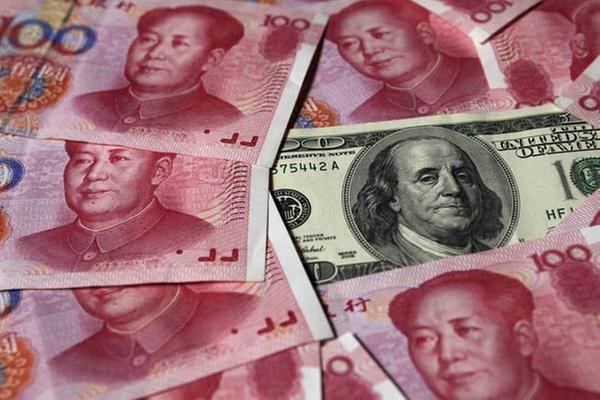 |
| A $100 banknote is placed next to 100 yuan banknotes in this October 16, 2010 file picture illustration taken in Beijing. [Photo/Agencies] |
Washington has always kept a close eye on the yuan's exchange rate against the US dollar, fearing it would lead to further trade imbalance. The appreciation or depreciation of the yuan may have something to do with the US' trade deficit with China, but it does not decide the volume of bilateral trade.
The fact is, the yuan's exchange rate against the dollar has been largely stable after hitting a six-year low in December, a month before Donald Trump was sworn in as US president. And it was not the only currency that depreciated against a strong dollar following Trump's vow to revitalize bricks-and-mortar industries in the US.
The dollar is losing its upward momentum after months of continuous appreciation, because the Trump administration is bogged down by political scandals and the US growth rate has slowed. In contrast, other currencies, including the yuan and the euro, have started recovering thanks to the steady economic recovery in China and the European Union.
China's currency reform over the past few years, too, has made notable progress. China's central bank has shifted its benchmarked exchange rate policy from a stable yuan to a stable yuan against a basket of currencies, in order to stabilize the China Foreign Exchange Trade System basket which now has 24 currencies. The yuan's inclusion in the International Monetary Fund's Special Drawing Rights basket last October has further stabilized its exchange rate, which at times was overrated.
These technical amendments, lauded by economists at home and abroad, should be a boon to the global monetary system. The US' trade deficit with China, like that with Japan and the Republic of Korea in the 1980s, is more a result of its imbalanced foreign trade system. The bulk of China's trade surplus with the US is in processing trade, which has largely been fueled by investments from US multinationals. The surplus figure could drop by 40 percent if measured by the added value of exports from China.
Besides, changes have been noted in bilateral trade as Beijing's trade surplus ($250.7 billion) has started declining, with a year-on-year drop of 3.88 percent last year. And in the first half of this year, US exports to China increased by 19.8 percent, while Chinese exports to the US rose by only 12.6 percent.
Also, when it comes to service trade, China has a huge deficit with the US (reports say $33.3 billion in 2015), and the gap is widening.
Nevertheless, the two sides need to cooperate to reduce the trade imbalance and dispel concerns over the yuan's exchange rate. The early gains from the 100-Day Action Plan for China-US economic cooperation, such as the reopening of the Chinese market to US beef products after 14 years, should be comforting news to the US. On its part, Washington should consider easing the restrictions on the export of high-tech products to China and seek more investment and deeper infrastructure cooperation with Beijing.
The author is head of the macro-economy research section at the Suning Institute of Finance affiliated to Suning Appliance Co.
- Yuan exchange rate hits 6-year low amid volatility of other currencies
- Stabilizing exchange rate
- Stricter financial supervision needed before exchange rate flows freely
- Market expectations stable for RMB exchange rate: Central bank official
- Trade, exchange rate might dominate G20 topics in Germany's Baden-Baden





