



US, Chinese approach to ties sharply differ







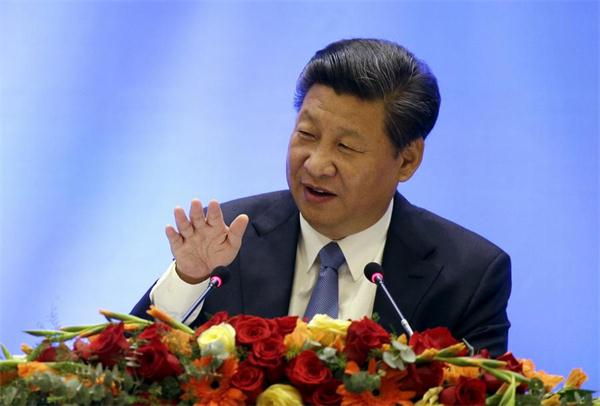 |
| Chinese President Xi Jinping speaks at a U.S.-China business roundtable, comprised of U.S. and Chinese CEOs, in Seattle, Washington September 23, 2015. The Paulson Institute, in partnership with the China Council for the Promotion of International Trade, co-hosted the event. [Photo/Agencies] |
Senior Chinese and US government officials had been speaking and writing on China-US relations in the run-up to President Xi Jinping's state visit to the United States. The tone of senior US officials, including a policy speech by National Security Advisor Susan Rice at George Washington University on Monday, has seen a clear shift toward a more positive and cooperative plane despite the media's obsession with the South China Sea issue and cyber hacking.
It is a pity that speeches by Rice and other US officials are not widely covered, let alone broadcast live, by US media outlets. Nevertheless, stronger emphasis on expanding cooperation while effectively managing differences is a welcome sign.
It doesn't take a careful reader much to see that there are major differences in the Chinese and American styles of approaching bilateral relations.
From the speech delivered by Foreign Minister Wang Yi at the Lanting Forum in Beijing on Sept 16 to President Xi's speech in Seattle on Tuesday evening, Chinese leaders have been, as always, laying stress on the overall positive picture of Sino-US ties. They have refrained from pointing the finger at or trying to embarrass the US.
However, many US officials, despite the relative change in tone, still cannot resist lecturing others. For example, Treasury Secretary Jack Lew's op-ed in The Wall Street Journal on Tuesday was basically an article on "China must do this and China must do that", something people cannot find in recent op-ed pieces by Chinese officials, such as State Councilor Yang Jiechi or Chinese Ambassador to the US Cui Tiankai. The same US arrogance is found in Rice's speech and the statements of other senior US officials.
These US officials have publicly accused China of being a state-sponsor of cyber-theft, posing a threat to freedom of navigation in the South China Sea, violating human rights and not conducting economic reforms as the US expected. It is like telling Chinese leaders that they don't know how to run a country of close to 1.4 billion people despite the fact that the dysfunction in Washington, not the state on the West Coast where Xi started his US visit, has become a malady of US politics.
Many in the US have longed to see Chinese become more like Americans. But does that mean they also long to see senior Chinese officials pointing the finger at and lecturing the US, as their US counterparts have been doing these days and throughout the past decades?
For example, Chinese officials could tell the US to stop its aggressive and wide-ranging surveillance, led by the National Security Agency, something that has angered the whole world, including some US allies.
China could also tell the US to stop its military interventions in sovereign nations, which have created a huge mess in the Middle East and North Africa. The US still owes the rest of the world an apology for invading Iraq and Afghanistan, which caused untold human disasters that the two countries and their neighbors are stilling suffering from today. On the pretext of spreading democracy, the US-led NATO pursued regime change in Libya by abusing a UN Security Council resolution on no-fly zone. Libya today is plagued by the worst mayhem in its history.
China, in contrast, has done nothing destructive to world peace.
Chinese officials could tell the US to stop selling arms to Taiwan and suspend its frequent close-in surveillance along China's coast, or China will make plans to send reconnaissance planes and ships to US coasts as a reciprocal response.
China should also tell the US to close its Guantanamo Bay detention center, address its gun violence, racial discrimination and corruption, as Gallup poll last week found that 75 percent of Americans believed corruption is widespread in the US government.
Will Americans still want Chinese to become more like them?
The author, based in Washington, is deputy editor of China Daily USA. chenweihua@chinadailyusa.com





