Washington wants to maintain primacy in Asia Pacific







 |
| A formation of the Nanhai Fleet of China's Navy finished a three-day patrol of the Nansha islands in the South China Sea. [Photo/Xinhua] |
Veteran diplomat Fu Ying struck a chord among Chinese when she pointed out the double standards adopted by the United States on the South China Sea issue. Fu told a gathering at the University of Chicago last week that China sees inconsistencies at play. "When China's neighbors act provocatively on territorial issues, the US turns its head away. Yet when China defends its interests, it is described either as assertive or as a bully," said Fu, now chairwoman of the Foreign Affairs Committee of the National People's Congress, China's top legislature.
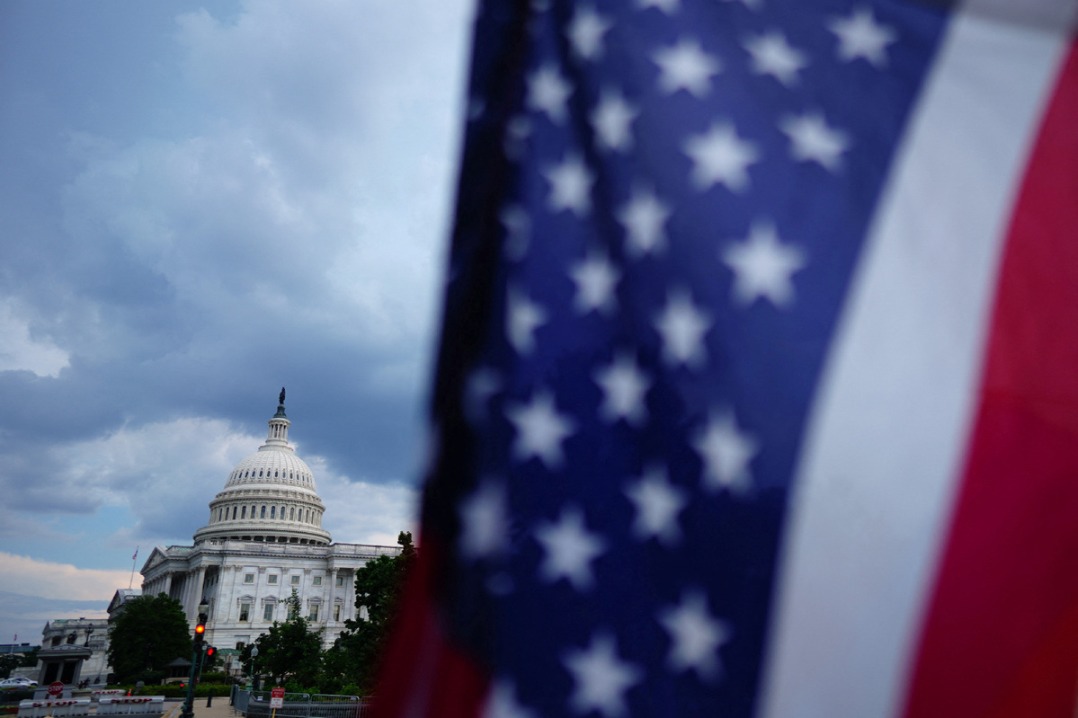
The US has been making a lot of noise these days about China's land reclamations on some isles and reefs in the South China Sea. US State Department officials have blamed the Chinese for the rising tensions, Pentagon officials have vowed to send military aircraft and vessels to closely patrol the area, while Senator John McCain has said China should not be invited to the 2016 RIMPAC (the Rim of the Pacific Exercise), the world's largest naval war games.
Yet none of them said anything when countries such as the Philippines and Vietnam reclaimed land earlier and on more outposts than China is doing now. US Assistant Secretary of Defense David Shear told a Senate hearing two weeks ago that in the Nansha (Spratly) Islands, Vietnam has 48 outposts, the Philippines 8, China 8, Malaysia 5, and China's Taiwan 1.
US officials like to talk about Washington's respect for international laws. But on the law of the seas, China and more than 160 countries are signatories to the UN Convention on the Law of the Sea, while the US has not ratified it, which speaks volumes of Washington's respect for international laws.
US officials also like to portray China's relations with its South China Sea neighbors as "coercion" or "bullying", but how coercive and bullying Chinese land reclamations are compared to a superpower flying military jets over and navigating vessels near China's isles or close to its seashores.
The US is the real champion of coercion and bullying if we look at the invasions of Iraq and Afghanistan, the rampant drone strikes that violate the sovereignty of other nations and cause the deaths of innumerable civilians, and its interventions in Libya and Syria. If that is the standard of a bully, China pales into insignificance.
Few will believe that the US has not taken sides in the territorial disputes in the South China Sea. Because when it claims to take no sides, it also vows to protect its allies. Does that mean the US will join a war provoked by its allies? The joke in Washington is that the US will have to defend both Japan and the Republic of Korea if a conflict breaks out between the two American allies over their disputed Takeshima/Dokdo Island.
The US has expressed deep concern over the freedom of navigation despite China saying that freedom of navigation has never been an issue in the past and will not be one in the future. China, as the world's largest trading nation, has more at stake when it comes to ensuring the freedom of navigation in its neighborhood.
All these probably explain why the US is ready to mess around in the South China Sea and further complicate the situation even as countries actually involved in the disputes try to agree to a code of conduct through their own efforts.
The true US motive behind all this is its selfish geopolitical goal of maintaining its primacy in the region, which it never wants to be challenged, especially by a rising power like China. It is akin to the selling of Trans-Pacific Partnership Agreement to the US Congress and American public for which the Obama administration has to cite geopolitical concerns about a rising China, rather than trade, as the real issue.
The author is deputy editor of China Daily USA. chenweihua@chinadailyusa.com