On wings of leather







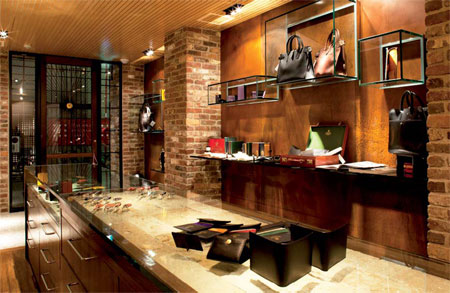
| Above: One of Ettinger's shops in Japan. The British leather products maker has been looking at China for a long time. Left: Robert Ettinger, managing director of Ettinger, says he is going through the process of gaining an understanding of Chinese culture and how to do business in the country. Photos Provided to China Daily |

A family firm finds that for all the allure of China, the decision to do business there is not so easy
Fools would no doubt rush in where Robert Ettinger fears to tread. You may have heard it before: Entrepreneur sees amazing business opportunity in China, plunges life-savings into venture, makes a merry million or three and lives happily ever after.
But Ettinger, managing director of the British leather products maker with the same name, is buying none of this. He has looked at China for a long time now - four or five years - to decide whether he wants to take the plunge. And still he has not decided.
Someone who could sympathize with his quandary is Alessandro Benetton, chairman of the Italian fashion brand. It has found that doing well in China is not that easy, and the chairman has said "there are as many companies trying to get into China as those trying to get out".
Yet you need look no further than the long lines of Chinese consumers at swish department stores in London and Paris to appreciate the lure of China for a company like Ettinger.
Yes, the country is an attractive place to do business, with its people rapidly developing a taste and desire for luxury brands, but Ettinger insists he is in no rush and wants to learn more about the market and find the right partner before he puts his family business on the line.
As attractive as having a piece of the Chinese market is, he is eager to protect the brand. Many Western companies have entered the country in a mad rush, failing to prepare properly, he says. Local partners may have dealt with their brands so poorly that money was lost and brand value shrank.
Some Western luxury brands such as Louis Vuitton, Hermes and Burberry have sold well in China, but Ettinger represents a different form of luxury: a small to medium-sized company with a niche market, and a much smaller but more loyal group of consumers.
British luxury is more refined, more conservative, and it is not as showy as some of its French and Italian counterparts, Ettinger says. Nevertheless, in some aspects small luxury-goods companies are similar to their bigger siblings. Like the big companies they need a proper marketing and communications strategy to connect with their consumers, but the way they do this is different.
Instead of large-scale marketing campaigns, Ettinger nurtures its relationship with customers in a more intimate way. It wants its customers to identify themselves with the philosophy it represents and its craftsmanship. For instance, instead of having celebrities posing for large commercials, it runs a blog to talk about life.
The niche group of consumers for a brand like Ettinger may only be starting to emerge in China. When people first get rich they tend to prefer something with a big logo to show off their status. A handbag by Louis Vuitton, for example, instantly confers a certain status on its owner. But eventually the buyers of well-known upmarket brands may turn to a niche brand, something more personal, less splashy, but of excellent quality and which they think better represents their personality. This is the group Ettinger targets, a group that has emerged in China only in the past year or so, Ettinger says.
But even if there is some fruit that is now ripe for the picking, Ettinger's task in harvesting it all would not be easy. For a small and medium-sized company with less money to spend, the Chinese market can be daunting, Ettinger says. What needs to be considered is that the population is huge and diverse, tastes may be totally different to people in the West, and things are changing. In addition, intellectual property is a big issue because fake products have a sizable chunk of the Chinese market.
Ettinger, who inherited his business from his father, has made the family brand more international. The company entered South Korea and Japan under his management in the 1980s. The situation of China was very different then, and it was only in recent years that his business gaze fell on it.
Each market has its own difficulties and characteristics, he says, and he is going through the process of gaining an understanding of Chinese culture and how to do business in the country. He has read a lot about China, and books such as The End of Cheap China, by Shaun Rein, and What Chinese Want, by Tom Doctoroff, lie on his desk. Of course, he has also visited the country.
He is also swotting up by talking with others, including academics. Recently a group of graduate students from Southampton University made the case for Ettinger to enter the Chinese market the subject of a thesis. They studied the link between the brand and Chinese culture and an appropriate way of marketing Ettinger in the country, including trying to come up with a suitable Chinese name for the brand.
Robert Ettinger's mission to find out what makes the China market tick took him to Beijing recently, and he was pleasantly surprised, he says. Among the things that caught his eye were an efficient airport, street tidiness and the quality of services in hotels and restaurants.
The fact-finding trip also took him to malls to observe not only shops but also people. Such reconnaissance is critical in localizing products, he says. For example, in Japan he learned that unlike Europeans, men there do not put coins in their pockets, because traditional values deem money dirty. As a result, wallets that Ettinger markets in Japan have an extra compartment for coins. Purses are also bigger because Japanese tend to carry much more cash than do Europeans. These kinds of adjustments are among product refinements that would be made if the company decides to enter China.
The company's royal link is seen as a potential selling point in China, given that for many Chinese such links denote quality, wealth and status. For instance, Bentley, the luxury car manufacturer, made a special version of the car for the Chinese market in June during the diamond jubilee of the Queen's ascent to the thrown, and found it sold out within a short time.
Ettinger makes leather goods for members of the royal family, and in 1996 Prince Charles granted it royal warrants. Ettinger hopes that when the prince visits China next year, he will help bring British manufacturing and brands to the market.
Another opportunity is the relatively less competitive market for men's accessories. Rich men in China now carry products by Dunhill or Louis Vuitton as a status symbol, and they may eventually want something different.
But the pitfalls and challenges remain, including protecting intellectual property rights and marketing. As the European economic slowdown continues and Chinese consumers enjoy their rising spending power, Western brands are flocking to China. But how do you distinguish your product from the rest and communicate the message to customers while maintaining a low-key British luxury image?
The most difficult part is to find the right business partner in China to develop the brand, Ettinger says. Ideally it would be a company with experience in managing luxury brands, and which understands the Chinese market, local tastes and ideals, and the philosophy of a European luxury company such as Ettinger.
Ettinger believes the right partner does exist, but that it will take time and effort to connect with it. "When we find them, we will know," he says.
Against his uncertainties, he is sure his quest for knowledge will better prepare him for doing business in China if he decides to do so.
"You cannot be completely sure about anything. You can only be surer, as with life in general."
diaoying@chinadaily.com.cn
(China Daily 11/30/2012 page21)



Today's Top News
- Xi extends congratulations on Intl Day of Solidarity with Palestinian People
- Foreign biz circle bullish on China's opening-up
- Era of China being bullied long gone
- Hong Kong, Macao to get more support
- Emergency space mission accomplished
- Japan blasted for continuing to defend remarks