How I learned to love my cultural heritage







China Daily website is inviting foreigner readers to share your China Story! and here are some points that we hope will help contributors:
This is not an easy story to tell, and contains many details I'm generally embarrassed (尷尬) to reveal. Underlying the story is the fact that, for many years, I actively rejected my Chinese cultural heritage as "foreign," something I thought (and was told) I should leave behind and permanently reject if I ever was to conform to my birth culture.
I am telling this story because I know there are many individuals like myself, Chinese born in countries all across the world, who have grown up "between a rock and a hard place," never seeming to meet the cultural expectations of our birth culture but also struggling to carry forth the thoughts, beliefs, and practices of our parent culture.
Rather than forcing ourselves to choose between one culture over the other or self-identifying as "bananas" (Chinese on the outside, but not on the inside), I believe we should instead submit to our unique cultural hybridity and seek to appreciate both respective cultures. Furthermore, I believe as cultural go-betweens, we have an important role to play in spreading Chinese culture both in the Mainland and in the rich Diasporas in which we reside.
Looking back, it is impossible for me to pinpoint the exact moment where I transitioned from a "Canadian" into a "Chinese-Canadian."
What I know for certain is that it has been and continues to be a lifelong journey of learning, one that began in the classroom of a Migration History professor and one that continues as I intern in Shanghai over this summer. I can pinpoint, however, many moments along that journey where I felt particularly attached to my motherland: staring out at the West Lake in Hangzhou, getting lost in the Old Summer Palace in Beijing, admiring the beauty of Guilin’s natural scenery, and crowding into a locals-only xiaolongbao (小籠包) store in Shanghai.
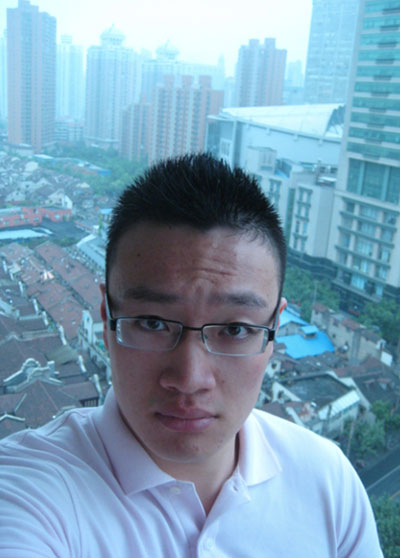 |
| Will Tao is interning this summer for a large pharmaceutical company in Shanghai.[Photo provided for chinadaily.com.cn] |
Transitioning into a Chinese-Canadian
My early University days, more specifically my decision to study the liberal arts, join a Fraternity and move out for a year were influenced by my attempts to reject my cultural upbringing.
I would account a large part of my change of heart and my transition to a "Chinese-Canadian" to three major events: 1) Registering for an Asian Migration History course, 2) Finding a Chinese girlfriend, and 3) Studying Chinese at UBC
The Chinese-Canadian Migration History course, I took almost accidentally and with no real intention of utilizing it to better connect with my cultural roots. I was therefore surprised when one of our first assignments was to do an oral history of a fellow classmate. My partner and I both decided we would make short films, asking personal questions about each other’s family history.
At that point I knew very little bout my family; in fact, next to nothing. This was something which began to bother me. Prompted by the assignment, I began to ask my parents questions, such as "Who were my grandparents?" It was a question to which my mom answered briefly: "Farmers, they were all farmers." However, from my dad I received a much more exciting story, one for many years he had seemingly kept to himself. My late grandfather, it turns out, was a prominent Communist educator who after the Revolution was an administrator and author of many prominent textbooks. My grandmother was on the other hand, the daughter of a Nationalist army officer. It was Romeo and Juliet style love story that I might never had known if I had not asked.
Under Dr. Yu’s tutelage, I became actively involved in the Chinese community in Vancouver, organizing workshops and panels aimed at solving cultural conflicts such as whether to teach Mandarin in local elementary schools. I also got to learn more about how closely connected Vancouver is to China, and how historically we made up some the earliest traders and migrants to the area (even before most Europeans had even heard of Canada). It was this continuous hunger to learn more and appreciate my identity that I took most from Dr. Yu’s class (In fact, my father and I are planning a trip to Shaoxing, Zhejiang to try and track down more of my family history later this summer)
The second major development was finding a Chinese girlfriend. Actually, it was finding a girlfriend who was more Chinese than I was. She was born in China and raised in Vancouver, but her parents spoke nothing but Chinese at home. This was in stark contrast to my own household, where my parents spoke the Shanghainese dialect to each other, I spoke English to my father and sister, and I spoke some sort of ungrammatical Chinglish to my Mother.
By visiting my girlfriend’s family, I learned simple but basic things such as to ditou (低頭) when addressing those older than you and to address them as nin (您) rather than ni (你)。I was forced to talk with various uncles and aunties in a language I seldom spoke by choice, asides from the basic "I’m coming" and "I’m going." During, this time my girlfriend also pressured me to watch Chinese television dramas with her, something I was at first hesitant to do because I had trouble relating to them. (Ironically, this summer I have become completely obsessed with Zhao Wei’s dramas and movies, as well as Chen Sicheng’s "Bejing Love Story" (北京愛情故事). It is a great way to learn Mandarin.)
In order to improve my language (and in order to get language requirements to graduate) I enrolled in Mandarin class during my second and third year at University. Along with calculus (go figure) they were my two lowest marks at University. I remember staring blankly at countless exams being completely unable to remember even the first stroke of the character I wanted to write. However, through all the lessons and lectures ranging from Confucius (孔子) to Chinese Chengyu Stories (成語故事), I finally began to appreciate the complexity and richness of Chinese culture. My favourite memories of Mandarin class were turning simple conversation exercises into "over the top" plays with music and costumes.





- The Fujian Coast Guard conducts regular law enforcement patrol in the waters near Jinmen
- IP protection for new fields to improve
- Draft rules define premade dishes in consumer interest
- Self-powering pacemaker could last a lifetime
- China intensifies crackdown on misuse of personal data
- China issues new rules classifying online content harmful to minors