High tech








John Deng believes China is producing technology leaders in their own right
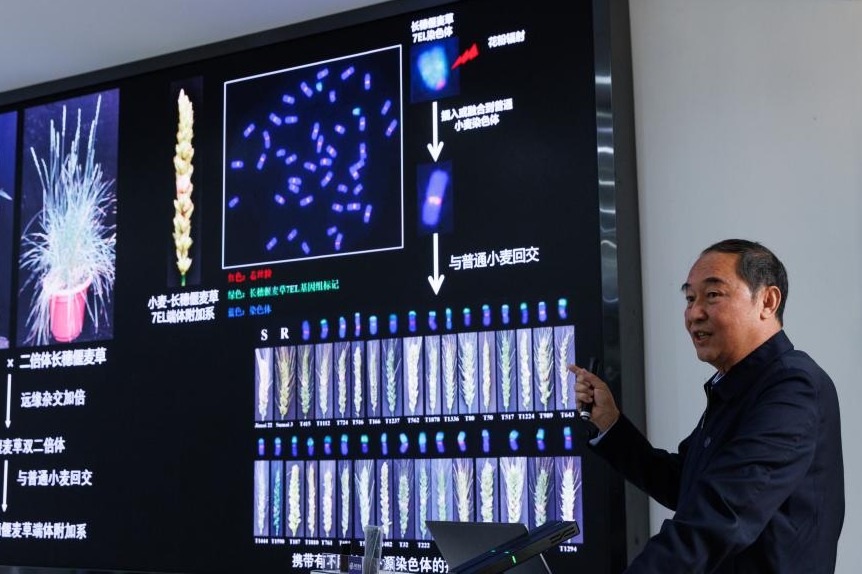
It will not be long before China has its own Microsoft and becomes a global technology leader, John Deng believes. The 41-year-old is founder and chief executive officer of Vimicro, a multi-media chip company which was the first Chinese mainland chip designer to be launched on NASDAQ in 2005. "The government has invested so much money in research and development, both in academic and industrial research, creating opportunities for the sort of start-ups which will eventually lead to companies like Microsoft and Intel," he predicts.
Deng, casually dressed in a black open-necked shirt and seeming the very epitome of the modern generation of Chinese entrepreneurs, spoke to us at Vimicro's spacious offices on the 15th floor of Shining Tower in the Haidian district of Beijing.
The company, which has three?main bases in China - at Shanghai, Shenzhen and Tianjin - has about 900 employees, many of them with masters degrees and PhDs from universities around the world. It also has an office in Silicon Valley.
Deng believes many of China's electronics and telecommunications companies such as Lenovo, the computer manufacturer; telecommunications companies Huawei and ZTE; and electrical goods maker Haier, are all emerging as technology leaders in their own right.
"These companies started in the 1980s and 1990s and began by manufacturing or working with foreign companies in China and gradually then started their own brands," he says.
"They can basically do everything themselves now, instead of working with other people and buying IP (intellectual property) or sharing their IP with other people."
Deng, who speaks perfect English, studied in the United States, gaining masters degrees in physics and economics and then a PhD in electrical engineering and computer sciences at the University of California, Berkeley. He is the only student to have done all three in just five years.
He went on to work for IBM as a senior researcher in?New York?but was keen to return to China.
"It's my own country. When I was a child, I spent every morning for three years raising the national flag at school. Just as I wish my country to win more gold medals in the Olympics, I want it to do better in science and technology," he says.
He received $1.2 million (901,000 euros) in start-up capital from the Chinese government to start Vimicro in 1999 and floated it in New York six years later. At one time, the company was valued at $1 billion but is now valued at about $200 million, suffering a down valuation like many other technology companies.
It makes chips for companies such as Sony, Samsung, HP, Philips, Lenovo and ZTE.
Deng was also recently made the youngest member of the Chinese Academy of Engineering at an award ceremony attended by Chinese President Hu Jintao.
Deng believes such huge forward steps as putting a man on the moon will demonstrate China's achievements in technology just as it did for the United States in the 1960s and will produce many spin-offs for use in other industrial areas.
"Launching a spaceship and sending Chinese astronauts to the moon is not only a symbol but also about pushing frontiers. It will mean advancing in areas such as materials technology, software, mathematics and physics," he says.
Deng says the country did once occupy the position as a global technology leader about 600 years ago.
"We were certainly very good at construction then, in building ships and traveling a far distance. After so many years of not moving forward or developing fast enough, our living standards and living conditions, compared to Western countries, have been left behind."
Deng says there is still a gap between China and Western technology in many areas and that it could take a number of years to catch up.
"We have to admit we are still learning and moving up the value chain. We are not at the level yet where we could produce something like an iPad or an iPhone but all these things are manufactured in China and we are learning," he says.
He says one of the barriers to China developing technology is that a lot of the standards, particularly in the electronics consumer goods field, like DVD and MPEG-4 (for video and audio compression) are international standards.
He says the China Academy of Telecommunications Technology's success in developing its own 3G format, the TD-SCDMA, which has been licensed to China Mobile, is the way forward since it makes China less dependent on Western license holders.
"I think there will be a day when China can build a whole system of its own software, chips, standards and data format, so we don't have to rely on foreign ones," he says.
He says the business model then would be to build products and networks reliant on these China formats and sell them not just to the domestic market but also to developing countries in Africa and Latin America, creating a technology universe almost parallel to Europe and the rest of the world.
"If we can create China-centric standards and formats then we will be able to compete with foreign companies in the developing world. The Africa market is so cost-sensitive and that is why they like Chinese products," he says.
Deng says it is a better strategy than taking on established players in Europe or US markets.
"In that market you have already got Apple, Sony, Nokia and other big brands. There is more room for China to develop in these other markets. It is not that these China products will necessarily be inferior. There are many consumer products in China which are the best in the world."
Vimicro itself is currently engaged in developing its own standard to be used in surveillance cameras and other equipment, which it hopes will be used not just in China but other parts of the world.
"We are hoping to help China build up a surveillance network and also for export. We want to become a leader in providing solutions for surveillance in both China and international markets, " he says.
There have been some suggestions that many Chinese are predisposed to being good scientists, given they have been great innovators in the past and pioneers in mathematics.
"I think all of human kind is equal, actually. I don't think it is something in our DNA. The recent successes have been more a product of our emphasis on science education, hard work and investment in research and development."
He also does not think China is engaged in a new technology race with Europe, the US or Japan.
"I think now is a peaceful time and I think everybody tries to serve each other's markets. I don't, however, think competition is bad. It is always good for the world to benefit from innovation and I think it is good for civilization."
Bio:
JOHN DENG
Founder and chief executive officer of Vimicro
Age: 41
Education
MS degrees in physics and economics
PhD in electrical engineering and computer sciences, University of California, Berkeley
Career
Senior researcher, IBM, New York
Founded Vimicro in 1999
Company floated on NASDAQ in 2005
In June 2010, became the youngest member of the Chinese Academy of Engineering
?


Today's Top News
- Effective use of investment emphasized
- China's shuttle diplomacy strives to reach ceasefire
- Nanjing Museum's handling of donated art, relics being probed
- Key role of central SOEs emphasized
- New travel program hailed as 'milestone'
- Animated films top draw at box office