Students border on the exceptional


 |
|
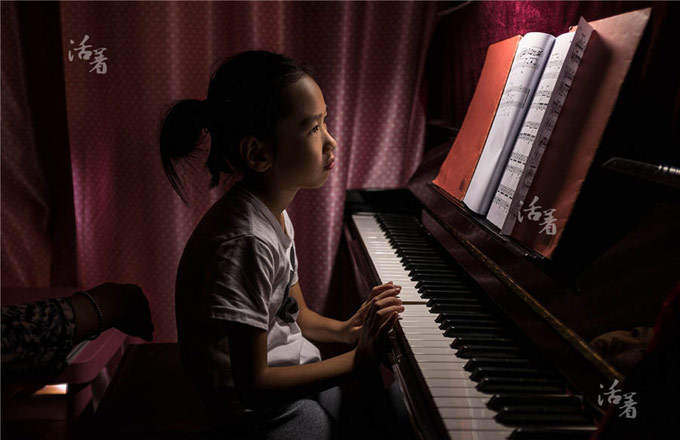
A class at Pianma Border School. [Dai ZHENHUA / China Daily] |
Ethnic languages
In 1983, the first five students from Myanmar crossed the border and began the journey to study at Pianma. "At the outset, the Myanmar students came to learn Mandarin and returned home when they finished primary school classes aged 14 or 15 to conduct business with Chinese traders," said Ma.
The expansion of cross-border trade meant that merchants in Myanmar discovered an urgent need for employees who could speak Chinese, said Ma. In addition, the local government in Myanmar required more interpreters for its increasing exchanges with Chinese officials. Those factors saw the number of Myanmese students studying in Pianma triple to 18 in 2009, when the upgrade was completed at Pianma Border School.
In Wu's hometown, the local government doesn't provide free education at the primary level and so parents have to hire teachers for their children, said Ma. Most parents struggle to pay for the education, but wealthier families will often offer to pay for the children from poorer families to study in China, Ma added.
Wu said children in Myanmar not only provide their own lunches, but also bring food for the teacher, just as Chinese students did back in the 1960s. "But in my school, Myanmese students enjoy free education and free lunches as long as they have registered at the residence management bureau in the county seat," added Ma.
Most of the Myanmese students join the classes two or three years later than their Chinese peers because their parents want them to learn their native language first. Last year, one student from Myanmar entered the first grade at the age of 13, six years older than his classmates.
It's difficult to discern any real difference between the Chinese and Myanmese children when they engage in extracurricular activities in the playground. That's because they have the same ethnicity. In both Pianma and Wu's hometown, many residents share the same origins and speak the ethnic Lisu language.
Wu said she and her compatriots were unable to speak Mandarin when they first entered the school and so the teachers instructed them in Lisu.
In Pianma, 90 percent of the 36 teachers are fluent in the ethnic language. Ma said, "Kids are much keener on language acquisition than adults and any slow learners catch up quickly if a teacher gives one-on-one instruction after class."
The situation is similar at other border schools, because many people on both sides of the border originate from the same ethnic groups. In Ruili city, a major trading port with Myanmar in the Dehong Dai and Jingpo autonomous prefecture, there are 1,758 Myanmese students. They study at all levels, ranging from kindergarten to occupational high school, where the students train for their preferred type of work and not further education. The students account for more than 5 percent of the total, according to the Ruili education bureau. However, only 137 Myanmese students have entered middle- or high school and very few enroll at university.
Yunjing village was divided when the permanent border, established in the 1960s, neatly bisected the settlement. At around 7 am, 64 children from the Myanmese part of the village ride their bikes to the Yunjing Border Primary School near downtown Ruili before returning home when classes finish in the afternoon.
"I require all first- and second-grade teachers to master the Dai language. Teachers will speak Mandarin and Dai to the Myanmese students in the first year. After one or two years, the Myanmese kids use Mandarin confidently," said Sun Jialiang, the school principal.
The Myanmese students get along very well with their Chinese peers, said Sun, which helps them to master the new language.
Related:
- Cross-border schooling not easy to arrange
- Rural-school closure policy put on hold
- Project gives rural schools a new virtual reach
- Pingnan introduces free meals in rural schools
- Rural schools suffer poor resource distribution
- Education, rural area upgrade key for sustainable growth
- Bridging education gap